Home & Garden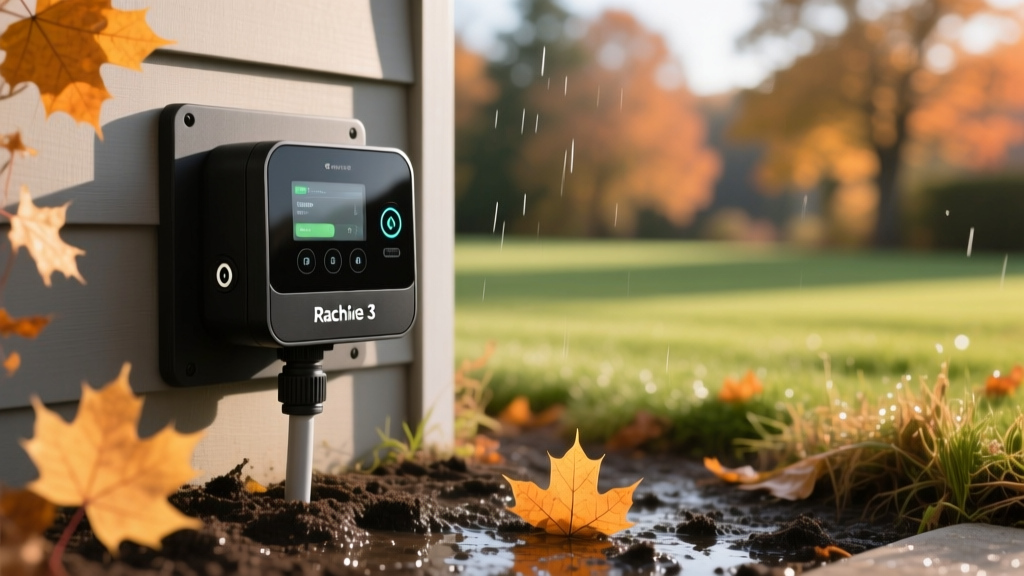
Fall 2026 Lawn Care: Rachio 3 Rain Sensor & Zone Setup
Lisa ThompsonPublished
Mastering Fall 2026 Lawn Care with Smart Irrigation
As the crisp air of autumn settles in and the days grow shorter, your lawn undergoes a critical transition. Fall is arguably the most important season for cool-season grasses like Kentucky Bluegrass, Perennial Ryegrass, and Tall Fescue. While the blades of grass may slow their upward growth, the root systems are aggressively expanding, storing vital carbohydrates to survive the impending winter freeze. In 2026, managing this delicate balance of moisture and temperature is easier than ever, provided you leverage the right smart home technology. The Rachio 3 Smart Sprinkler Controller remains the gold standard for precision irrigation, but its true power in the autumn months is only unlocked when you properly integrate a rain sensor and dial in your zone control settings.
According to data from the U.S. Geological Survey (USGS), outdoor water use accounts for a massive portion of residential water consumption, much of which is wasted due to inefficient scheduling. By transitioning your Rachio 3 from its high-frequency summer schedule to a tailored fall regimen, you not only promote deeper root growth but also protect your lawn from fungal diseases like snow mold, which thrive in cold, waterlogged soil.
Integrating the Rachio 3 with a Rain Sensor for Autumn Showers
Fall weather is notoriously unpredictable. One week may bring unseasonably warm, dry spells, while the next could dump inches of cold rain on your yard. Relying solely on historical weather data or basic app-based forecasts can lead to overwatering during these wet autumn fronts. This is where a physical rain sensor becomes an indispensable component of your 2026 smart irrigation setup.
Choosing the Right Rain Sensor Hardware
For the Rachio 3, you have two primary options for rain detection. The first is the proprietary Rachio Wireless Rain and Freeze Sensor, which communicates directly with the controller via a dedicated wireless signal, bypassing the need to run physical wires to the controller box. The second option is a traditional wired rain sensor, such as the Rain Bird RSD-BEx, which connects directly to the S1 and S2 sensor terminals on the Rachio 3 backplate. For most homeowners retrofitting an older system, the wireless option offers a cleaner, faster installation.
Configuring the Sensor in the 2026 Rachio App
Once your hardware is installed, the software configuration is straightforward but crucial. Open your Rachio app and navigate to the 'More' tab, then select 'Controller Settings' followed by 'Rain Sensor'. If you are using a wired sensor, ensure the physical switch on the sensor is set to 'Active' and the vent ring is adjusted to your local rainfall threshold—typically 1/8 inch to 1/4 inch for fall applications. In the app, toggle the Rain Sensor setting to 'On'. This hardware override ensures that even if the Rachio's Weather Intelligence Plus (WIP) algorithm misses a hyper-local microclimate rainstorm, the physical sensor will interrupt the watering cycle, preventing dangerous autumn soil saturation.
Mastering Zone Control for Fall Overseeding and Cooling Temps
The EPA WaterSense program heavily advocates for weather-based irrigation controllers because they adapt to seasonal shifts. However, the Rachio 3 requires you to input the correct zone parameters to make accurate autumn calculations. Summer settings will overwater your lawn in October, while spring settings will underwater it during a dry September heatwave.
Adjusting Zone Parameters for Autumn
To adjust your zone control for fall, you must modify three critical settings within each zone's 'Advanced' menu: Root Depth, Allowed Depletion, and Crop Coefficient. As the soil cools, evaporation rates plummet, and the grass's water requirements shift.
| Zone Parameter | Summer Setting | Fall 2026 Setting | Why It Matters in Autumn |
|---|---|---|---|
| Root Depth | 6 - 9 inches | 9 - 12 inches | Encourages the Rachio to water less frequently but for longer durations, pushing roots deeper before the frost line sets in. |
| Allowed Depletion | 30% - 40% | 50% | Cooler temps mean less heat stress. Allowing the soil to dry out more between cycles prevents fungal pathogens and rot. |
| Crop Coefficient | 80% - 100% | 60% - 75% | Reflects the reduced evapotranspiration (ET) rate of cool-season grasses as ambient temperatures drop below 65°F. |
| Slope / Shade | Standard | Adjust for leaf cover | Falling leaves create heavy shade and trap moisture. Increase shade settings for zones under deciduous trees to reduce watering. |
Handling Overseeded Zones
If you are overseeding your lawn in early fall to repair summer damage, you must temporarily break away from the Rachio's smart scheduling for those specific zones. New grass seed requires consistent, shallow moisture to germinate. Create a separate 'Fixed Schedule' for your overseeded zones, programming them to run for 5 to 8 minutes, two to three times a day (morning, noon, and early afternoon). Once the new grass reaches a height of two inches and has been mowed once, delete the Fixed Schedule and return the zone to Weather Intelligence Plus to resume deep, infrequent fall watering.
Step-by-Step: Winterizing Your Rachio 3 System
As late November approaches and the threat of hard freezes becomes imminent, your focus must shift from irrigation to winterization. Water left inside your PVC or polyethylene irrigation lines will freeze, expand, and cause catastrophic cracks in your pipes, sprinkler heads, and backflow preventer. The Rachio 3 cannot physically blow out your lines, but it plays a vital role in the winterization process.
The Fall Blowout Procedure
You will need to hire a licensed irrigation professional or use a commercial-grade air compressor (capable of 80-100 CFM) to blow out the lines. Never exceed 50 PSI for polyethylene pipes or 80 PSI for PVC, as high pressure can turn sprinkler heads into dangerous projectiles. During the blowout, use the Rachio app to manually activate each zone one by one. This ensures that the solenoid valves open fully, allowing the compressed air to push every last drop of water out of the lateral lines.
Putting the Rachio 3 into Winter Standby
Once the lines are clear and the main water shut-off valve to the irrigation system is closed, it is time to configure the controller for winter. Do not simply unplug the Rachio 3. Unplugging it erases its internal memory and severs its connection to your smart home ecosystem. Instead, open the app, go to 'More', select 'Controller Settings', and toggle the 'Standby Mode' to 'On'. Standby Mode keeps the device connected to your Wi-Fi, allowing it to receive firmware updates and maintain your zone configurations, while strictly prohibiting any scheduled or manual watering. In the spring of 2027, you simply toggle Standby Mode off, and your optimized zone settings will be ready to go.
Cost Breakdown and ROI for 2026
Investing in smart irrigation technology yields rapid returns, especially in regions with tiered water pricing or strict autumn watering restrictions. As of late 2026, the Rachio 3 (8-Zone model) retails for approximately $229, while the 16-Zone model sits around $279. Adding the Rachio Wireless Rain and Freeze Sensor will cost an additional $59.
While the upfront hardware cost hovers around $288 to $338, the return on investment is substantial. By utilizing precise zone control, integrating a physical rain sensor to prevent redundant watering during autumn storms, and leveraging Weather Intelligence Plus to adjust for dropping evapotranspiration rates, homeowners typically see a 30% to 50% reduction in outdoor water usage compared to traditional static timers. Furthermore, preventing snow mold through proper autumn moisture management can save you hundreds of dollars in spring fungicide treatments and lawn renovation costs.
Conclusion
Fall lawn care in 2026 is a blend of agronomic science and smart home automation. By taking the time to integrate a reliable rain sensor, meticulously adjusting your Rachio 3 zone parameters to reflect the cooling climate, and properly executing your winterization protocols, you set the stage for a vibrant, resilient lawn next spring. Smart irrigation is not just about saving water; it is about delivering the exact right amount of moisture at the exact right time, ensuring your landscape thrives through every season.
