Home & Garden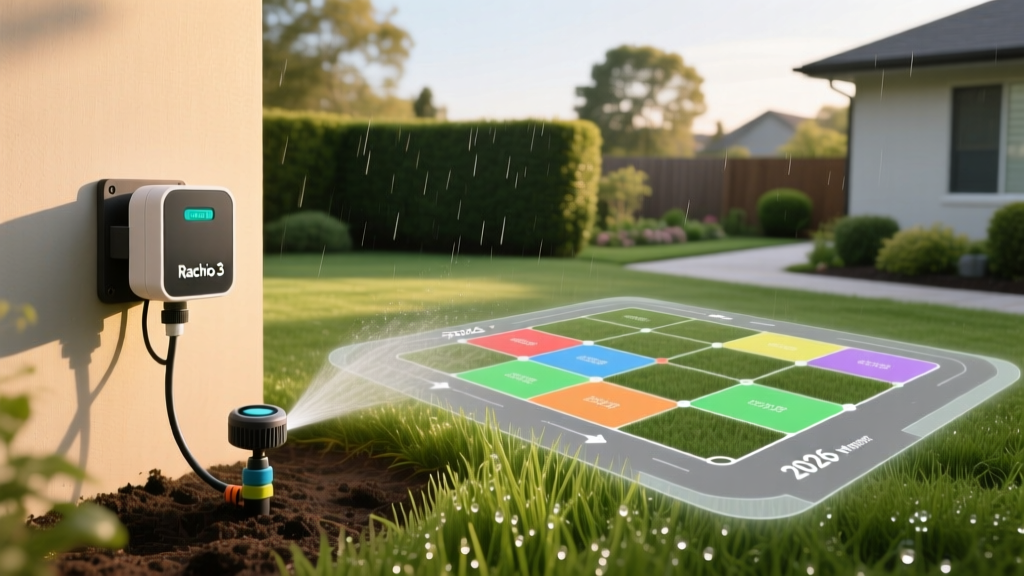
Mowing Patterns & Rachio 3 Irrigation: 2026 Lawn Guide
Lisa ThompsonPublished
The Intersection of Mowing Patterns and Smart Irrigation in 2026
As we navigate the 2026 landscaping season, homeowners are increasingly realizing that lawn care is not a series of isolated tasks, but a deeply interconnected ecosystem. Two of the most critical components of this ecosystem are your mowing techniques and your smart irrigation setup. Specifically, pairing advanced mowing patterns with the Rachio 3 smart sprinkler controller, its integrated rain sensor, and precision zone control creates a synergistic effect that promotes profound root growth, minimizes water waste, and yields a golf-course-quality lawn. According to the EPA WaterSense program, outdoor water use accounts for nearly a third of all residential water consumption, making the optimization of your irrigation and mowing habits both an environmental imperative and a financial necessity.
Why Mowing Patterns Matter for Water Absorption
When discussing mowing techniques, many homeowners focus solely on the aesthetic appeal of striping. However, alternating your mowing patterns—such as switching between horizontal, vertical, and diagonal passes each week—serves a vital agronomic purpose. Repeatedly mowing in the same direction causes soil compaction and forces grass blades to lean in one direction, which can lead to uneven sunlight exposure and localized moisture stress. Compacted soil acts as a barrier to water infiltration. If your soil is compacted from poor mowing patterns, the precise zone control of your Rachio 3 will be rendered less effective, as water will pool on the surface and evaporate rather than reaching the root zone. By alternating patterns, you keep the grass blades standing upright and reduce soil compaction, ensuring that every drop of water delivered by your Rachio 3 penetrates deeply into the soil profile.
Configuring the Rachio 3 and Rain Sensor for 2026
The Rachio 3 remains a powerhouse in the smart home irrigation space in 2026, largely due to its Weather Intelligence Plus and robust zone control capabilities. To maximize efficiency, integrating a physical rain sensor alongside the controller’s digital weather data provides a failsafe against overwatering during unpredictable spring and summer micro-climate storms.
Rain Sensor Integration
While the Rachio 3 uses hyper-local weather data to skip watering, a hardwired rain sensor mounted on your roofline or fence provides real-time, on-the-ground precipitation tracking. If a sudden, unforecasted downpour hits your specific zip code, the rain sensor immediately interrupts the Rachio 3’s scheduled zone runs. This prevents the dreaded scenario of sprinklers running in the rain, protecting your lawn from fungal diseases that thrive in over-saturated conditions while saving you money on your municipal water bill.
Zone Control and Root Depth Settings
The true magic of the Rachio 3 lies in its zone-specific customization. You must input the correct Root Depth for each zone in the app. This is where your mowing height directly dictates your irrigation settings. The University of California Integrated Pest Management program emphasizes that mowing height is directly correlated to root depth; grass mowed too short will develop shallow, drought-prone roots. If you mow your Tall Fescue at 3.5 inches, your Rachio 3 root depth setting should reflect a deeper profile (around 6 to 8 inches), prompting the controller to schedule longer, less frequent deep soak watering cycles. Conversely, a Bermuda grass zone mowed at 1.5 inches requires a shallower root depth setting and more frequent, shorter watering intervals.
Synchronizing Mowing Schedules with Irrigation Zones
To achieve the perfect lawn in 2026, your mowing schedule must dance in harmony with your Rachio 3’s zone control. Never mow a lawn immediately after a heavy irrigation cycle. Wet grass clumps together, dulls mower blades, and tears the grass tissue, leaving it vulnerable to disease and rapid moisture loss. Instead, program your Rachio 3 to water in the early morning hours (between 4:00 AM and 6:00 AM). This allows the grass blades to dry by mid-morning while the soil retains the moisture. You can then safely mow in the late afternoon or early evening when temperatures are cooler, minimizing heat stress on the freshly cut blades.
The 1/3 Rule and Mulching for Moisture Retention
The golden rule of mowing, endorsed by experts at Texas A&M Aggie Turf, is to never remove more than one-third of the grass blade in a single pass. Scalping the lawn exposes the soil to direct sunlight, drastically increasing evaporation rates and forcing your Rachio 3 to run more frequently to compensate for the lost moisture. Furthermore, utilizing a mulching mower and leaving the clippings on the lawn acts as a natural, organic layer of mulch. These fine clippings decompose rapidly, returning nitrogen to the soil and creating a micro-barrier that traps soil moisture. When you consistently mulch, you can often reduce the Crop Coefficient setting in your Rachio 3 app by 5% to 10%, as the lawn's natural moisture retention is significantly improved.
2026 Grass Type, Mowing Height, and Rachio 3 Settings Matrix
To help you calibrate your mower and your smart controller, refer to the matrix below. This table aligns the ideal mowing height with the corresponding Rachio 3 zone settings for optimal water efficiency.
| Grass Type | Ideal Mowing Height | Rachio 3 Root Depth Setting | Recommended Watering Strategy |
|---|---|---|---|
| Tall Fescue | 3.0 - 4.0 inches | 6 - 8 inches | Deep soak, 2x per week |
| Kentucky Bluegrass | 2.5 - 3.5 inches | 5 - 7 inches | Moderate soak, 2-3x per week |
| Bermuda Grass | 1.0 - 2.0 inches | 3 - 5 inches | Short cycles, 3x per week |
| Zoysia Grass | 1.5 - 2.5 inches | 4 - 6 inches | Deep soak, 1-2x per week |
| St. Augustine | 2.5 - 4.0 inches | 5 - 7 inches | Moderate soak, 2x per week |
Advanced Mowing Patterns for Sloped Zones
Sloped zones present a unique challenge for both mowing and irrigation. When mowing slopes, always mow across the incline rather than up and down, which prevents scalping and reduces soil erosion. In the Rachio 3 app, sloped zones should be configured with the Cycle and Soak feature enabled. This splits the total watering time into multiple shorter intervals, allowing water to absorb into the compacted slope soil rather than running off into the street. By combining cross-slope mowing with Cycle and Soak, you ensure that the water actually reaches the root zone of your turf without wasting a single gallon to runoff.
Best Practices for Mowing and Irrigation Syncing
- Keep Blades Sharp: Dull mower blades shred grass tips, causing them to turn brown and lose moisture faster. Sharpen blades every 25 hours of use to ensure clean cuts that heal quickly and retain water.
- Monitor Rain Sensor Debris: Ensure your physical rain sensor is free of autumn leaves and bird droppings, which can block the collection funnel and cause the Rachio 3 to skip necessary watering cycles.
- Adjust for Shade: Grass in shaded areas should be mowed 0.5 inches higher than grass in full sun. In the Rachio 3 app, create a separate zone for shaded areas and lower the Sun Exposure setting to reduce automatic watering times.
- Aerate Annually: Core aeration relieves the soil compaction caused by mowing. Schedule aeration just before your Rachio 3's peak spring watering season to maximize water penetration.
Seasonal Adjustments for Late 2026
As the 2026 season transitions from the peak heat of summer into the cooler days of autumn, both your mowing height and your Rachio 3 settings must adapt. For cool-season grasses, gradually lower your mowing height by half an inch in the fall to prevent snow mold and winter turf diseases. Simultaneously, use the Rachio 3’s Seasonal Shift feature to automatically scale back watering percentages based on the declining UV index and cooler soil temperatures. The integrated rain sensor will also become increasingly valuable during heavy autumn showers, ensuring your lawn enters winter dormancy with the perfect level of soil moisture—neither bone-dry nor waterlogged.
Conclusion
Mastering your lawn in 2026 requires looking beyond individual chores and embracing a holistic approach to turf management. By intentionally alternating your mowing patterns to reduce compaction, adhering to the 1/3 rule to protect the soil canopy, and precisely tuning your Rachio 3 zone control and rain sensor to match your grass's root depth, you create a resilient, drought-tolerant landscape. This synergy not only saves hundreds of gallons of water each season but also results in a thicker, greener, and healthier lawn that will be the envy of the neighborhood.
