Home & Garden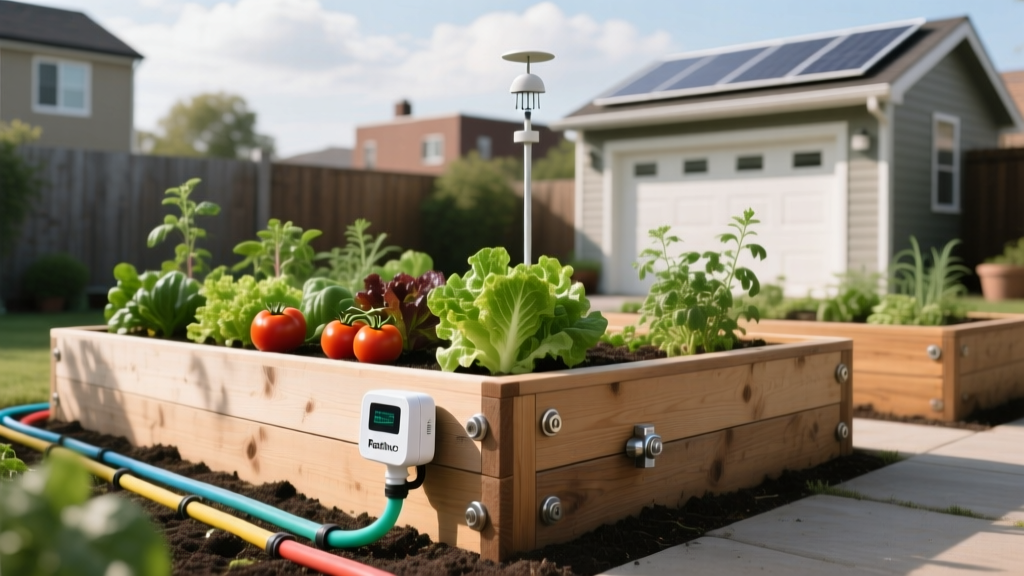
Optimize Rachio 3 Smart Irrigation for Raised Beds in 2026
Anna KowalskiPublished
The Evolution of Raised Bed Irrigation in 2026
Raised bed vegetable gardening has surged in popularity, offering superior soil control, better drainage, and higher yields for home growers. However, the very drainage that makes raised beds so effective also presents a unique challenge: they dry out significantly faster than in-ground gardens. As we navigate the erratic weather patterns and prolonged dry spells of 2026, relying on manual watering or outdated timer-based sprinkler systems is no longer viable for serious garden-to-table enthusiasts. Overwatering leads to root rot and fungal diseases, while underwatering stresses plants and ruins harvests.
Enter the Rachio 3 Smart Irrigation Controller. When paired with a dedicated wireless rain sensor and strategic zone control, the Rachio 3 transforms how you manage your raised bed vegetable garden. By leveraging hyper-local weather data and precise soil moisture algorithms, this smart home integration ensures your tomatoes, leafy greens, and root vegetables receive the exact amount of water they need, precisely when they need it. In this comprehensive 2026 guide, we will explore how to configure your Rachio 3 system specifically for the unique microclimates of raised bed vegetable gardening.
Why Raised Beds Require Specialized Zone Control
Unlike traditional lawns that benefit from uniform broadcast spraying, a raised bed vegetable garden is a mosaic of different plant families, each with distinct root depths and water requirements. According to the University of Minnesota Extension, inconsistent watering is the primary culprit behind blossom end rot in tomatoes and bolting in leafy greens. A single, blanket watering schedule simply cannot accommodate a bed of deep-rooted peppers situated right next to a bed of shallow-rooted radishes.
The Rachio 3 excels in this environment through its advanced zone control capabilities. By dividing your raised beds into distinct hydro-zones, you can tailor the irrigation duration and frequency to match the specific crop coefficient of each plant family. In 2026, the latest firmware updates for the Rachio 3 allow for even more granular control over drip irrigation valves, enabling micro-adjustments down to the minute. This level of precision ensures that water is delivered directly to the root zone via drip lines or micro-sprinklers, minimizing evaporation and keeping foliage dry to prevent powdery mildew.
Integrating the Rachio Wireless Rain Sensor
One of the most critical components of a smart raised bed irrigation system is the rain sensor. While the Rachio 3 uses internet-based weather forecasts to skip scheduled watering, hyper-local microclimates can sometimes cause discrepancies between forecasted rain and actual precipitation in your backyard. Integrating the Rachio Wireless Rain Sensor bridges this gap by providing real-time, on-site precipitation data.
Optimal Placement for Raised Bed Gardens
To ensure your rain sensor accurately reflects the conditions your raised beds are experiencing, proper placement is vital. Mount the sensor in an open area where it receives unobstructed rainfall, away from the overhang of your roof or the dense canopy of nearby shade trees. For most suburban gardens in 2026, mounting the sensor on a dedicated pole or the peak of a garden shed at least six feet off the ground yields the best results. The sensor communicates directly with the Rachio 3 via a dedicated wireless signal, instantly overriding any scheduled zone runs if the customizable rainfall threshold (typically set between 1/8 and 1/4 inch for vegetable gardens) is met.
This hardware-software synergy is crucial for raised beds. Because raised bed soil mixes—often comprising equal parts compost, peat moss or coco coir, and vermiculite—hold moisture differently than native clay soils, preventing unnecessary watering after a light drizzle is essential to maintaining optimal soil aeration.
Strategic Zone Configuration for Vegetable Families
To maximize the efficiency of your Rachio 3, you must map your raised beds to specific irrigation valves and configure the zones within the Rachio app. Here is a proven strategy for dividing a standard four-bed vegetable garden setup:
- Zone 1: Solanaceae (Tomatoes, Peppers, Eggplants) - These crops require deep, infrequent watering to encourage extensive root systems. Use inline drip tubing (like Netafim Techline EZ with 1.0 GPH emitters spaced 12 inches apart) and set the Rachio 3 to a deeper root depth profile.
- Zone 2: Leafy Greens & Brassicas (Lettuce, Spinach, Broccoli) - These plants have shallow root systems and require consistent, frequent moisture. Use adjustable micro-sprinklers or drip tape with emitters spaced 6 inches apart. Set the Rachio app to a shallow root depth and higher watering frequency.
- Zone 3: Root Vegetables (Carrots, Radishes, Beets) - Require even moisture during germination but less water as roots mature. Drip lines with 0.5 GPH emitters work best here to prevent soil erosion and seed displacement.
- Zone 4: Drought-Tolerant Herbs (Rosemary, Thyme, Oregano) - Often neglected, herbs easily succumb to root rot if overwatered. Assign them to a dedicated zone with minimal run times and longer dry-out periods between waterings.
Rachio 3 Raised Bed Watering Schedule Matrix (2026)
The following table provides a baseline configuration for your Rachio 3 zones during the peak summer growing season. Adjust these parameters based on your local evapotranspiration (ET) rates and the specific soil mix used in your raised beds.
| Zone / Crop Type | Emitter Type & Flow Rate | Rachio Root Depth Setting | Soil Type Setting | Baseline Summer Duration | Frequency |
|---|---|---|---|---|---|
| Tomatoes & Peppers | Inline Drip (1.0 GPH) | 10 - 14 inches | Loam / Sandy Loam | 45 - 60 minutes | Every 3-4 days |
| Leafy Greens | Micro-Sprinkler (10 GPH) | 4 - 6 inches | Loam | 10 - 15 minutes | Daily / Every 2 days |
| Root Vegetables | Drip Tape (0.5 GPH) | 6 - 8 inches | Sandy Loam | 25 - 35 minutes | Every 2-3 days |
| Mediterranean Herbs | Point Source Drip (0.5 GPH) | 8 - 10 inches | Sand / Sandy Loam | 15 - 20 minutes | Every 5-7 days |
Note: Always utilize the Rachio 3's 'Flex Daily' schedule type for raised beds. This algorithm dynamically adjusts watering durations based on daily weather changes, soil moisture depletion, and seasonal shifts.
Configuring the App for Raised Bed Soil Profiles
The secret to unlocking the Rachio 3's potential lies in the advanced zone settings within the mobile app. Most homeowners leave these on default, which is calibrated for traditional turfgrass. For raised bed vegetable gardening, you must customize the Soil Type and Allowed Depletion settings.
Most raised beds are filled with a fluffy, well-draining mix. Setting your soil type to Sandy Loam or Loam in the app tells the Rachio algorithm that the soil drains quickly and holds less available water per inch than heavy clay. Consequently, the controller will schedule shorter, more frequent watering cycles to prevent water from simply flushing through the bottom of the bed, taking valuable nutrients with it.
Furthermore, adjust the Allowed Depletion setting. For water-sensitive crops like lettuce and cucumbers, lower the allowed depletion to 20-30%. This triggers the Rachio 3 to water before the soil dries out significantly, preventing the stress that causes bitter-tasting cucumbers or bolting spinach. For deep-rooted tomatoes, you can safely allow a 40-50% depletion, encouraging the roots to stretch deeper into the raised bed in search of moisture, resulting in sturdier, more resilient plants.
Cost Analysis, ROI, and Water Conservation
Investing in smart irrigation is a financial and environmental win. As of 2026, the Rachio 3 8-Zone controller retails for approximately $229, with the Wireless Rain Sensor adding about $50 to the total hardware cost. When factoring in high-quality drip irrigation components, valves, and wiring, a complete smart raised bed irrigation retrofit typically costs between $450 and $650 for a standard backyard setup.
However, the return on investment is substantial. The EPA WaterSense program reports that smart irrigation controllers can save the average home up to 7,600 gallons of water annually. For raised bed gardens, which are often watered daily during peak summer, the savings are even more pronounced. By eliminating the guesswork and preventing the common habit of 'overwatering just to be safe,' gardeners typically see a 20% to 30% reduction in their summer water bills. In many municipalities, local water districts offer rebates in 2026 that cover up to 100% of the cost of a WaterSense-labeled smart controller like the Rachio 3, making the upgrade virtually free.
Additionally, the Colorado State University Extension highlights that drip irrigation systems paired with smart controllers can achieve up to 90% water application efficiency, compared to just 50-70% for traditional overhead sprinklers. This means more water goes directly to your vegetables, and less is lost to wind drift and evaporation.
Final Thoughts for the 2026 Growing Season
Mastering raised bed vegetable gardening requires a delicate balance of nutrition, sunlight, and precise hydration. By upgrading to a Rachio 3 smart irrigation system equipped with a wireless rain sensor and meticulously configured zone controls, you are not just automating a chore; you are actively optimizing the microclimate of your garden. The result in 2026 is a more resilient garden, a bountiful harvest, and the peace of mind that comes from knowing your plants are receiving exactly what they need, whether you are home or miles away.
