Home & Garden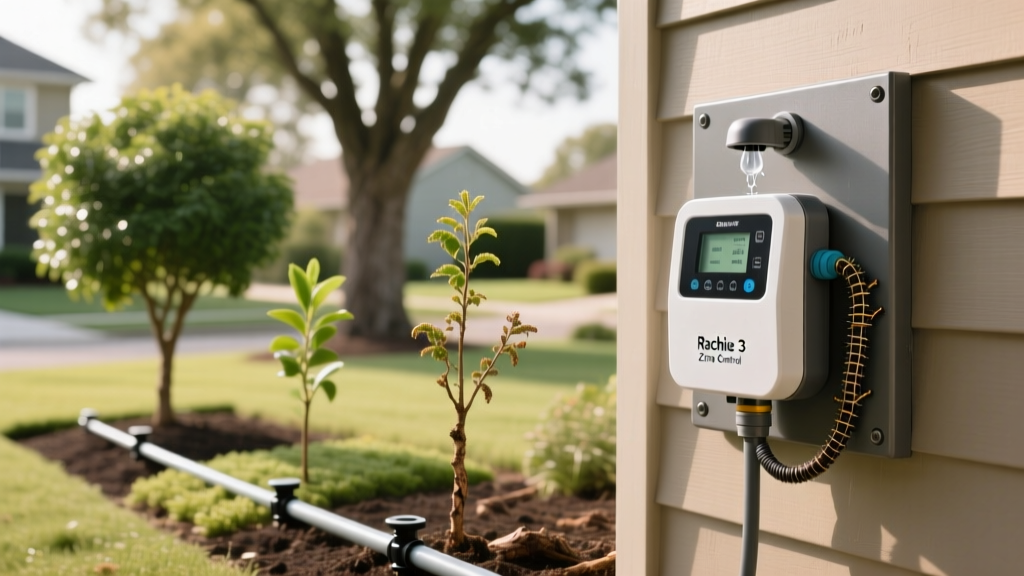
Rachio 3 Zone Control & Rain Sensors: Web Worm Defense 2026
Anna KowalskiPublished
The Unseen Connection: Tree Hydration and Web Worm Vulnerability
When homeowners think of tree web worms—such as the notorious fall webworm (Hyphantria cunea) or the eastern tent caterpillar—they typically reach for pruning shears, biological sprays, or systemic insecticides. However, as we navigate the 2026 growing season, arborists and entomologists are emphasizing a proactive, often overlooked defense mechanism: precision smart irrigation. Trees under environmental stress, particularly from erratic or shallow watering, emit specific volatile organic compounds (VOCs) that act as a chemical beacon for pests. By leveraging the Rachio 3 smart irrigation controller paired with a dedicated wireless rain sensor, you can maintain optimal tree vigor, effectively fortifying your landscape against severe web worm defoliation before the first web even appears.
Understanding the 2026 Web Worm Threat and Tree Stress
Fall webworms are a recurring nuisance across North America, typically appearing in late summer and early fall. They encase the terminal branches of deciduous trees in unsightly, silken webs while voraciously consuming the foliage. According to entomologists at Penn State Extension, while healthy, mature trees can usually withstand the aesthetic damage of a web worm infestation without suffering long-term structural harm, younger or environmentally stressed trees are at a much higher risk of secondary infections, dieback, and stunted growth.
The primary catalyst that transforms a minor pest nuisance into a severe landscape crisis is drought stress. When a tree lacks adequate soil moisture, its natural defense mechanisms—such as the production of defensive tannins and the maintenance of robust sap flow—are compromised. Furthermore, shallow, frequent watering encourages surface-level root growth, making the tree even more susceptible to the rapid drying of the topsoil during late-summer heatwaves. This is exactly the type of stress that invites aggressive web worm colonization. To combat this in 2026, transitioning to a deep-root watering schedule managed by the Rachio 3 is essential for building natural pest resistance.
Configuring Rachio 3 Zone Control for Deep Root Health
The core advantage of the Rachio 3 lies in its hyper-local Weather Intelligence and advanced zone customization. Many homeowners make the critical mistake of grouping their mature shade trees into the same irrigation zones as their turfgrass. Turf requires frequent, shallow watering to maintain its lush green appearance, whereas trees require infrequent, deep soaking to encourage taproots and deep lateral roots to flourish.
Separating Turf and Tree Zones
To utilize the Rachio 3 for web worm defense, you must first ensure your tree drip lines are on dedicated valve zones. If your current irrigation system groups trees with grass, the trees are likely being overwatered at the surface while remaining underwatered at the deep root zone. This shallow moisture profile leads to root rot near the trunk and drought stress at the root tips—a paradox that severely weakens the tree's immune system.
Once your trees are on a dedicated zone, you will use the Rachio app to configure the soil type, vegetation type, and root depth. For mature deciduous trees prone to web worms (such as pecan, hickory, cherry, and walnut), you should set the vegetation type to "Trees" and the root depth to at least 18 to 24 inches. This tells the Rachio 3's proprietary algorithms to calculate longer run times with extended cycle-soak intervals, ensuring water penetrates deep into the soil profile rather than running off into the street.
The Crucial Role of the Rachio Wireless Rain Sensor
While the Rachio 3 utilizes internet-based weather forecasts to skip watering before predicted storms, microclimates and sudden 2026 summer squalls can still lead to overwatering. This is where the Rachio Wireless Rain and Freeze Sensor becomes an indispensable tool for tree health. Overwatering is just as dangerous as underwatering; waterlogged soils suffocate roots, depriving them of oxygen and leading to phytophthora root rot. A tree battling root rot lacks the energy to produce new foliage to replace the leaves lost to web worm feeding.
By installing the Rachio rain sensor in an unobstructed area of your yard, you provide the controller with real-time, on-the-ground precipitation data. If a sudden late-summer thunderstorm drops half an inch of rain, the sensor immediately halts the scheduled deep-soak tree cycle. The EPA WaterSense program highlights that pairing smart controllers with physical soil or rain sensors is the gold standard for preventing the fungal complications that often follow pest defoliation. When web worms strip a tree of its leaves, the tree relies on stored energy and remaining healthy roots to push out a second flush of growth. If those roots are drowning due to a lack of rain sensor overrides, the tree will likely suffer severe branch dieback.
Recommended 2026 Rachio 3 Settings for Tree Zones
To optimize your Rachio 3 for tree health and web worm resilience, use the following baseline settings as a starting point for your dedicated tree zones. These settings prioritize deep soil moisture retention over surface dampness.
| Parameter | Turf Grass Zone (For Comparison) | Mature Tree Zone (Web Worm Defense) |
|---|---|---|
| Watering Frequency | 2-3 times per week | Every 10-14 days |
| Run Time per Cycle | 15-20 minutes | 45-60 minutes (with cycle/soak) |
| Soil Type Setting | Clay Loam | Loam / Sandy Loam |
| Root Depth Setting | 6 inches | 18-24 inches |
| Allowed Depletion | 50% | 30% (Keeps deep soil consistently moist) |
| Slope / Runoff Setting | Low | High (Triggers automatic cycle soaking) |
Note: Always adjust run times based on your specific soil composition and local municipal water restrictions. The Rachio 3's cycle-and-soak feature is vital here, breaking a 60-minute run time into three 20-minute intervals to prevent surface runoff.
Step-by-Step: Pairing Your Rain Sensor to Rachio 3
Integrating the rain sensor into your 2026 smart home ecosystem takes only a few minutes and ensures your trees are never subjected to waterlogged stress.
- Mount the Sensor: Attach the Rachio Wireless Rain Sensor to a fence post or roofline where it has a clear, unobstructed view of the sky, away from the drip lines of your trees or the overhangs of your home.
- Connect to the App: Open the Rachio app, navigate to the "More" tab, select "Accessories," and choose "Add Rain Sensor."
- Calibrate the Threshold: For tree zones, set the rain sensor threshold to 1/8 inch. This ensures that light, ineffective drizzles do not cancel your deep-soak schedules, but genuine rain events pause irrigation to protect the root zones from oxygen deprivation.
- Enable Sensor Delays: Configure a 24-to-48-hour delay post-rainfall. This allows the topsoil to dry slightly, encouraging roots to seek deeper moisture reserves, thereby anchoring the tree and boosting its overall vitality.
Holistic Web Worm Management: Beyond the Sprinkler
While precision irrigation via the Rachio 3 builds the tree's natural immunity and structural resilience, an integrated pest management (IPM) approach is still necessary when web worm populations surge. As noted by researchers at the University of Minnesota Extension, maintaining proper soil moisture is the foundation of tree care, but biological controls are the safest way to address active infestations without harming beneficial pollinators or contaminating your smart irrigation runoff.
Biological Controls and Pruning
If you spot the characteristic silken webs forming in your tree canopy in late July or August, rely on Bacillus thuringiensis var. kurstaki (Btk). This naturally occurring soil bacterium is highly lethal to web worm caterpillars when ingested but is completely safe for humans, pets, and earthworms. Because your Rachio 3 is already managing your soil moisture, you can apply Btk sprays directly to the foliage and the webbing without worrying about the soil becoming oversaturated.
Additionally, use a pole pruner to physically remove nests that are within reach. Do not attempt to burn the webs out of the tree, as this causes severe thermal damage to the cambium layer—damage that a drought-stressed tree cannot recover from. By combining the Rachio 3's deep-root hydration strategies with targeted mechanical and biological interventions, your landscape will remain robust, green, and largely unbothered by the 2026 web worm season.
Final Thoughts on Smart Irrigation and Pest Defense
Pest control in the modern garden is not just about what you spray; it is fundamentally about how you cultivate the environment. Tree web worms are opportunistic pests that exploit weakness. By upgrading to the Rachio 3 smart controller, separating your tree zones from your turf, and utilizing a wireless rain sensor to prevent root asphyxiation, you are doing much more than conserving water. You are actively engineering a landscape that is naturally hostile to pests and resilient in the face of changing climate patterns. Invest in your soil's moisture profile today, and your trees will reward you with vigorous, pest-resistant growth for decades to come.
