Home & Garden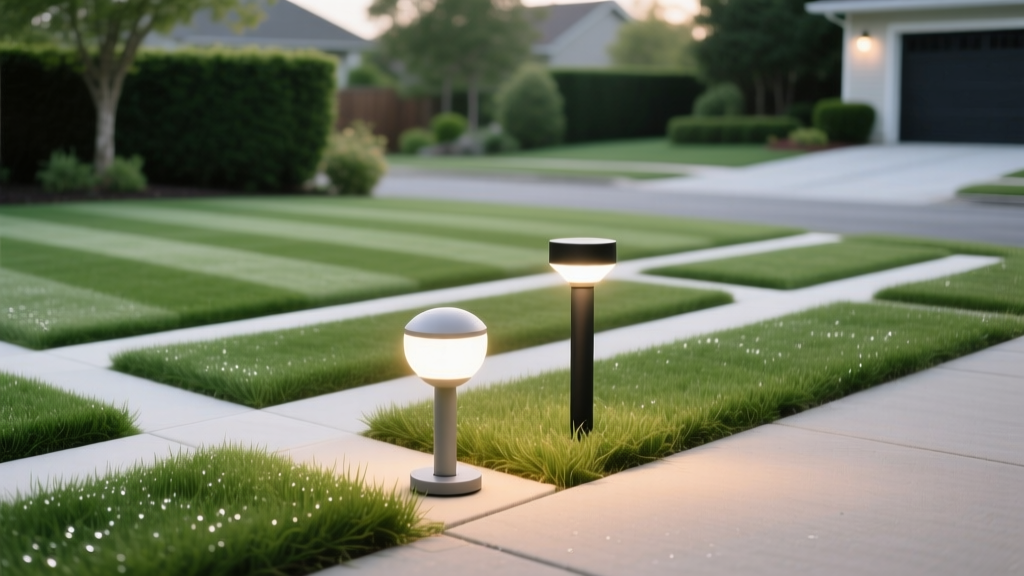
Ring vs Philips Hue Pathway Lights: Mowing Patterns 2026
Sarah ChenPublished
The Intersection of Smart Lighting and Pristine Mowing Patterns
For lawn care enthusiasts, the perfect mowing pattern is a point of immense pride. Whether you are rolling a classic checkerboard, carving sharp diagonals, or laying down deep, contrasting stripes, the visual impact of a well-manicured lawn is undeniable. However, as we move through 2026, the integration of smart home technology into our outdoor spaces has introduced a new variable to the equation: pathway lighting. Specifically, the debate between Ring and Philips Hue outdoor pathway fixtures has become a central topic for homeowners who refuse to compromise their turf aesthetics for the sake of illumination.
Integrating smart pathway lights requires more than just digging a trench for low-voltage wiring; it demands a strategic understanding of mower deck clearances, zero-turn radii, and the physics of how light reflects off bent grass blades. In this comprehensive guide, we will explore how to choose, place, and mow around the 2026 lineup of Ring and Philips Hue pathway lights, ensuring your lawn remains a masterpiece both day and night.
Mower Deck Clearance: The Golden Rule of Pathway Placement
Before comparing brands, we must address the physical reality of mowing techniques. According to the University of Minnesota Extension, maintaining the proper mowing height is critical for turf health, with cool-season grasses typically requiring a 3.0 to 4.0-inch cut in the spring and fall. This means your mower deck is hovering just inches above the soil.
When placing pathway lights to accentuate a mowing pattern, the fixture's base and the surrounding hardscape must never intrude into the mower's cutting path. If a zero-turn mower's caster wheel strikes a light base, it will not only damage the fixture but also scalp the lawn, destroying the very pattern you worked to create. Furthermore, string trimmers spinning at high RPMs will easily shatter polycarbonate light lenses or sever low-voltage cables if fixtures are placed flush with the turf edge.
Philips Hue Outdoor: Precision Lighting for Checkerboard Lawns
The Philips Hue ecosystem has long been the gold standard for granular lighting control, and their 2026 outdoor lineup, featuring the updated Calla bollard and Lily XL spotlights, fully embraces the Matter-over-Thread protocol for seamless integration. But how does Hue serve the lawn striping enthusiast?
Enhancing the Checkerboard Pattern
A checkerboard pattern is achieved by mowing parallel stripes, then turning 90 degrees and mowing perpendicular stripes, alternating the direction of the grass bend. The visual contrast relies entirely on light reflection. Philips Hue's ability to adjust color temperature (from 2000K warm amber to 6500K daylight) allows you to manipulate how the grass reflects light at night.
- Warm White (2700K): Softens the contrast, making the checkerboard look subtle and elegant for evening entertaining.
- Cool Daylight (5000K+): Exaggerates the shadows and highlights, making the geometric checkerboard pattern pop dramatically against the dark turf.
Placement Strategy: To avoid mower damage, Hue Calla bollards should be installed at least 14 inches back from the turf edge, embedded in a mulch or river-rock border. This provides a safe buffer for the mower deck's overhang and allows the string trimmer to edge the lawn without striking the fixture. You can run the low-voltage Hue cable safely beneath the hardscape border, bringing it up only at the fixture base.
Ring Smart Pathlights: Illuminating Diagonals and Curves
Ring has aggressively expanded its outdoor smart lighting ecosystem in 2026, focusing heavily on solar integration and security-based motion activation. The Ring Solar Pathlight (2nd Gen) and the wired Ring Pathlight offer a different approach to landscape illumination, one that pairs exceptionally well with diagonal and concentric circle mowing patterns.
Highlighting Diagonal Lines
Diagonal mowing patterns create a sense of depth and elongate narrow yards. Because diagonals naturally draw the eye toward the corners of the property, placing Ring Pathlights along the primary walking paths that border these diagonal lines creates a stunning visual corridor. Unlike Hue, which requires a central transformer and low-voltage wiring, Ring's solar pathlights can be spiked directly into the soil.
The Mowing Challenge: Because solar pathlights are often pushed directly into the lawn edge, they are notorious victims of the string trimmer. To integrate Ring lights without destroying them during your weekly edge-maintenance routine, you must employ the trench-edging technique. Use a manual half-moon edger to create a deep, 4-inch V-trench between the lawn and the pathlight. This physical barrier prevents the grass rhizomes from creeping toward the light and gives your string trimmer a clear, safe channel to operate without the nylon string whipping against the Ring fixture's solar panel.
2026 Comparison Chart: Hue vs. Ring for Lawn Enthusiasts
Choosing between these two giants depends heavily on your specific mowing equipment, lawn layout, and willingness to install low-voltage wiring versus relying on solar or standard line-voltage setups.
| Feature | Philips Hue Calla Bollard (2026) | Ring Solar Pathlight (2nd Gen) |
|---|---|---|
| Fixture Height | 15.7 inches (Low profile, less obtrusive) | 17.5 inches (Taller, better for tall ornamental grasses) |
| Light Output | 600 Lumens (Adjustable via app) | 100 Lumens (Fixed, motion-boosted) |
| Mower Clearance Needed | 14+ inches (Requires hardscape border) | 6+ inches (Can be trenched directly at turf edge) |
| Color Control | 16 Million Colors & Tunable White | Fixed Warm White (3500K) |
| Stripe Enhancement | Excellent (Adjustable angles/colors) | Fair (Static downlighting) |
| 2026 Avg. Price | $179.99 per fixture + Transformer | $69.99 per fixture (No wiring needed) |
Mowing Techniques and Edging Around Smart Fixtures
Regardless of whether you choose the premium color control of Philips Hue Outdoor Lighting or the accessible, security-focused ecosystem of Ring Outdoor Lighting, your mowing technique must adapt to the hardware.
The Zero-Turn Overlap Technique
When mowing straight lines to create stripes, overlapping each pass by 2 to 3 inches ensures no uncut grass is left behind. However, when approaching a pathway lined with smart lights, the overlap zone becomes a danger area. If your lights are placed near the edge, the mower deck's side discharge or mulching baffle can kick up debris directly into the light lenses. Always approach the fixture boundary with the discharge chute facing away from the pathway, and use a slow, controlled turn to prevent the rear caster wheels from pivoting into the light bases.
The String Trimmer Guard Method
For Ring solar lights placed near the turf, consider installing small, clear acrylic landscape guards around the base. These cost less than $5 online and act as a physical shield. When you run your string trimmer along the edge to maintain the crisp lines of your mowing pattern, the nylon string will strike the acrylic guard rather than the expensive smart light fixture.
The Physics of Nighttime Stripes: Angling Your Smart Lights
Understanding why mowing stripes exist is crucial to lighting them. Stripes are not created by cutting the grass to different heights; they are created by bending the grass blades in opposite directions using a roller or the suction of the mower deck. When light hits the grass blades bent away from you, you see the glossy underside, appearing lighter. When light hits the blades bent toward you, you see the tips and shadows, appearing darker.
This optical illusion relies heavily on the angle of the light source. The sun provides a high, broad angle that makes daytime stripes vivid. At night, pathway lights sit at ground level. If you use Philips Hue Lily spotlights, you can physically angle the beam to graze the turf at a low 15-degree angle. This low-grazing light drastically exaggerates the shadows of the bent grass, making your nighttime stripes look significantly deeper and more defined than they do under standard overhead floodlights. Ring's downward-firing pathlights, by contrast, will wash out the stripes by illuminating the tips of the grass uniformly, reducing the contrast.
Final Verdict for 2026
If your primary goal is to showcase intricate mowing patterns like checkerboards and high-contrast stripes after the sun goes down, the Philips Hue ecosystem is the undisputed winner for 2026. The ability to tune the color temperature and angle the Lily spotlights to graze the turf allows you to manipulate the physics of light reflection, turning your lawn into a nighttime canvas. However, this requires a commitment to installing proper hardscape borders to protect the low-voltage wiring from your mower deck.
Conversely, if you prefer sweeping diagonal patterns, curved pathways, and prioritize ease of installation and security integration over granular aesthetic control, the Ring pathway lights offer a highly capable, budget-friendly alternative. Just be sure to master the trench-edging technique to keep your string trimmer at bay. By aligning your smart lighting choice with your specific mowing techniques, you can achieve a landscape that is as flawless at midnight as it is at noon.
