Home & Garden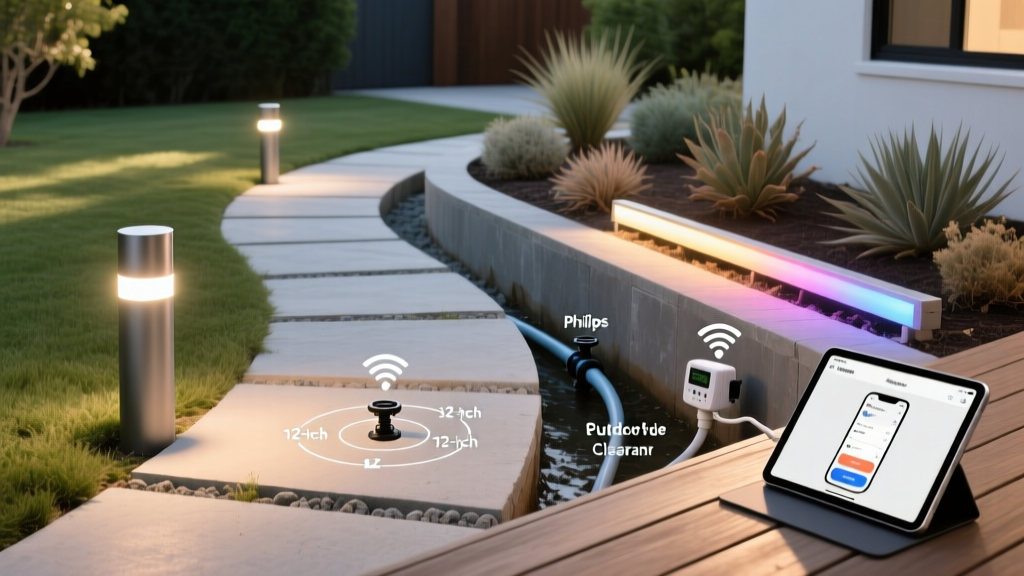
Ring vs Philips Hue Pathway Lights: 2026 Irrigation Guide
Anna KowalskiPublished
The Intersection of Smart Lighting and Irrigation Planning
When designing a comprehensive outdoor living space in 2026, landscape architects and DIY homeowners are increasingly treating smart lighting and irrigation systems as a single, unified infrastructure. The days of trenching a yard twice—once for polyethylene sprinkler pipes and again for low-voltage lighting wire—are over. However, merging these systems requires careful spatial planning, especially when choosing between the two dominant pathway lighting ecosystems: Ring and Philips Hue. From an irrigation perspective, the physical placement of sprinkler heads, the type of nozzles used, and the smart controller integration all dictate which lighting system will survive and thrive in your landscape.
This guide evaluates the Ring Smart Pathway Light and the Philips Hue Calla Bollard strictly through the lens of sprinkler and irrigation system design. We will cover overspray clearance, trenching synergies, and how modern smart controllers can communicate with your lighting to prevent water waste and hardware damage.
Ring vs. Philips Hue: 2026 Pathway Light Showdown
Both Ring and Philips Hue have updated their outdoor lineups for 2026, focusing on higher IP ratings, better color accuracy, and native support for the Matter smart home protocol. However, their physical designs interact very differently with nearby irrigation infrastructure.
| Feature | Ring Smart Pathway Light (2026) | Philips Hue Calla Bollard (2026) |
|---|---|---|
| Primary Function | Security, motion tracking, camera integration | Aesthetics, color zoning, entertainment |
| IP Rating | IP65 (Dust tight, protected from water jets) | IP65 (Dust tight, protected from water jets) |
| Power Requirement | 120V Hardwired or Ring Solar/Battery base | 24V Low-Voltage Transformer |
| Irrigation Risk Factor | High (Motion sensors trigger false alerts from water droplets) | Moderate (Hard water overspray causes permanent lens scaling) |
| Best Sprinkler Companion | Drip Irrigation & Subsurface Lines | MP Rotators & Precision Spray Heads |
Sprinkler Head Clearance and Overspray Protection
The most common mistake in combined landscape installations is placing pathway lights directly in the arc of a traditional spray head. According to EPA WaterSense guidelines, minimizing overspray onto hardscapes and non-target structures is a core component of outdoor water efficiency. When overspray hits your smart lights, it causes two major issues: hardware degradation and smart home phantom triggers.
The Ring Motion Sensor Dilemma
Ring’s 2026 pathway lights feature advanced radar and PIR (passive infrared) motion sensors designed to detect human movement. If a standard 15-foot spray head oscillates or blows in the wind, the water droplets passing through the sensor’s field of view will trigger constant motion alerts. This floods your Ring app with false notifications and ruins the automation routines tied to your security system. If you are committed to Ring pathway lights, you must design your irrigation zones to keep all spray heads at least 24 inches away from the light's detection radius, or switch entirely to drip irrigation in those specific planting beds.
Philips Hue and Calcium Scaling
While Philips Hue Calla bollards do not have motion sensors, their polycarbonate diffuser lenses are highly susceptible to hard water staining. If your municipal water supply is high in calcium and magnesium, daily overspray from standard sprinkler nozzles will bake a cloudy, white mineral crust onto the Hue lenses within a single summer season, ruining the color-mixing capabilities. To protect Hue installations, irrigation designers should specify MP Rotators or high-efficiency rotary nozzles. These nozzles produce heavier, wind-resistant water streams that drop precisely onto the turf rather than misting into the air and drifting onto pathway fixtures.
Trenching Synergy: Laying Low-Voltage Wire with Poly Pipe
One of the greatest advantages of integrating your lighting and irrigation planning is the ability to share trenching labor. In 2026, most residential retrofits utilize flexible polyethylene (poly) pipe for mainlines and laterals, trenched at a depth of 8 to 12 inches. Low-voltage lighting wire, such as the 12-gauge direct burial cable required for Philips Hue’s 24V outdoor transformer, only requires a depth of 6 inches.
When digging a shared trench, always lay the irrigation poly pipe at the bottom. Cover it with two inches of soil or sand, and then lay your low-voltage lighting wire on top. This stratification is critical: if a sprinkler mainline develops a leak or requires a future splice, the low-voltage wire acts as a visual warning layer. If you accidentally slice into the wire with a trenching shovel, you will only lose your pathway lights, not flood your yard and wash out your landscaping. Furthermore, never use the same trench for 120V hardwired Ring lights and irrigation pipes without a minimum 12-inch horizontal separation and a physical barrier, as a leaking pipe could create a severe electrical hazard.
Smart Home Integration: Linking Lights to Irrigation Controllers
The maturation of the Matter protocol in 2026 has finally bridged the gap between outdoor irrigation controllers (like the Rachio 4 or Hunter Hydrawise) and lighting ecosystems. You no longer need clunky third-party workarounds to make your sprinkler system talk to your pathway lights. Here are three highly effective automation routines to implement in your smart home hub:
- The 'Wet Grass' Warning: Program your Philips Hue Calla bollards to glow a soft amber or red when your smart irrigation controller initiates an evening watering cycle. This visually signals to guests and family members that the lawn is currently being watered, preventing foot traffic on wet turf which can lead to soil compaction and grass disease.
- Flow Meter Leak Alerts: If your irrigation system is equipped with a smart flow meter, configure a routine where a detected continuous flow anomaly (indicating a broken pipe or stuck valve) causes all Ring and Hue pathway lights to pulse blue. This provides an immediate, highly visible outdoor alert that can be seen from the street or a second-story window, allowing you to shut off the main water valve before thousands of gallons are wasted.
- Post-Irrigation Security Handoff: Coordinate your system so that Ring pathway lights only activate their high-lumen security mode 15 minutes after the final irrigation zone shuts down. This ensures that the motion sensors are not blinded by the reflective glare of water droplets suspended in the air, maximizing the camera and sensor accuracy for nighttime security.
Final Verdict for Landscape Contractors and DIYers
Choosing between Ring and Philips Hue for your pathway lighting ultimately depends on your irrigation design philosophy. If your landscape relies heavily on subsurface drip lines, root-zone watering systems, and xeriscaping where overspray is virtually non-existent, the Ring Smart Pathway Light is an exceptional choice that adds a vital layer of security to your property. However, if your yard features traditional turf zones with rotary sprinkler heads, the Philips Hue Calla Bollard—paired with precise MP Rotator nozzles and smart controller automations—offers a superior, low-maintenance aesthetic that won't be compromised by the realities of outdoor water distribution. By planning your trenching, pipe depths, and smart home routines simultaneously, you can create a cohesive, water-efficient, and beautifully illuminated landscape that stands the test of time.
