Home & Garden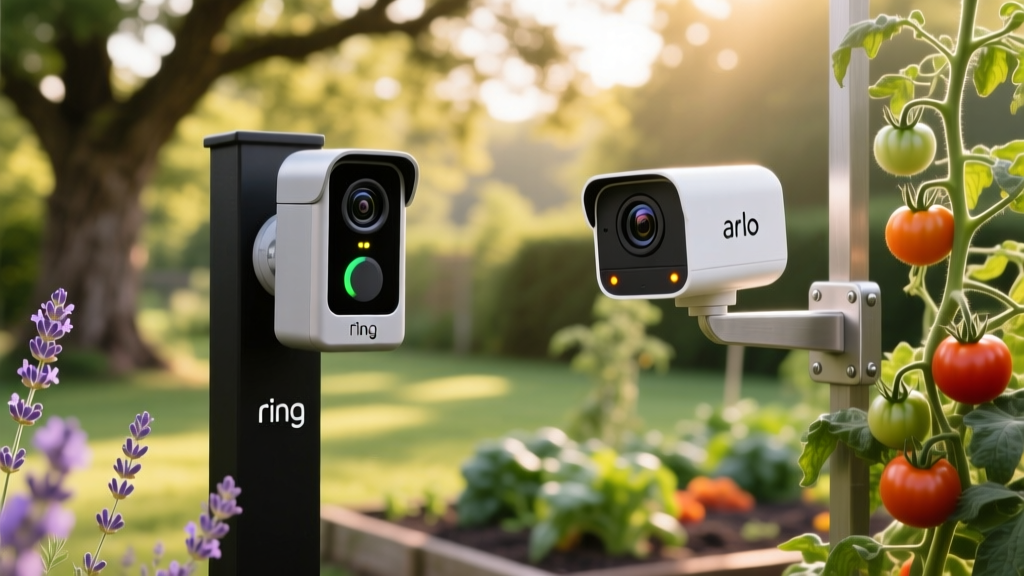
Ring vs Arlo Weatherproof Cameras for Garden Documentation 2026
Sarah ChenPublished
The Evolution of Garden Documentation and Smart Home Integration
In 2026, the intersection of horticulture and smart home technology has completely transformed how we document our outdoor spaces. Garden photography and botanical documentation are no longer limited to daily walks with a DSLR camera. Today, landscape enthusiasts, master gardeners, and permaculture designers are leveraging outdoor security cameras to create continuous, hands-off visual archives of their gardens. Whether you are tracking the phenology of your hydrangeas, monitoring soil erosion in a rain garden, or capturing the exact moment your heirloom tomatoes ripen, choosing the right weatherproof camera is essential.
When it comes to outdoor smart home integration, the debate almost always narrows down to two industry giants: Ring and Arlo. While both brands are famous for porch security, their flagship outdoor cameras possess unique imaging and weatherproofing capabilities that make them surprisingly powerful tools for garden documentation. In this comprehensive guide, we compare the weatherproofing, image quality, and botanical archiving features of Arlo and Ring to help you choose the perfect lens for your landscape in 2026.
Decoding Weatherproof Ratings: Surviving the Garden Elements
The most critical factor for any device placed in a garden bed is its ability to withstand harsh, unpredictable environments. Unlike a front porch, a garden exposes electronics to high humidity, blowing topsoil, aggressive pollen, freezing frost, and direct hits from oscillating sprinklers. To understand how these cameras survive, we must look at their Ingress Protection (IP) ratings. According to Ring's official guide to IP ratings, the two-digit IP code defines exactly how well a device resists dust and water.
Arlo’s IP66 Rating: The Heavy Rain Champion
Arlo’s premium outdoor lineup, including the Arlo Ultra series, typically boasts an IP66 weather resistance rating. As detailed in Arlo's weather resistance documentation, the '6' for dust means the camera is completely dust-tight—a massive advantage in dry, windy climates or during spring pollen storms where fine particulate matter can ruin a camera lens. The second '6' for water resistance means the camera can withstand powerful water jets from any direction. For a gardener, this means an Arlo camera can survive a direct, high-pressure blast from a garden hose or a severe, wind-driven monsoon rainstorm without moisture breaching the internal seals.
Ring’s IP65 Rating: Adequate for Standard Irrigation
Ring’s flagship outdoor models generally carry an IP65 rating. While it shares the same dust-tight '6' as Arlo, the '5' for water resistance indicates protection against low-pressure water jets. In a garden setting, an IP65 rating is perfectly adequate for standard rainfall and ambient humidity. However, if you place a Ring camera near a powerful rotor sprinkler head that routinely blasts the device with pressurized water, you risk compromising the weather seals over time. For garden documentation, Ring cameras are best placed under eaves, in shaded pergolas, or high up in the canopy where direct irrigation is not a factor.
Image Quality and Color Science for Botanical Archiving
When documenting plant health, flower pigmentation, and foliage density, resolution and dynamic range are paramount. You need to be able to zoom in on a leaf to check for early signs of blight or capture the true, vibrant hue of a blooming peony.
Arlo: 4K Resolution and HDR Superiority
Arlo’s 4K Ultra lineup remains the gold standard for outdoor resolution. The 8-megapixel sensor captures an astonishing level of macro-level detail, even when you are viewing a wide 130-degree field of a sprawling vegetable garden. More importantly, Arlo’s High Dynamic Range (HDR) processing excels in high-contrast garden environments. If you are documenting a shaded fern bed with bright, glaring sunlight in the background, Arlo’s HDR balances the exposure, ensuring the delicate fronds in the shadows are visible without blowing out the highlights in the sky. This color accuracy is vital for gardeners who use their visual archives to track nutrient deficiencies or chlorosis in plant leaves.
Ring: 2K HDR and Bird’s Eye View
Ring’s outdoor pro models offer 2K resolution with HDR. While 2K provides slightly less cropping flexibility than 4K, Ring compensates with its unique 'Bird’s Eye View' technology, which uses radar to map movement paths. While this is a security feature, gardeners have repurposed it to track the movement patterns of larger wildlife, such as deer navigating through a meadow garden or groundhogs burrowing near raised beds. Furthermore, Ring's color science tends to lean slightly warmer, which can make autumn foliage and late-summer golden-hour garden shots look exceptionally cinematic.
Night Vision and Nocturnal Ecology Documentation
A thriving garden is a 24-hour ecosystem. Documenting nocturnal pollinators like hawk moths, tracking the damage caused by nighttime pests like slugs and earwigs, or simply watching bats hunt over a water feature requires advanced night vision capabilities.
Both Ring and Arlo offer color night vision, utilizing built-in spotlights to illuminate the garden bed after dark. However, Arlo’s color night vision is widely regarded as superior in low-light botanical settings. Arlo allows you to manually adjust the spotlight brightness and exposure settings within the app, preventing the harsh 'washout' effect that often occurs when a bright spotlight reflects off the waxy leaves of plants like magnolias or hostas. Ring’s night vision is highly effective but relies more heavily on automated exposure, which can sometimes struggle with the complex, reflective textures of a dense garden canopy at night.
Timelapse and AI Plant Tracking Features
For the ultimate garden documentation tool, timelapse photography is non-negotiable. Watching a seed germinate, a vine climb a trellis, or a rain garden fill and drain over a single season is a core aspect of modern horticultural archiving.
- Arlo's Native Timelapse: Arlo cameras feature built-in, native timelapse scheduling. You can set the camera to capture a frame every 10 minutes during daylight hours and stitch them together into a seamless video of your garden's seasonal progression. This is an invaluable feature for permaculture designers documenting landscape maturation.
- Ring's AI and Ecosystem: Ring does not currently offer native, multi-day timelapse stitching in its standard app. However, Ring's integration with third-party smart home dashboards and its advanced AI object detection make it incredible for cataloging specific events. In 2026, Ring's AI is highly adept at distinguishing between swaying branches, falling leaves, and actual animal intruders, reducing false alerts when you are trying to monitor a garden bed for specific pest activity.
2026 Camera Comparison Chart for Gardeners
| Feature | Arlo Ultra Series (4K) | Ring Outdoor Cam Pro (2K) |
|---|---|---|
| Weather Rating | IP66 (Dust-tight, powerful water jets) | IP65 (Dust-tight, low-pressure water) |
| Resolution | 4K UHD with HDR | 2K QHD with HDR |
| Field of View | 130° (Better for focused bed details) | 160° (Better for wide landscape overviews) |
| Timelapse | Native in-app scheduling and stitching | Requires third-party software or workarounds |
| Night Vision | Adjustable Color Night Vision | Automated Color Night Vision |
| Power Source | Rechargeable Battery / Solar Panel | Quick-Release Battery / Hardwired / Solar |
| Best Garden Use | Macro plant details, timelapses, heavy rain zones | Wide canopy views, wildlife tracking, covered patios |
Strategic Installation Tips for Botanical Archiving
Where you place your camera dictates the quality of your garden documentation. According to CNET's expert reviews on outdoor camera performance, placement is just as critical as the hardware itself. To optimize your setup for garden photography, follow these 2026 best practices:
- Avoid Southern Glare: Position your camera facing North or East whenever possible. Facing South will result in the sun glaring directly into the lens during the middle of the day, washing out the colors of your garden beds and defeating the camera's HDR capabilities.
- Camouflage in the Canopy: For documenting wildlife without startling them, mount your camera in the lower branches of a deciduous tree, angling it down toward the garden bed. The dappled shade will protect the lens from direct UV degradation while providing a natural vantage point.
- Mind the Sprinkler Arc: Even with an IP66 rating, constant battering from a high-pressure irrigation head will eventually degrade the acoustic microphone and cause water spotting on the lens. Map your irrigation zones and ensure the camera is mounted at least two feet outside the primary spray radius.
- Utilize Solar Trickle Charging: Garden documentation requires continuous power, especially for timelapses. Both Ring and Arlo offer proprietary solar panels. Mount the panel in a full-sun clearing and run the discrete, weatherproof cable down to the camera hidden in the foliage.
Final Verdict: Which Camera Belongs in Your Garden?
Choosing between Ring and Arlo for garden documentation ultimately depends on your specific horticultural goals. If your primary focus is high-fidelity botanical archiving, capturing the minute details of plant health, and utilizing native timelapse features to watch your garden evolve over the seasons, the Arlo Ultra series is the undisputed champion. Its 4K resolution, superior HDR, and IP66 weatherproofing make it a resilient, high-definition eye on your most delicate garden beds.
Conversely, if your garden documentation leans more toward landscape-wide overviews, tracking the movement of larger wildlife, and integrating with a broader smart home ecosystem that includes your patio lighting and automated irrigation, the Ring Outdoor Cam Pro is a fantastic, versatile choice. Just be mindful of its IP65 limitations regarding direct sprinkler contact, and you will have a reliable tool for capturing the beauty and ecology of your outdoor sanctuary throughout 2026 and beyond.
