Home & Garden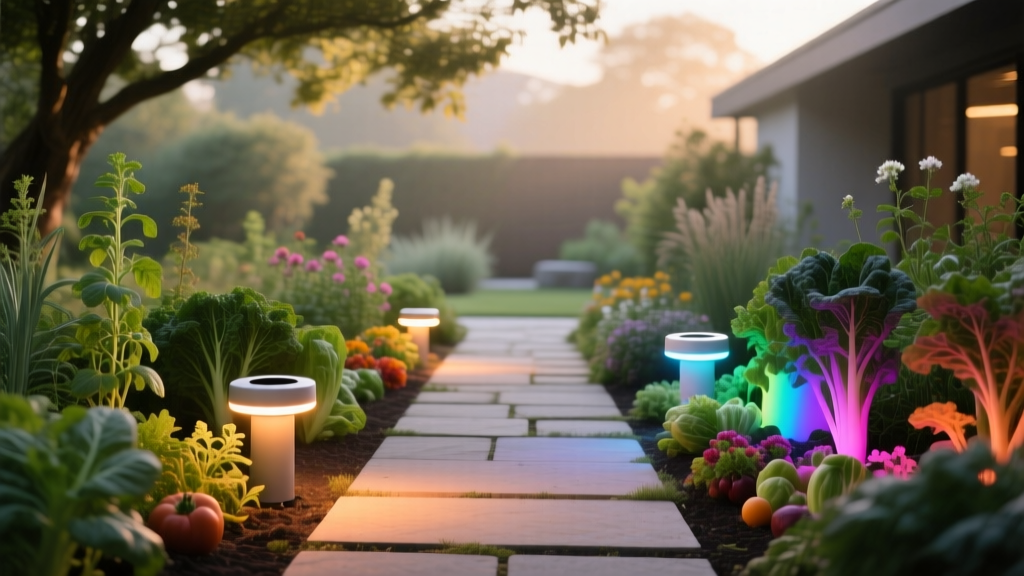
Ring vs Philips Hue Pathway Lights: 2026 Foodscaping Guide
Robert HayesPublished
The Intersection of Smart Technology and Edible Landscaping
As we move through 2026, the concept of the traditional suburban lawn has completely transformed into the edible landscape, or 'foodscape.' Homeowners are replacing resource-heavy turfgrass with raised cedar beds, dwarf fruit tree guilds, and sprawling kitchen gardens. But while much attention is paid to soil health, companion planting, and smart drip irrigation, one critical element is often overlooked: outdoor lighting. When you are investing time and money into growing 'Sun Gold' tomatoes, 'Bluecrop' blueberries, and culinary herbs, the way you illuminate your garden pathways impacts both the security of your crops and the biological rhythms of your plants.
In the smart home ecosystem, two giants dominate the outdoor lighting space: Ring and Philips Hue. Both offer exceptional pathway lighting solutions, but they serve fundamentally different purposes in an edible landscape. This comprehensive 2026 guide breaks down the Ring Pathlight series versus the Philips Hue Calla and Lily outdoor collections, analyzing them strictly through the lens of foodscaping, crop protection, and plant biology.
The Biology of Light: Why Photoperiodism Matters in the Foodscape
Before comparing hardware, we must address the science of light pollution and plant health. Plants rely on photoperiodism—the physiological reaction to the length of day and night—to trigger vital growth stages, including flowering, fruiting, and dormancy. Blasting your garden with cool-white, high-lumen LEDs at midnight can severely disrupt these cycles.
According to DarkSky International, artificial light at night (ALAN) disrupts local ecosystems, and this applies directly to your backyard microclimate. For short-day plants or those requiring a dark period to set fruit and harden off for winter, stray light trespass can result in delayed harvests or increased susceptibility to frost damage. Therefore, a smart lighting system that allows for precise spectrum control, dimming, and targeted beam angles is not just an aesthetic luxury; it is a horticultural necessity.
Philips Hue Outdoor: Precision Spectrum Control for Plant Health
The Philips Hue outdoor lineup, specifically the Calla Bollard and Lily Spotlight, remains the gold standard for aesthetic and biologically respectful garden lighting in 2026. Powered by a low-voltage wired system, these fixtures are designed to be integrated seamlessly into the hardscaping of a kitchen garden.
Customizable Color Temperature
The standout feature of the Hue ecosystem for foodscapers is the ability to tune the white light spectrum. You can schedule your pathway lights to emit a warm, amber glow (around 2000K to 2500K) during the late evening hours. This warmer spectrum significantly reduces the disruption of plant photoperiods compared to harsh blue-white light. You can illuminate your decomposed granite pathways for safe nighttime navigation without tricking your nearby pepper plants into thinking it is still daytime.
Aesthetic Zoning and Hardscape Integration
Foodscaping is as much about beauty as it is about yield. The Hue Calla Bollards provide a soft, diffuse 360-degree glow that perfectly outlines curved pathways winding through artichoke and rhubarb beds. With 16 million colors, you can even use subtle color shifts to indicate garden zones—for example, a soft green hue for the perennial herb guild and a warm white for the annual vegetable beds. Furthermore, the 2026 Hue Bridge updates offer native Matter-over-Thread support, ensuring rock-solid connectivity even at the far edges of a large suburban lot.
Ring Smart Lighting: Security and Pest Deterrence
While Hue excels in aesthetics and plant biology, Ring dominates the realm of security. The Ring Wired Pathlight and Solar Pathlight are built with a different primary objective: motion detection, deterrence, and integration with Ring's suite of outdoor cameras.
Wildlife and Crop Protection
If your greatest foodscape threat is wildlife—such as deer browsing on your brassicas, raccoons raiding your sweet corn, or groundhogs burrowing under your raised beds—Ring is the superior choice. Ring pathway lights feature built-in motion sensors that can trigger a sudden brightening of the lights, startling nocturnal foragers. More importantly, these lights can be linked to Ring Pan-Tilt or Spotlight Cameras. When a motion event occurs on the pathway, the camera automatically pans to the zone, sending a real-time alert to your smartphone. In 2026, Ring's AI-powered animal detection can differentiate between a stray neighborhood cat and a deer, allowing you to customize your automated deterrence routines.
The Drawback: Fixed Color Temperatures
The primary drawback of Ring lighting for the dedicated horticulturist is the lack of spectrum tuning. Ring pathlights typically operate at a fixed, cooler color temperature (around 3500K to 4000K). While excellent for security and visibility, this cooler light contains more blue wavelengths, which are highly disruptive to plant dark cycles. To mitigate this, foodscapers using Ring must be meticulous about fixture placement, ensuring the light beams are directed strictly downward onto the pathways and shielded from the foliage of sensitive crops.
Feature Comparison Chart: Hue vs. Ring for Edible Landscapes
To help you decide which system aligns with your garden's specific needs, here is a side-by-side comparison of the flagship pathway options available in 2026.
| Feature | Philips Hue Calla Bollard (Wired) | Ring Wired Pathlight |
|---|---|---|
| Primary Strength | Aesthetics & Plant-Safe Spectrum | Security & Pest Deterrence |
| Color / Spectrum | 16M Colors + Tunable White (2000K-6500K) | Fixed Warm/Cool White (Approx. 3500K) |
| Motion Sensing | Requires external Hue Motion Sensor | Built-in Passive Infrared (PIR) Sensor |
| Camera Integration | Limited (via third-party routines) | Native Ring Camera Panning & Recording |
| Installation | Low-voltage transformer & cable | Standard line-voltage or low-voltage options |
| Approx. 2026 Cost | $130 - $160 per bollard | $80 - $110 per pathlight |
| Smart Home Protocol | Zigbee / Matter-over-Thread | Wi-Fi / Proprietary RF |
Strategic Placement in the Kitchen Garden
Regardless of whether you choose Ring or Hue, the physical placement of your pathway lights is critical in an edible landscape. Unlike a flat turf lawn, a foodscape is a dynamic, three-dimensional environment with sprawling vines, towering trellises, and intricate irrigation networks.
Avoiding Shovel Strikes and Irrigation Conflicts
When trenching for low-voltage lighting cables, you must map out your existing drip irrigation lines and soaker hoses. The U.S. Department of Energy recommends careful planning of outdoor lighting layouts to maximize efficiency and minimize environmental disruption. In a garden setting, this means running lighting conduits parallel to, but at least 6 inches away from, your main water lines. Use heavy-duty landscape staples to secure the wiring, and bury it at least 4 inches deep to protect it from seasonal aeration and the inevitable slip of a garden trowel.
Managing Light Trespass on Raised Beds
If you are growing photoperiod-sensitive crops, utilize the physical structure of your garden to block light trespass. Place your pathway lights on the side of the path opposite to your most sensitive plants. Utilize dense, low-growing edible groundcovers like creeping thyme or alpine strawberries as a natural 'baffle' to absorb and block horizontal light spill from the fixtures before it reaches the main crop canopy.
Which System Wins for Edible Landscaping in 2026?
The choice between Ring and Philips Hue ultimately depends on the primary function of your outdoor space and the specific threats to your harvest.
Choose Philips Hue if: Your foodscape is an extension of your outdoor living area, designed for evening entertaining, dining, and visual beauty. If you grow photoperiod-sensitive plants and require precise control over light temperature to protect plant biology, the Hue Calla and Lily series are unmatched. The ability to dim the lights to a warm, plant-safe amber while enjoying a garden-to-table dinner on the patio is the pinnacle of modern foodscaping.
Choose Ring if: Your garden is located in a rural or semi-rural area where wildlife pressure is high, or if you are growing high-value crops that are frequent targets for human or animal theft. The integration of motion-activated pathway lighting with Ring's camera ecosystem provides an invisible, automated security fence around your edible landscape, giving you peace of mind that your months of hard labor will actually make it to the kitchen.
For the ultimate 2026 smart garden, many advanced foodscapers are adopting a hybrid approach: utilizing Hue for the interior pathways and patio-adjacent beds to preserve plant health and ambiance, while deploying Ring floodlights and cameras on the dark, vulnerable perimeters of the property to deter deer and intruders. By understanding the unique strengths of both ecosystems, you can ensure your edible landscape is as secure and biologically thriving as it is beautiful.
