Lawn Care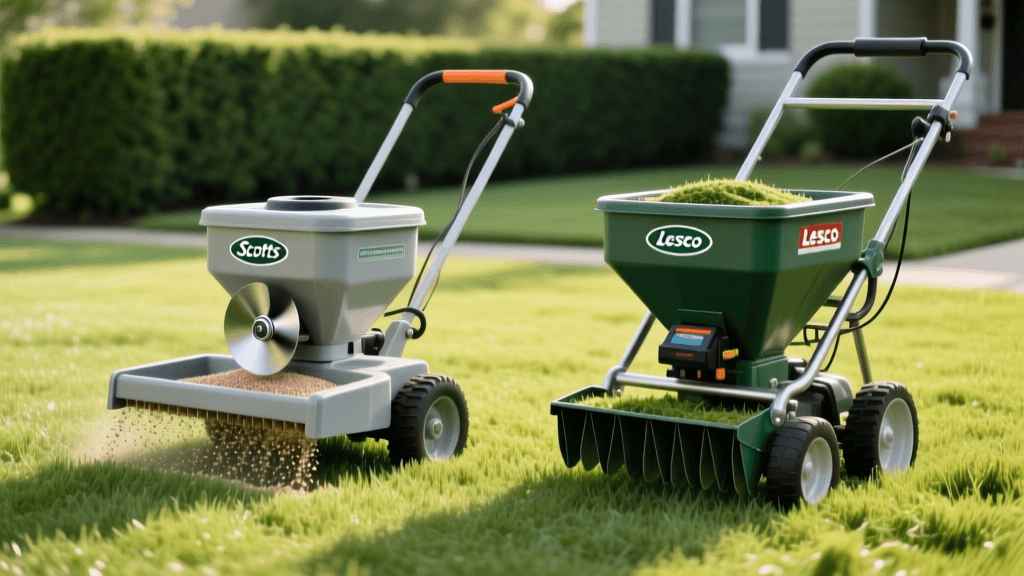
Scotts Broadcast vs Lesco Drop Spreaders: Full Review
Introduction to Lawn Spreaders
Achieving a lush, green, and weed-free lawn requires more than just buying the right fertilizer or grass seed; it demands precise, even application. Over-application can burn your turf and waste money, while under-application leaves your lawn vulnerable to weeds and environmental stress. When it comes to spreading granular products, homeowners generally choose between two dominant technologies: broadcast and drop spreaders.
In this comprehensive product review and comparison, we pit the industry-standard Scotts EdgeGuard Mini Broadcast Spreader against the professional-grade Lesco High Wheel Drop Spreader. Whether you are overseeding a cool-season fescue lawn in the fall or applying a pre-emergent crabgrass preventer in the spring, choosing the right tool is critical. We will break down the mechanics, usability, and ideal use cases for both spreaders to help you make an informed decision for your specific lawn care routine.
The Core Difference: Broadcast vs. Drop Technology
Before diving into the specific models, it is essential to understand the fundamental mechanical differences between broadcast and drop spreaders. A broadcast spreader, also known as a rotary spreader, utilizes a spinning horizontal disc located beneath the hopper. As granular fertilizer or seed falls onto the disc, it is flung outward in a wide, sweeping fan pattern. This design allows you to cover large areas quickly, making it highly efficient for expansive properties. However, the wide dispersal pattern means you must be careful near garden beds, driveways, and water features to avoid staining or unintended growth.
Conversely, a drop spreader releases the product directly downward through a series of holes along the bottom of the hopper. The application width is strictly limited to the physical width of the hopper itself, typically around 22 to 26 inches. This targeted approach provides unparalleled precision, ensuring that expensive grass seed and specialized herbicides are placed exactly where you want them. The trade-off is speed and the necessity for overlapping passes. If you do not overlap your wheel tracks perfectly, you risk leaving distinct, unseeded or unfertilized stripes across your lawn. According to turfgrass specialists, understanding your property's layout is the first step in selecting the right spreader type.
Product Review: Scotts EdgeGuard Mini Broadcast Spreader
The Scotts EdgeGuard Mini Broadcast Spreader is arguably the most recognizable and widely purchased spreader in the residential lawn care market. Designed for small to medium-sized lawns (up to 5,000 square feet), this lightweight, push-operated spreader features a durable polyethylene hopper that resists rust and corrosion from harsh fertilizer salts. The standout feature is the proprietary EdgeGuard technology, an adjustable deflector shield that blocks the right side of the broadcast pattern. When engaged, it prevents fertilizer from landing on landscaping, hardscapes, and garden beds, saving you from the tedious task of sweeping up granular products off your driveway.
Priced typically between $40 and $60, the Scotts Mini is an entry-level powerhouse. It comes pre-calibrated for Scotts brand products, taking the guesswork out of dial settings for the average homeowner. The large, pneumatic-style wheels provide decent traction, though the lightweight frame can sometimes struggle on thick, overgrown turf. Cleaning is straightforward: simply rinse the hopper with a garden hose, ensuring the runoff is directed back onto the lawn to utilize any residual nutrients.
Pros and Cons of the Scotts EdgeGuard Mini
- Pros: Highly affordable, lightweight, EdgeGuard deflector prevents hardscape staining, rust-proof hopper, pre-calibrated for popular retail products.
- Pros: Fast coverage for wide-open spaces, easy to store in small sheds.
- Cons: Not ideal for large properties (over 5,000 sq ft), lightweight frame can tip if handled roughly, susceptible to wind drift during application.
Product Review: Lesco High Wheel Drop Spreader
The Lesco High Wheel Drop Spreader represents the gold standard for precision application, frequently utilized by professional landscaping companies and dedicated lawn care enthusiasts. Unlike the plastic-heavy construction of residential models, the Lesco drop spreader boasts a heavy-duty, powder-coated steel frame and a stainless steel hopper. This robust construction ensures longevity, even when frequently exposed to corrosive pre-emergent herbicides and acidic fertilizers. The "High Wheel" designation refers to its large, 14-inch pneumatic tires, which effortlessly roll over uneven terrain, aeration plugs, and thick turf without bogging down.
With a 22-inch drop width and a massive 80-pound capacity, this spreader is built for serious work. It features an enclosed gearbox that protects the internal mechanical components from debris and moisture, ensuring smooth, consistent operation season after season. While the Lesco drop spreader commands a premium price tag—often ranging from $250 to $350—its accuracy is unmatched. When applying expensive, slow-release organic fertilizers or precise overseeding blends, the Lesco ensures every single granule is deposited exactly between the wheel tracks, eliminating the wind-drift associated with broadcast spreaders.
Pros and Cons of the Lesco High Wheel Drop
- Pros: Commercial-grade durability, pinpoint accuracy, zero wind drift, large pneumatic tires for rough terrain, massive 80 lb capacity.
- Pros: Enclosed gearbox prevents mechanical failures, ideal for expensive seed and specialized chemicals.
- Cons: Expensive upfront cost, heavy and requires more storage space, slower application speed, requires strict overlapping to avoid lawn striping.
Head-to-Head Comparison Chart
| Feature | Scotts EdgeGuard Mini | Lesco High Wheel Drop |
|---|---|---|
| Spreader Type | Broadcast (Rotary) | Drop |
| Hopper Material | Polyethylene (Plastic) | Stainless Steel |
| Frame Material | Lightweight Steel / Plastic | Heavy-Duty Powder-Coated Steel |
| Capacity | Up to 5,000 sq ft coverage | 80 lbs (approx. 15,000+ sq ft) |
| Application Width | 5 to 12 feet (adjustable fan) | 22 inches (fixed drop) |
| Best Used For | Quick fertilizing, small suburban yards | Precision seeding, expensive herbicides |
| Estimated Price | $40 - $60 | $250 - $350 |
Calibration and Application Best Practices
Regardless of whether you choose the Scotts broadcast model or the Lesco drop model, proper calibration is non-negotiable. Environmental factors, product density, and walking speed all influence the actual application rate. Turfgrass experts at UMass Extension emphasize that relying solely on the manufacturer's dial settings can lead to significant over or under-application, as granule size varies wildly between brands. To calibrate, measure a specific test area (such as 1,000 square feet), weigh the exact amount of product required for that space, and walk your normal pace while emptying the hopper over a tarp or driveway to catch and weigh the output.
"Proper spreader calibration is the single most important step in preventing turf burn, saving money, and protecting local waterways from nutrient runoff."
Furthermore, timing and technique play crucial roles in lawn health. When using a drop spreader like the Lesco, you must overlap your passes by about two inches to prevent striping. For broadcast spreaders like the Scotts, you should overlap by walking directly in the tracks of your previous pass, as the product fans out widely. The experts at Purdue University Turfgrass Science recommend applying granular fertilizers to dry foliage and immediately watering the lawn afterward to move the nutrients into the soil profile, preventing leaf burn and maximizing root absorption. Additionally, always sweep any stray granules off hard surfaces to protect local waterways from nutrient runoff, a critical best practice highlighted by the University of Minnesota Extension.
Final Verdict: Which Spreader Should You Buy?
So, which spreader deserves a spot in your garden shed? The answer depends entirely on your lawn's size, layout, and your budget. If you maintain a standard suburban lawn under 5,000 square feet with numerous garden beds, trees, and tight borders, the Scotts EdgeGuard Mini Broadcast Spreader is the undisputed champion of convenience and value. Its EdgeGuard deflector and fast application rate make weekend fertilization a breeze without breaking the bank.
However, if you manage a sprawling estate, demand professional-grade precision for expensive grass seed, or frequently apply highly concentrated herbicides where wind drift is a major concern, the Lesco High Wheel Drop Spreader is a worthwhile investment. Its heavy-duty steel construction and pinpoint accuracy will pay for themselves over time by eliminating product waste and preventing chemical damage to adjacent landscaping. Ultimately, pairing the right spreader with a strict calibration routine will guarantee a thicker, healthier, and more resilient lawn for years to come.