Home & Garden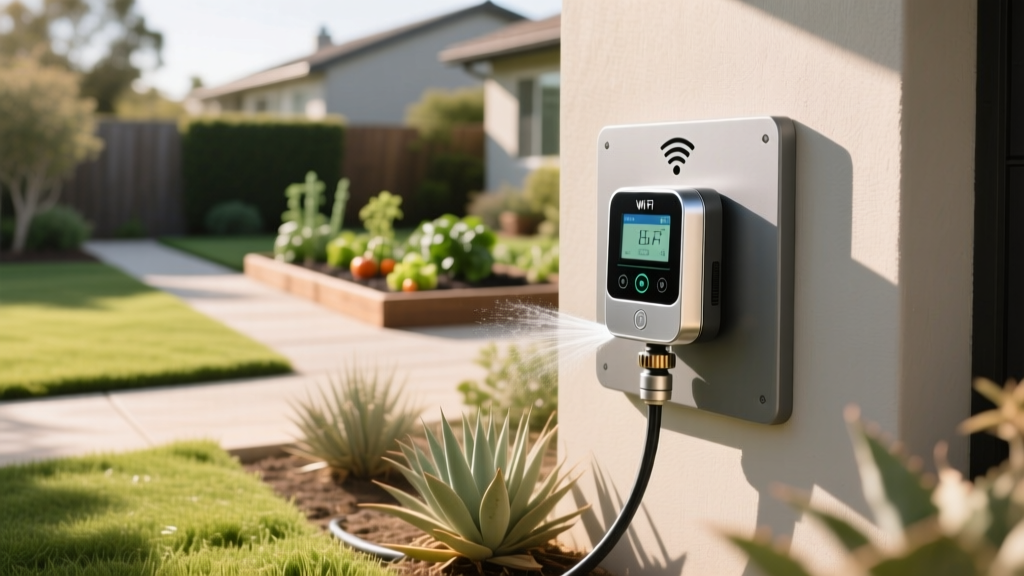
Smart Irrigation System Costs and ROI: Complete Guide
Mike RodriguezPublished
Landscaping and lawn care represent a significant portion of a homeowner's annual maintenance budget. While fertilizers, aeration, and mowing services often dominate the conversation, water usage is the silent budget-drainer. According to the United States Environmental Protection Agency (EPA), outdoor water use accounts for nearly 30% of total household water consumption, with some arid regions seeing that number climb to 60%. As water rates rise and drought restrictions become more common, homeowners are increasingly turning to smart home integration to manage their landscapes efficiently. But what does it actually cost to upgrade to a smart irrigation system, and how long does it take to see a return on investment (ROI)?
What Defines a Smart Irrigation System?
A traditional sprinkler system operates on a rigid, pre-set timer. It will water your lawn at 6:00 AM whether it is 95 degrees and dry, or pouring rain. A smart irrigation system replaces this dumb timer with an intelligent, Wi-Fi-enabled controller that adjusts watering schedules based on real-time data. These systems generally fall into two categories:
- Weather-Based (Evapotranspiration or ET) Controllers: These connect to your home Wi-Fi and pull hyperlocal weather data from online meteorological stations. They calculate the exact amount of water your lawn loses to evaporation and plant transpiration, adjusting run times accordingly.
- Soil Moisture Sensor (SMS) Systems: These rely on physical probes buried in the root zones of your lawn or garden beds. They bypass the scheduled watering cycle if the soil already holds adequate moisture.
According to the EPA, upgrading to a WaterSense labeled smart controller is one of the most impactful outdoor upgrades a homeowner can make. The agency notes that smart irrigation controllers can save the average home nearly 7,600 gallons of water annually by eliminating unnecessary watering cycles.
Equipment Costs: Controllers, Sensors, and Accessories
The cost of the hardware varies wildly based on the number of zones your property requires and the level of data granularity you desire. Here is a breakdown of the most popular smart controllers on the market:
1. Premium Weather-Based Controllers
Models like the Rachio 3 or the Rain Bird ST8I-2.0 are industry leaders. The Rachio 3 (8-zone model) typically retails between $230 and $280. It features hyperlocal weather intelligence, freeze skip, wind skip, and seasonal shift capabilities. Rain Bird's smart indoor/outdoor controllers range from $150 to $220, offering excellent integration for homes that already have legacy Rain Bird infrastructure.
2. Budget-Friendly Smart Controllers
If you are looking for entry-level smart home integration, the Orbit B-hyve is a standout. Priced between $100 and $140 for an 8-zone unit, it provides weather-based adjustments and app control, though it lacks some of the advanced micro-climate data integrations found in premium models.
3. Soil Moisture Sensors and Flow Meters
For the ultimate precision, you can pair your smart controller with a soil moisture sensor or a flow meter. Soil moisture sensors (such as those from Hunter or Rain Bird) cost between $80 and $150. Flow meters, which attach to your main irrigation line to detect leaks and measure exact water usage, cost between $120 and $250. While optional, these accessories transform a smart controller into a comprehensive landscape management tool.
Professional Installation vs. DIY Costs
One of the most appealing aspects of smart irrigation controllers is that they are largely designed for the DIY market. If you have a standard screwdriver, a smartphone, and 30 minutes of free time, you can likely swap out your old timer for a smart one. However, professional installation is recommended if your system requires wiring upgrades, master valve installations, or the integration of complex soil sensors.
- DIY Installation Cost: $0 in labor. You only pay for the hardware.
- Professional Installation Cost: Irrigation specialists typically charge between $150 and $300 for a straightforward controller swap. If your system requires trenching for new soil sensor wires, adding a flow meter, or upgrading an outdated pump start relay, labor costs can easily push the total installation bill to $600 - $1,200+.
Comprehensive Cost Comparison Table
To help you budget for your landscape upgrade, review the estimated costs below based on an average 8-zone suburban lawn.
| Component / Service | DIY Cost Estimate | Pro Installed Estimate | Expected Lifespan |
|---|---|---|---|
| Basic Smart Controller (e.g., Orbit B-hyve) | $100 - $140 | $250 - $400 | 5 - 8 Years |
| Premium Smart Controller (e.g., Rachio 3) | $230 - $280 | $400 - $600 | 7 - 10 Years |
| Soil Moisture Sensor Add-on | $80 - $150 | $250 - $450 | 3 - 5 Years |
| Flow Meter & Leak Detection | $120 - $250 | $400 - $700 | 10+ Years |
| System Winterization / Maintenance | $0 (DIY Blowout) | $75 - $150 / year | Annual |
Calculating Your ROI and Water Savings
The primary financial benefit of a smart irrigation system is the reduction in your municipal water bill. To calculate your ROI, you must understand your local water rates. The national average for water and sewer combined is roughly $2.00 to $5.00 per 1,000 gallons, though this can exceed $10.00 in drought-prone areas like California or Nevada.
The Math Behind the Savings:
Let us assume your traditional system uses 12,000 gallons of water per month during the peak summer season (June, July, August). Over three months, that is 36,000 gallons. If your local water rate is $4.00 per 1,000 gallons, your summer irrigation bill is $144.
A smart controller typically reduces outdoor water use by 20% to 40% by skipping rain events and adjusting for cooler, cloudy weeks. Assuming a conservative 25% reduction, you save 9,000 gallons over the summer. That equates to a direct savings of $36 per summer season.
While $36 a year might not sound like a massive windfall, the ROI timeline shrinks dramatically when you factor in utility rebates and the compounding savings over the 10-year lifespan of the controller. Furthermore, if you live in an area with tiered water pricing—where the cost per gallon skyrockets once you cross a certain usage threshold—smart controllers can keep you in the cheapest pricing tier, saving you hundreds of dollars annually.
The Secret Weapon: Utility Rebates
Many homeowners are unaware that their local water utility will actually pay them to upgrade to a smart system. Because municipal water treatment and distribution are expensive, utilities incentivize conservation. The EPA maintains a fantastic resource called the WaterSense Rebate Finder, which allows you to search your zip code for active local rebates.
It is incredibly common for water districts to offer rebates ranging from $50 to $150 for the purchase of a WaterSense labeled smart controller. In some aggressive conservation markets, the rebate covers 100% of the hardware cost, making your ROI instantaneous. Always check with your local water provider before purchasing your equipment, as many require pre-approval or specific receipts to process the rebate.
Maintenance, Hidden Costs, and Limitations
While smart controllers are largely 'set it and forget it' devices, they are not entirely free of maintenance or hidden costs. When budgeting for your smart landscape, keep the following in mind:
- Wi-Fi Dependency: Weather-based controllers require a stable 2.4GHz Wi-Fi signal at the location of your controller. If your router is on the opposite side of your house from the garage or basement where the irrigation panel lives, you may need to purchase a Wi-Fi extender ($30 - $50).
- Sensor Degradation: While the main controller may last a decade, soil moisture sensors are buried in harsh, wet, and acidic environments. Expect to replace soil probes every 3 to 5 years to maintain accurate data readings.
- Winterization: Smart controllers do not eliminate the need for fall winterization. If you live in a freezing climate, you still must pay an irrigation professional to blow out your lines with compressed air ($75 - $150 annually) to prevent cracked pipes and broken sprinkler heads.
- Subscription Fees: Fortunately, the vast majority of top-tier smart controllers (Rachio, Orbit, Rain Bird) do not charge monthly subscription fees for app access or weather data. However, always read the fine print before buying niche or commercial-grade smart valves that may require a SaaS subscription.
Final Verdict: Is the Upgrade Worth the Price Tag?
From a purely financial perspective, a smart irrigation system pays for itself within 1 to 3 years, especially when local utility rebates are applied. However, the true value extends far beyond your monthly water bill. Smart systems promote a healthier lawn by preventing the shallow root growth and fungal diseases associated with overwatering. They also provide unparalleled convenience; you can monitor your sprinkler zones, check for leak alerts, and adjust your watering schedule from your smartphone while you are halfway across the world on vacation.
For the modern homeowner looking to bridge the gap between outdoor maintenance and smart home efficiency, upgrading to a Wi-Fi-enabled irrigation controller is one of the most practical, cost-effective, and environmentally responsible investments you can make in your landscape.
