Home & Garden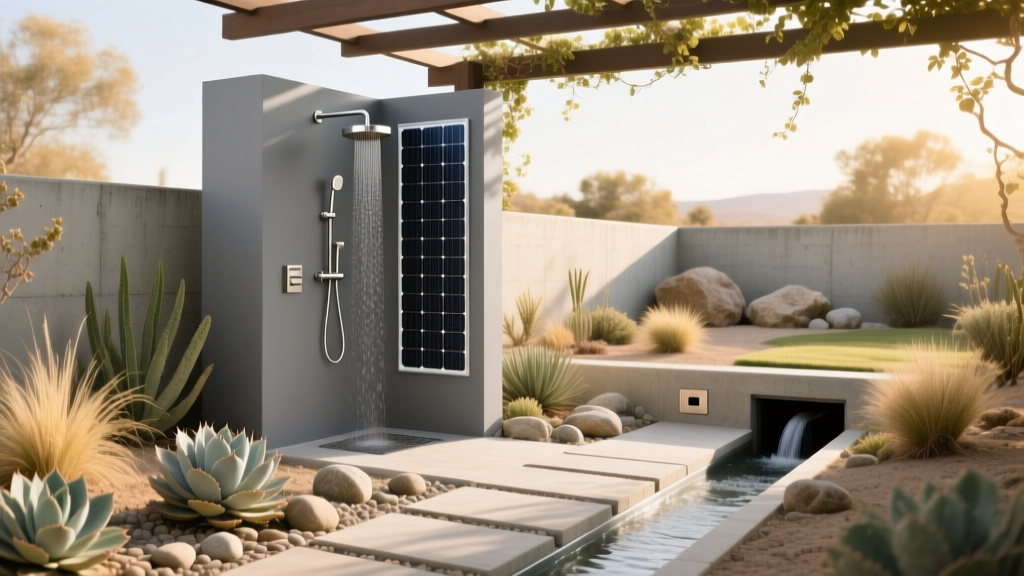
Best Solar Outdoor Showers for Xeriscape Yards in 2026
Lisa ThompsonPublished
The Convergence of Luxury and Water Conservation
As municipal water restrictions tighten across the Sun Belt and western states in 2026, homeowners are increasingly seeking ways to maintain outdoor luxuries without violating drought ordinances. The outdoor shower, once considered a water-wasting novelty, has undergone a sustainable renaissance. By combining passive solar heating enclosures with ultra-low-flow fixtures and xeriscape-integrated greywater drainage, you can enjoy a hot, open-air shower while actively irrigating your drought-tolerant landscape.
Xeriscaping is no longer just about replacing grass with gravel; it is a sophisticated approach to hydro-zoning and water reclamation. An outdoor shower built with xeriscaping principles captures 100% of its greywater, filtering it naturally through permeable substrates to feed deep-rooted, arid-adapted plants. This guide will walk you through designing, building, and planting a solar-heated outdoor shower enclosure that aligns perfectly with modern low-water landscaping standards.
Designing the Passive Solar Heating Enclosure
Traditional outdoor showers rely on electric or gas tankless heaters, which require expensive trenching, grid connections, and fossil fuels. In 2026, the gold standard for off-grid, low-water properties is the passive solar batch heater enclosure. This method uses the sun's thermal energy to pre-heat or fully heat your shower water before it reaches the fixture.
The Copper Coil Cold-Frame Method
To build a highly efficient solar enclosure, construct a south-facing, angled cold-frame box adjacent to the shower stall. Inside this box, mount a 50-foot coil of 1/2-inch soft copper tubing. Paint the copper and the interior backing of the box with high-heat matte black paint, and cover the box with double-walled polycarbonate glazing. As cold water from your mainline enters the coil, the greenhouse effect rapidly heats the water. On a typical 75°F sunny day, this passive system can yield water temperatures up to 110°F—perfect for a comfortable shower without drawing a single watt of electricity.
According to the U.S. Department of Energy, passive solar water heating systems can reduce water heating energy costs by 50% to 80%, making them an ideal complement to the energy-efficient ethos of a xeriscaped property.
Selecting Ultra-Low-Flow Fixtures for 2026
The cornerstone of any xeriscape-compatible shower is the fixture. Standard showerheads use 2.5 gallons per minute (GPM), meaning a 10-minute shower consumes 25 gallons of water. To integrate with a low-water landscape, you must minimize the volume of greywater your drainage basin needs to process.
For 2026 installations, we highly recommend the High Sierra 1.2 GPM Showerhead. Unlike aerating low-flow heads that lose heat quickly in outdoor breezes, the High Sierra uses a patented nozzle design that creates heavy, high-impact droplets. This ensures the water retains its solar-heated temperature and provides excellent rinsing power while using less than half the water of a standard fixture. The EPA WaterSense program notes that upgrading to WaterSense-labeled showerheads can save the average family thousands of gallons annually, a critical metric for homes relying on well water or strict municipal allotments.
Engineering the Xeriscape Greywater Basin
In a xeriscaped yard, you never want shower water pooling on hardscapes or evaporating uselessly. The shower floor and drainage system must act as a direct irrigation delivery network for your surrounding plants. Avoid concrete pads; instead, use a permeable base of decomposed granite (DG) or washed river rock over a French drain system.
The Mulch Basin Trench
Route the shower drain into a shallow, 12-inch-deep mulch basin trench that wraps around the shower enclosure. Fill the trench with a mix of lava rock (for aeration and bio-filtration) and arborist wood chips. As the greywater flows into the trench, the wood chips break down the mild soaps, while the lava rock prevents soil compaction. The water then percolates outward to the root zones of your xeriscape plants.
Top Drought-Tolerant Plants for Greywater Irrigation
Not all xeriscape plants tolerate the slight alkalinity or organic load of greywater. Avoid planting acid-loving species or shallow-rooted succulents directly in the splash zone. Instead, select deep-rooted, hardy species that thrive on the occasional deep soaking.
| Plant Species | Common Name | Greywater Tolerance | Placement Strategy |
|---|---|---|---|
| Muhlenbergia capillaris | Pink Muhly Grass | High | Plant 2 feet from the drain trench for a soft, filtering privacy screen. |
| Leucophyllum frutescens | Texas Ranger (Cenizo) | High | Place at the end of the greywater trench to catch runoff during heavy use. |
| Agave parryi | Parry's Agave | Moderate | Keep 3+ feet away; benefits from deep percolation but dislikes wet crowns. |
| Lantana camara | Lantana | High | Excellent for planting along the sunlit edges of the solar enclosure. |
| Dietes bicolor | Fortnight Lily | Very High | Acts as a bio-filter; plant directly adjacent to the lava rock trench. |
Step-by-Step Installation Guide
- Site Selection and Sun Mapping: Choose a location that receives at least 6 hours of unshaded, direct southern exposure for the solar enclosure, while providing natural privacy. Ensure the site is within 50 feet of your main water line to minimize trenching.
- Excavate the Greywater Trench: Dig a 12-inch deep, 18-inch wide trench radiating outward from the shower footprint toward your xeriscape planting zones. Line the bottom with 2 inches of coarse gravel.
- Build the Permeable Shower Floor: Frame a 4x4 foot base using composite decking (which resists moisture and rot better than wood in 2026's extreme heat cycles). Fill the interior footprint with 3 inches of washed pea gravel over landscape fabric.
- Construct the Solar Enclosure: Build the angled polycarbonate cold-frame box on the south side of the shower stall. Mount the 50-foot black copper coil inside, connecting the inlet to your cold water main and the outlet to the shower mixing valve.
- Plumb the Fixture and Drain: Install the High Sierra 1.2 GPM fixture. Route the PVC drain pipe from the gravel base directly into the lava-rock mulch basin trench.
- Plant and Mulch: Install your selected xeriscape plants along the trench, backfilling with native soil and topping with a 3-inch layer of arborist wood chips to filter the greywater.
2026 Cost Breakdown and Material Sourcing
Building a xeriscape-integrated solar shower is highly cost-effective compared to running gas lines or electrical conduits to the far edges of your property. Below is an estimated cost breakdown for a DIY installation using premium, weather-resistant materials.
| Component | Material Specification | Estimated Cost (2026) |
|---|---|---|
| Solar Heating Coil | 50 ft 1/2" Soft Copper Tubing + Matte Black Paint | $140 - $180 |
| Enclosure Glazing | Double-Wall Polycarbonate Panels & Cedar Framing | $250 - $350 |
| Shower Fixture | High Sierra 1.2 GPM Solid Brass Showerhead | $45 - $60 |
| Drainage & Base | Lava Rock, Pea Gravel, PVC Piping, Landscape Fabric | $120 - $150 |
| Xeriscape Plants | 5-7 Gallon specimens (Muhly Grass, Texas Ranger) | $150 - $250 |
| Total Estimated DIY Cost | $705 - $990 |
Eco-Friendly Soaps and Winterization
Because your shower water is directly irrigating your landscape, the choice of soap is paramount. Traditional shampoos and body washes contain sodium, boron, and synthetic fragrances that will alter your soil pH and burn the roots of drought-tolerant plants. Always use pH-neutral, biodegradable liquid soaps, such as Dr. Bronner's Pure-Castile Liquid Soap or specialized greywater-safe products like Oasis Biocompatible Soaps. These break down rapidly in the mulch basin without harming soil microbiomes.
Winterization: If you live in a region that experiences hard freezes, winterizing the solar enclosure is critical to prevent the copper coil from bursting. In late autumn, shut off the dedicated water valve to the shower and open the showerhead to drain the line. Use a wet-dry vac to blow out any remaining water from the copper coil and the PVC drain lines. Cover the polycarbonate solar box with a breathable canvas tarp to protect it from hail and heavy snow loads until the spring thaw.
Conclusion
Integrating a solar-heated outdoor shower into your xeriscape design is a brilliant way to elevate your outdoor living space while respecting local water mandates. By harnessing passive solar energy, utilizing ultra-low-flow fixtures, and turning your greywater into a lifeline for beautiful, drought-tolerant plants, you create a closed-loop system that is as luxurious as it is ecologically responsible. As water conservation continues to define landscaping trends in 2026, this project stands out as a premier example of sustainable home improvement.
