Home & Garden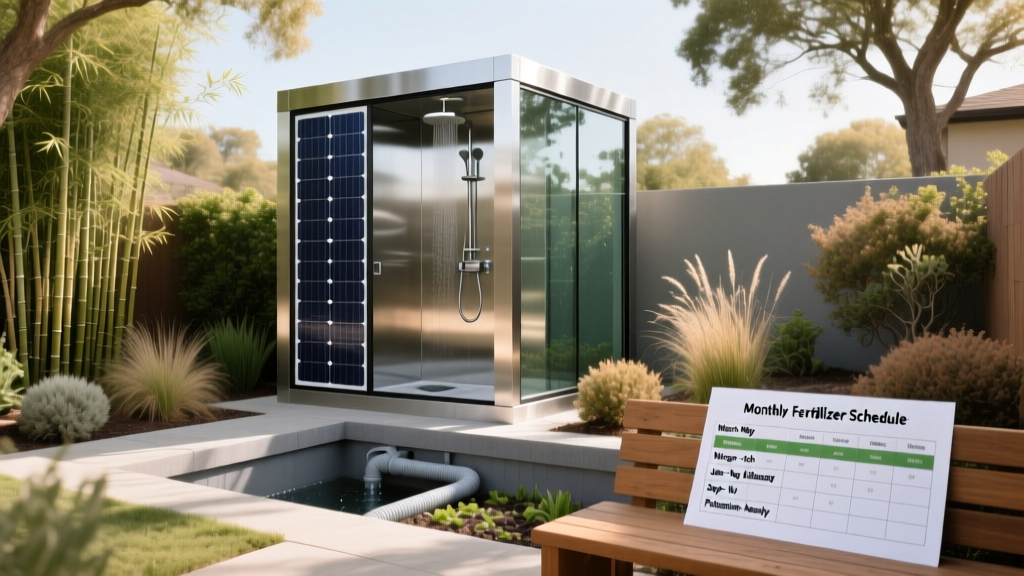
Solar Outdoor Shower Enclosures 2026: Fertilizer Guide
Lisa ThompsonPublished
The 2026 Guide to Solar-Heated Outdoor Shower Enclosures and Landscape Fertility
In 2026, the line between indoor luxury and outdoor sustainability has completely dissolved. Homeowners are no longer just installing basic outdoor plumbing; they are building fully integrated, solar-heated outdoor shower enclosures that double as living privacy walls and micro-greenhouses. However, merging a daily-use water fixture with your garden's ecosystem introduces a unique horticultural challenge. The runoff from your shower, even when using biocompatible soaps, alters the soil chemistry of the surrounding privacy hedges and living walls. To maintain a lush, vibrant enclosure, you must implement a highly specific fertilizer schedule designed to counteract greywater salinity while promoting vigorous plant growth.
This comprehensive guide bridges the gap between DIY solar plumbing installation and advanced garden soil management, ensuring your outdoor shower enclosure remains a thriving, energy-efficient sanctuary for years to come.
Step 1: Installing the 2026 Solar Thermal Heating System
Modern solar thermal technology has advanced significantly. In 2026, flexible evacuated-tube solar mats and high-efficiency flat-plate collectors are the standard for residential outdoor showers. Unlike older, bulky systems, today's solar thermal panels can be seamlessly integrated into the roof of your shower enclosure or mounted on a nearby south-facing pergola.
Plumbing the Solar Loop
For a standard outdoor shower, a 20-gallon solar storage tank paired with a 4-by-8-foot solar thermal collector provides ample hot water, even in early spring. You will need to run UV-resistant PEX tubing from the collector to a tempering valve. The tempering valve is a critical safety component in 2026 solar setups; it prevents scalding by mixing cold groundwater with the super-heated water from the solar loop. Ensure all above-ground plumbing is insulated with closed-cell elastomeric foam to prevent heat loss and protect against late-season frost snaps.
Step 2: Framing the Living Privacy Enclosure
An outdoor shower requires privacy, and the most eco-friendly way to achieve this is by building a "living enclosure." This involves constructing a sturdy cedar or composite trellis framework and training fast-growing, dense vegetation to form natural walls. Popular choices for 2026 living enclosures include clumping bamboo (Fargesia species), Star Jasmine (Trachelospermum jasminoides), and hardy kiwi vines.
When setting your structural posts, dig below the frost line and use gravel for drainage at the base to prevent wood rot. The framework should be positioned at least 18 inches away from the shower's primary drainage basin to allow the plants room to establish their root systems without being constantly waterlogged.
Step 3: Greywater Management and Soil Science
The most critical intersection between your shower installation and your garden's health is the drainage system. According to Greywater Action, routing shower runoff directly into a mulch basin or French drain is an excellent way to irrigate surrounding privacy plants. However, greywater is not pure water. It contains trace amounts of sodium, boron, and chloride from soaps, shampoos, and human skin cells.
Over time, these salts accumulate in the soil. Sodium displaces essential nutrients like calcium and magnesium, leading to soil compaction, poor drainage, and nutrient lockout. If you are growing a living enclosure around your shower, your fertilizer schedule must be specifically engineered to remediate these salts and maintain optimal soil pH.
Essential Fertilizer Types for Shower-Adjacent Plants
Standard synthetic fertilizers will only exacerbate the salt buildup in your greywater-irrigated soil. Instead, you must rely on targeted organic amendments and specific mineral fertilizers. As noted by the University of Minnesota Extension, woody and vining privacy plants require a balanced approach to soil fertility that prioritizes root health and microbial activity over sheer nitrogen spikes.
1. Gypsum (Calcium Sulfate)
Gypsum is the ultimate weapon against greywater salinity. The calcium in gypsum binds to the sodium in the soil, creating sodium sulfate, which is highly soluble and easily flushed out of the root zone during heavy rains or deep waterings. It also improves soil structure without altering the pH.
2. Acidifying Organic Fertilizers
Greywater tends to be slightly alkaline due to the presence of baking soda and calcium carbonate in municipal water supplies. To keep your privacy plants thriving, use acidifying organic fertilizers like cottonseed meal or composted pine bark. These slowly release nitrogen while gently lowering the soil pH to the 6.0-6.5 range preferred by most ornamental vines and shrubs.
3. Liquid Kelp and Humic Acids
To help your living enclosure withstand the environmental stress of fluctuating soil chemistry, apply liquid kelp and humic acid drenches. These biostimulants promote aggressive root growth and increase the plant's natural resistance to salt toxicity.
The 2026 Fertilizer & Amendment Schedule
Maintaining a living solar shower enclosure requires a disciplined, seasonal approach. Below is the recommended fertilizer and amendment schedule for the most common privacy plants used in outdoor shower enclosures.
| Plant Type | Early Spring (March) | Early Summer (June) | Autumn (October) | Greywater Amendment |
|---|---|---|---|---|
| Clumping Bamboo | 2 lbs high-nitrogen organic lawn fertilizer per 100 sq ft. | 1 lb balanced organic granular fertilizer (5-5-5). | Top dress with 2 inches of composted manure. | Apply 5 lbs Gypsum to the drainage basin bi-annually. |
| Star Jasmine | 1 lb cottonseed meal per plant to acidify soil and provide slow-release N. | Liquid kelp foliar spray to encourage blooming and vine strength. | 1 lb bone meal per plant to support root dormancy. | Flush basin with elemental sulfur if soil pH tests above 7.2. |
| Arborvitae / Cedars | 1 lb evergreen-specific fertilizer (high nitrogen, acidic) per inch of trunk diameter. | Withhold fertilizer; allow deep greywater irrigation only. | Apply 1 lb potash (0-0-60) to improve winter cold hardiness. | Mulch heavily with pine needles to buffer sodium uptake. |
Choosing Biocompatible Soaps to Protect Your Fertilizer Investment
No fertilizer schedule can overcome the damage caused by harsh chemical body washes. In 2026, the market is flooded with "greywater-safe" soaps, but not all are created equal. Avoid products containing sodium lauryl sulfate (SLS), boron (borax), and synthetic fragrances. Instead, opt for castile-based soaps or those explicitly certified for greywater irrigation. These break down rapidly in the mulch basin, allowing the soil microbiome to process the organic matter without disrupting the delicate NPK balance you have established through your fertilizer schedule.
Smart Home Integration for Fertigation
The modern outdoor living space is deeply connected to the smart home. The EPA WaterSense program highlights that integrating smart soil sensors with your irrigation and fertigation systems can reduce water waste and prevent nutrient runoff. By installing wireless soil EC (Electrical Conductivity) and pH sensors in your shower's mulch basin, you can connect the data to your home's central smart hub.
When the EC sensor detects a dangerous spike in soil salinity from heavy shower use, the smart system can automatically trigger a clean-water flush from your rain barrel or municipal line, diluting the salts. Furthermore, smart fertigation injectors can be programmed to dispense precise doses of liquid humic acid directly into the greywater line, neutralizing salts in real-time before they ever reach the root zone of your living enclosure.
Conclusion
Installing an outdoor shower with a solar-heated enclosure is a brilliant way to elevate your home's outdoor living space while reducing your carbon footprint. However, the true mark of a master gardener is recognizing that this structure is not just a piece of plumbing—it is an active participant in your landscape's ecosystem. By understanding the impact of greywater on soil chemistry and adhering to a rigorous, science-backed fertilizer schedule, you ensure that your living privacy walls remain thick, green, and vibrant. Embrace the synergy of solar technology, smart home integration, and organic soil management, and your 2026 outdoor shower will be a lush, sustainable retreat for decades to come.
