Home & Garden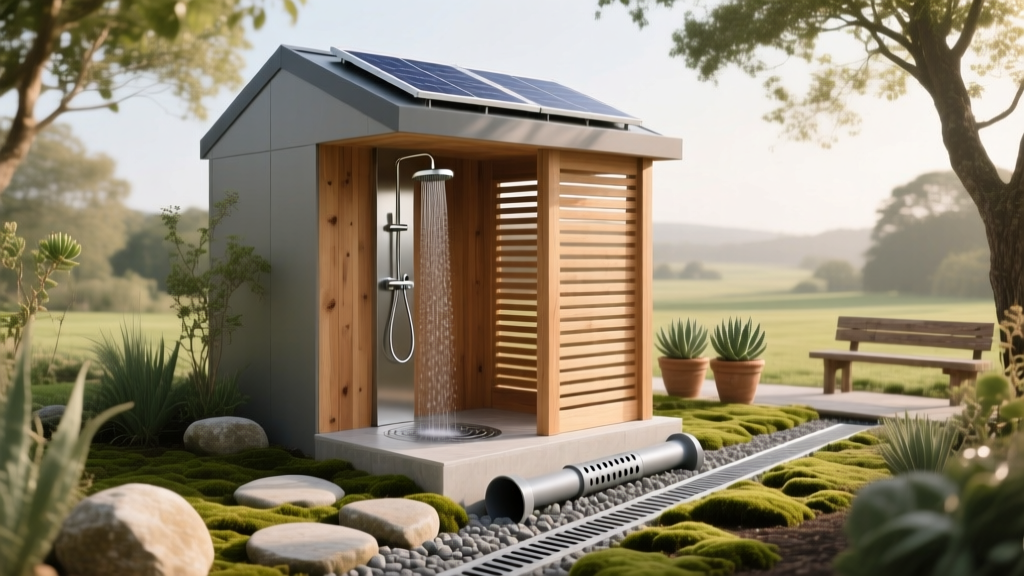
Build a Solar Outdoor Shower & French Drain 2026
Anna KowalskiPublished
The Rise of the Off-Grid Solar Shower in 2026
Outdoor living spaces have reached new heights of sustainability and luxury in 2026. Homeowners are increasingly bridging the gap between indoor comforts and the natural landscape, and one of the most sought-after upgrades this year is the solar-heated outdoor shower. Whether you are rinsing off after a session in the garden, washing the dog, or simply enjoying an open-air bathing experience, a solar-powered enclosure provides endless hot water without driving up your utility bills. However, while the solar thermal panels and cedar enclosures often steal the spotlight, the true backbone of any successful outdoor shower is its subsurface drainage system. Without a properly installed French drain, your luxurious garden oasis can quickly degrade into a muddy, mosquito-infested bog.
The Critical Role of French Drains in Outdoor Showers
When you install an outdoor shower, you are introducing a concentrated, high-volume water source to a localized area of your yard. A standard low-flow showerhead uses about 1.8 to 2.0 gallons per minute (GPM). A ten-minute shower deposits nearly 20 gallons of water directly onto the soil. In 2026, with shifting climate patterns causing more frequent and intense rainstorms in many regions, relying on natural soil percolation is a recipe for disaster. Soil saturation leads to root rot for nearby trees, foundation erosion, and stagnant puddles that breed pests.
A French drain solves this by intercepting the greywater at the shower base and channeling it away from the enclosure to a designated dispersal area, such as a dry well or a rain garden. By combining a state-of-the-art solar-heated enclosure with a meticulously graded French drain, you protect your landscape, comply with local zoning regulations, and ensure your outdoor shower remains a functional retreat for decades.
Selecting Your 2026 Solar-Heated Enclosure
The market for outdoor shower enclosures has evolved significantly. In 2026, the most efficient setups utilize passive solar thermal roofing integrated directly into the privacy screens. Modern enclosures feature dark-stained, sustainably sourced cedar or modified wood panels that absorb ambient heat, while the roof houses a low-profile, flat-plate solar thermal collector. These collectors heat a closed-loop glycol solution that transfers warmth to your shower water via a compact heat exchanger hidden in the enclosure's utility closet.
For those preferring a simpler approach, advanced black-pipe passive solar arrays can be mounted on the south-facing roof of the shower enclosure. These systems require no pumps or electricity, relying entirely on thermosiphon principles to deliver hot water. Regardless of the heating method you choose, the enclosure must be elevated slightly above the drainage bed to prevent wood rot and allow the French drain to capture the runoff seamlessly.
Tools and Materials Required
Before breaking ground, gather the necessary tools and materials for both the enclosure foundation and the French drain system. Proper preparation is the key to a weekend DIY success.
- Digging Tools: Trenching shovel, spade, and a heavy-duty steel tamper.
- Measuring & Leveling: Line level, masonry string, tape measure, and a laser level for precise slope calculations.
- Drainage Components: 4-inch perforated corrugated pipe (or modern NDS EZ-Drain gravel-free alternatives), non-woven geotextile landscape fabric, and washed drain rock (if using traditional pipe).
- Termination: A high-capacity dry well kit (e.g., Infiltrator or similar 2026-compliant models) or materials for a rain garden.
- Plumbing: PEX tubing, frost-proof sillcock, and biodegradable greywater-safe pipe fittings.
Step-by-Step French Drain Installation for Shower Greywater
Step 1: Trenching and Slope Calculation
The efficiency of a French drain relies entirely on gravity. You must dig a trench that starts directly beneath or immediately adjacent to the shower base and routes to your dry well or dispersal zone. The trench should be approximately 12 inches wide and 18 inches deep. The most critical metric is the slope: you must maintain a minimum drop of 1/8 inch per foot (a 1% grade) to ensure water flows freely without pooling inside the pipe. Use a string line and a line level to verify your grade before proceeding.
Step 2: Geotextile Fabric and Base Layer
Line the entire trench with a high-quality, non-woven geotextile fabric. Do not skip this step or substitute it with cheap woven weed barrier. Non-woven fabric allows water to pass through while preventing fine soil particles from migrating into the drain pipe and causing clogs over time. Leave at least 12 inches of excess fabric hanging over the edges of the trench so you can wrap it over the top of the drain later. If you are using traditional perforated pipe, add a 2-inch base layer of washed drain rock.
Step 3: Pipe Placement and Aggregate
Lay your 4-inch perforated pipe in the center of the trench. Ensure the perforations are facing downward; this allows water rising from the saturated soil to enter the pipe at the lowest point, keeping the pipe itself relatively clear of sediment. If you are using a modern gravel-free French drain system (which features a polystyrene aggregate wrapped in fabric), simply lay the bundled pipe directly on the soil. Cover the pipe with more washed drain rock until you are about 4 inches below the ground surface.
Step 4: Wrapping and Backfilling
Fold the excess geotextile fabric over the top of the gravel or drain bundle, creating a complete 'burrito' wrap. This encapsulation is your primary defense against root intrusion and soil collapse. Finally, backfill the remaining 4 inches with native topsoil and finish with sod or shade-tolerant ground cover that can handle occasional moisture. For the immediate shower base, install a removable cedar slat floor over a recessed catch basin that funnels directly into the French drain's starting point.
2026 Material Cost & Planning Table
Budgeting accurately is essential for any hardscaping project. Below is an estimated cost breakdown for a premium solar outdoor shower and French drain installation based on 2026 retail pricing.
| Component | Description | Estimated Cost (2026) |
|---|---|---|
| Solar Enclosure Kit | Cedar privacy screen with passive solar thermal roof | $1,650.00 |
| Plumbing & Fixtures | Frost-proof valves, PEX lines, low-flow 1.8 GPM showerhead | $280.00 |
| French Drain Pipe | NDS EZ-Drain Gravel-Free System (two 10ft sections) | $240.00 |
| Geotextile Fabric | Non-woven drainage fabric (4ft x 50ft roll) | $115.00 |
| Dry Well Kit | High-capacity subsurface greywater dispersal chamber | $310.00 |
| Total Estimated Cost | Materials Only (Excluding Labor) | $2,595.00 |
Eco-Friendly Greywater Management
When routing shower water into a French drain and dry well system, you are technically managing greywater. In 2026, environmental consciousness is paramount, and local municipalities have strict guidelines regarding what can be safely returned to the earth. According to the EPA WaterSense program, outdoor water use accounts for a significant portion of household consumption, and managing runoff properly protects local watersheds from contamination.
You must use only biodegradable, phosphate-free, and sodium-free soaps and shampoos in your outdoor shower. Harsh chemicals, antibacterial agents, and synthetic conditioners will destroy the beneficial soil microbes in your drain field and can leach into the groundwater. Furthermore, the U.S. Green Building Council recommends integrating subsurface irrigation and dry wells into landscape designs to promote natural aquifer recharge without overwhelming municipal storm drains. By terminating your French drain into a dry well surrounded by deep-rooted native plants, you create a self-sustaining rain garden that filters the greywater naturally before it reaches the water table.
Maintenance and Winterization
To ensure your solar shower and French drain survive the freezing temperatures of winter, a strict annual maintenance routine is required. Before the first hard frost, shut off the water supply at the interior valve and open the exterior frost-proof sillcock. Use a wet-dry shop vac or an air compressor to blow out any remaining water from the PEX lines and the showerhead.
For the French drain, flush the system annually using a garden hose inserted into the access cleanout. This forces out any accumulated silt or organic debris. If your solar thermal system uses a closed-loop glycol mixture, check the fluid levels and pressure gauge every spring to ensure the heat exchanger is operating at peak efficiency. With proper care, your 2026 solar outdoor shower and French drain system will provide a luxurious, eco-friendly bathing experience while keeping your garden landscape pristine and perfectly drained for years to come.
