Home & Garden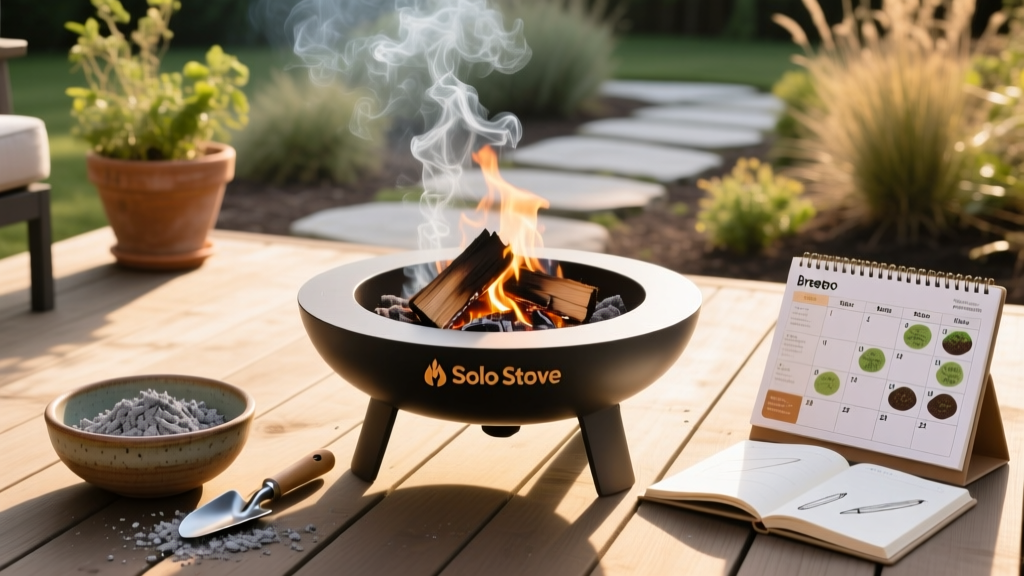
Solo Stove vs Breeo 2026: Fire Pit Ash Fertilizer Guide
Emily WatsonPublished
Bridging Outdoor Ambiance and Garden Fertility in 2026
As we navigate the 2026 outdoor living season, the modern home landscape is no longer just about aesthetics; it is about creating a closed-loop, sustainable ecosystem. For homeowners who love gathering around a smokeless fire pit and also prioritize a robust garden-to-table lifestyle, your evening fires hold a hidden secret: high-quality, mineral-rich wood ash. When comparing the two titans of the smokeless fire pit industry—the Solo Stove Yukon 2.0 and the Breeo X Series 24—most buyers focus on heat output and smoke reduction. However, from a 'Fertilizer Types & Schedules' perspective, the way these pits combust wood drastically alters the quality, yield, and usability of the ash left behind for your garden beds.
Wood ash is a powerhouse soil amendment. It is rich in calcium, potassium, magnesium, and trace micronutrients. But not all ash is created equal. The secondary combustion technology that defines smokeless fire pits burns wood at significantly higher temperatures than traditional masonry pits. This complete combustion results in a finer, more concentrated ash that is highly alkaline and immediately bioavailable to your plants. In this comprehensive guide, we will compare the Solo Stove and Breeo systems specifically through the lens of ash production, and provide a detailed 2026 fertilizer schedule to integrate this valuable byproduct into your garden safely.
The Science of Wood Ash in Your 2026 Fertilizer Schedule
Before diving into the hardware, it is vital to understand what you are adding to your soil. Wood ash does not contain nitrogen, but it typically boasts an N-P-K equivalent of roughly 0-1-3, alongside a massive dose of calcium carbonate. According to research highlighted by Penn State Extension, wood ash acts similarly to agricultural lime, raising soil pH and reducing acidity. Because the particles produced by high-efficiency smokeless fire pits are micro-fine, they break down and alter soil chemistry much faster than traditional crushed limestone.
In 2026, with soil health and regenerative gardening at the forefront of landscaping trends, utilizing fire pit ash is a brilliant way to buffer acidic soils, deter soft-bodied pests like slugs, and provide the calcium necessary to prevent blossom-end rot in tomatoes and peppers. However, because smokeless pits burn so efficiently, the volume of ash is lower, meaning the mineral concentration per cup is much higher. Precision application is key.
Solo Stove vs. Breeo: Combustion Tech and Ash Quality
To understand the fertilizer you are harvesting, you must understand the burn. Both brands utilize double-wall construction and precision airflow to achieve near-smokeless combustion, but their engineering approaches yield slightly different ash profiles.
Solo Stove Yukon 2.0: The 360-Degree Signature Airflow
The Solo Stove relies on a continuous ring of base vents that pull in cool air, heat it between the double walls, and inject it through top vent holes. This creates a massive secondary burn. The result is an incredibly fine, powdery white ash. Because the burn is so complete, you are left with almost zero unburnt carbon (charcoal chunks). This pure, white ash is highly alkaline and dissolves rapidly in wet soil, making it an excellent fast-acting pH buffer for your spring fertilizer schedule.
Breeo X Series 24: The X-Lumen Airflow System
Breeo utilizes an X-shaped airflow channel at the base, combined with strategically placed top vents. The Breeo tends to burn slightly hotter and is designed to accommodate larger, denser logs. The ash produced in a Breeo often retains a bit more structural integrity and may contain trace amounts of biochar if the fire is choked down prematurely. This makes Breeo ash slightly better for long-term soil structure improvement and compost integration, as the micro-chars help with moisture retention and cation exchange capacity (CEC) in sandy soils.
2026 Hardware Comparison: Ash Yield and Harvesting
When planning your fertilizer schedule, the physical logistics of harvesting the ash matter just as much as the chemistry. Here is how the 2026 models stack up for the eco-conscious gardener:
| Feature | Solo Stove Yukon 2.0 | Breeo X Series 24 |
|---|---|---|
| Wood Capacity | Up to 16-inch logs | Up to 20-inch logs |
| Ash Texture | Micro-fine, talc-like powder | Fine with occasional micro-char |
| Ash Yield per Cord | Lower volume, high alkalinity | Moderate volume, balanced minerals |
| Harvesting Method | Manual scoop/vacuum required | Optional pull-out ash pan available |
| Best Garden Use | Fast-acting pH correction | Compost buffering & soil structure |
For the serious gardener, Breeo's optional ash pan is a massive advantage. Pulling a drawer of cooled ash is significantly cleaner than reaching into the Solo Stove with a hand trowel or ash vacuum, reducing the risk of contaminating your harvest with unburnt debris.
Your 2026 Fire Pit Ash Fertilizer Schedule
Integrating wood ash into your garden requires timing. Because it is highly soluble, applying it at the wrong time can lead to nutrient runoff or pH spikes that lock out essential micronutrients like iron and manganese. Follow this seasonal schedule to maximize your fire pit's byproduct.
Early Spring: The Pre-Planting pH Buffer
Before you plant your brassicas (cabbage, broccoli, kale) or alliums (garlic, onions), test your soil pH. If your soil is below 6.5, lightly dust your Solo Stove or Breeo ash over the beds at a rate of no more than 15 to 20 pounds per 1,000 square feet. Water it in immediately. The fast-acting calcium will prepare the soil for heavy-feeding spring crops.
Summer: Compost Pile Balancing
During the summer, your compost pile is likely filled with acidic green materials and nitrogen-rich kitchen scraps. Keep a dedicated metal bucket next to your Breeo or Solo Stove. Every time you clean out the pit, sprinkle a thin layer of ash into your compost bin. This neutralizes odors, deters flies, and balances the pH, ensuring your composting microbes remain highly active.
Autumn: Root Crop and Lawn Prep
In the fall, wood ash is phenomenal for preparing beds for next year's root vegetables. Carrots and parsnips thrive in soils with ample potassium and calcium. Additionally, a very light dusting of fine Solo Stove ash over your lawn in late autumn can help buffer the acidic effects of decomposing oak leaves and promote stronger grass root development before winter dormancy.
Crucial Safety Rules for Ash Harvesting
The quality of your fertilizer is entirely dependent on the quality of your firewood. The EPA BurnWise program strictly warns against burning treated, painted, or glued wood. Pressure-treated lumber contains copper, arsenic, and other heavy metals that will survive the combustion process and permanently toxify your garden soil. Furthermore, never use ash from fires that included plastic, trash, or manufactured logs containing chemical binders.
Always store your harvested ash in a sealed, dry metal container. If wood ash gets wet before you apply it to the garden, the potassium and calcium will leach out into the bottom of the bucket, leaving you with a useless, caustic sludge. Keep your ash dry until the moment it hits the soil.
Plants to Avoid When Applying Wood Ash
While wood ash is a miracle amendment for many crops, it is detrimental to acid-loving plants. Never apply fire pit ash to your blueberry patches, azaleas, rhododendrons, or hydrangeas (if you want them to remain blue). The rapid pH spike will induce severe iron chlorosis, causing the leaves to yellow and the plants to stunt. Keep your Solo Stove and Breeo ash strictly confined to the vegetable garden, the lawn, and ornamental beds that prefer neutral to slightly alkaline conditions.
Final Verdict for the Eco-Conscious Gardener
Both the Solo Stove and Breeo are exceptional pieces of 2026 outdoor engineering, but they serve slightly different gardening workflows. If your primary goal is fast-acting, micro-fine ash for immediate spring pH correction, and you don't mind the manual labor of scooping, the Solo Stove Yukon 2.0 is a fantastic choice. However, if you view your fire pit as a steady, seasonal fertilizer factory and prefer the convenience of an ash drawer, along with the added soil-structure benefits of trace biochar, the Breeo X Series 24 is the ultimate tool for the garden-to-table homesteader. By treating your fire pit not just as a source of warmth, but as a vital component of your 2026 fertilizer schedule, you close the loop on your landscape's natural cycles.
