Home & Garden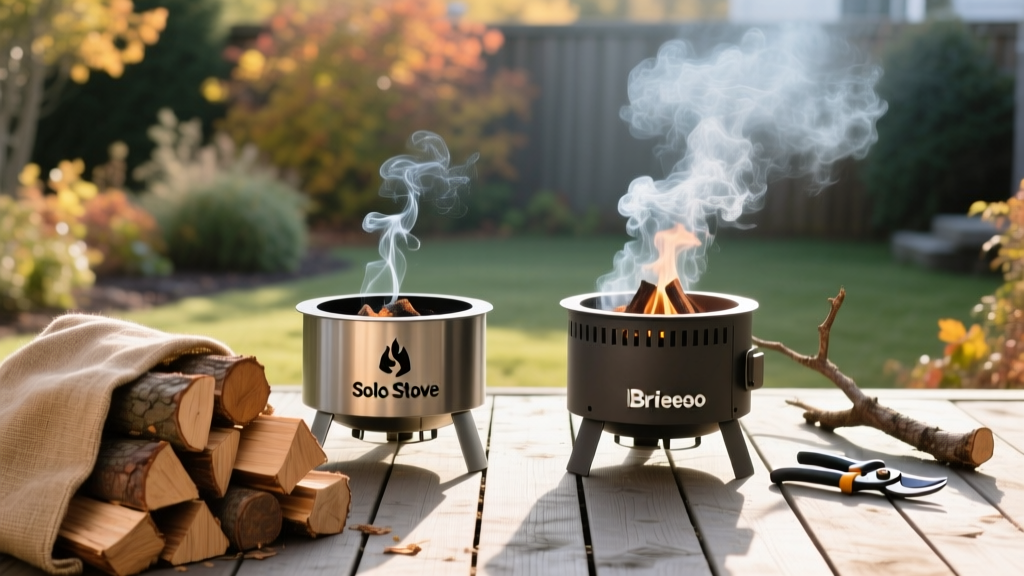
Solo Stove vs Breeo 2026: Smokeless Fire Pits For Pruning Wood
Lisa ThompsonPublished
The Intersection of Arbor Care and Outdoor Living
As we navigate the 2026 landscaping season, the modern homeowner's backyard is increasingly viewed as a closed-loop ecosystem. Rather than paying for yard waste removal or running noisy wood chippers, many gardening enthusiasts are turning to high-end smokeless fire pits to dispose of pruning debris. However, not all fire pits are created equal, and not all pruning debris burns the same way. The two undisputed market leaders—Solo Stove and Breeo—utilize different airflow dynamics and firebox geometries that make them uniquely suited to different types of wood.
Choosing between a Solo Stove and a Breeo shouldn't just be about aesthetic preference or brand loyalty; it should be directly tied to your specific pruning methods, the timing of your tree care, and the physical dimensions of the wood you harvest. In this comprehensive guide, we will explore how to align your arboriculture practices with the right smokeless fire technology for 2026, ensuring a virtually smoke-free, highly efficient burn every time you tidy up your canopy.
Understanding Smokeless Technology in 2026
Before matching your pruning debris to a specific brand, it is vital to understand how modern smokeless fire pits operate. Both Solo Stove and Breeo rely on double-wall, secondary combustion technology. Air is drawn in through bottom vents, heated as it travels up the space between the double walls, and then reintroduced into the fire chamber through top holes. This superheated oxygen ignites the smoke particles before they can escape into your yard.
However, the rate of airflow and the size of the firebox differ drastically between the two brands. Solo Stove models (like the 2026 Yukon 2.0 and Bonfire 2.0) feature aggressive, fast-moving airflow that excels at rapidly incinerating smaller, twiggy materials. Breeo models (like the X Series 19 and 24) feature a wider, deeper firebox with a slightly more measured draft, designed to sustain long, hot burns over larger, denser logs. Understanding this distinction is the key to matching your pit to your pruning yield.
Pruning Timing: Matching the Season to the Pit
The timing of your pruning dictates the size, density, and moisture content of the wood you will harvest. According to the University of Minnesota Extension, timing your pruning to the tree's dormancy cycle not only protects plant health but directly influences the volume and thickness of the wood you will process for your fire pit.
Dormant Season Pruning (Late Winter / Early Spring)
Structural pruning, crown reduction, and the removal of major diseased limbs are best performed during the late winter dormancy period. This method yields large, thick, dense hardwood branches (often 3 to 6 inches in diameter). Because this wood is substantial, it requires a fire pit that can handle larger log capacities and sustain a deep coal bed.
The Verdict: This is Breeo territory. The Breeo X Series 24 can easily accommodate logs up to 17 inches in length and 5 inches in diameter. Its heavy-duty Corten steel or stainless steel construction retains heat beautifully, allowing thick, dormant-season hardwood to break down completely into a fine, manageable ash over several hours.
Summer Pruning (Late Spring / Summer)
Summer pruning is primarily focused on canopy management: removing water sprouts, suckers, deadwooding, and performing light crown thinning to improve air circulation. This method generates a high volume of thin, twiggy debris (typically 0.5 to 2 inches in diameter). Thin wood burns incredibly fast and can easily smother a fire if packed too tightly, requiring a pit with rapid, aggressive airflow to maintain combustion.
The Verdict: This is where the Solo Stove shines. The Solo Stove Yukon 2.0 is engineered to pull air through smaller, fast-burning twigs with incredible efficiency. The aggressive secondary burn holes will vaporize the smoke from thin, sap-heavy summer sprouts almost instantly, turning a massive pile of brush into a small pile of ash in a fraction of the time it would take in a traditional fire ring.
Pruning Methods: Sizing Wood for the Firebox
How you make the cut matters just as much as when you make it. The Arbor Day Foundation emphasizes proper cutting techniques like the three-part drop-crotch cut to prevent bark tearing and promote rapid tree healing. But from a fire pit perspective, the method you use to process the harvested limb determines how well it will fit in your smokeless pit.
- Drop-Crotching and Large Limb Removal: When removing entire lateral branches, you are left with long, heavy limbs. Processing these requires a chainsaw or heavy bow saw. If you primarily perform this type of heavy structural pruning, Breeo's wider rim and optional Outpost cooking grate make it the superior choice. You can lay long, split logs across the pit without them falling into the ash bed and extinguishing the primary airflow vents.
- Heading Cuts and Hedge Trimming: Heading cuts stimulate dense, bushy regrowth. When you eventually thin out this dense growth, you are left with hundreds of small, uniform sticks. Solo Stove's cylindrical, slightly narrower design acts almost like a specialized incinerator for this exact type of uniform, stick-like debris. You can stand thin pruning sticks vertically in a Solo Stove, creating a "teepee" effect that maximizes the central updraft.
2026 Head-to-Head Comparison: Solo Stove vs. Breeo
To help you decide which fire pit aligns with your specific landscaping habits, we have compiled a direct comparison of the flagship large-format models from both brands for the 2026 season.
| Feature | Solo Stove Yukon 2.0 (2026 Model) | Breeo X Series 24 (2026 Model) |
|---|---|---|
| Approximate Price | $599.99 | $699.00 |
| Weight | 38 lbs (Highly Portable) | 92 lbs (Semi-Permanent) |
| Best Pruning Debris | Thin twigs, water sprouts, summer brush | Thick structural limbs, split hardwood logs |
| Airflow Dynamics | Aggressive, fast-burn secondary combustion | Measured, long-sustain secondary combustion |
| Ash Management | Removable Ash Pan (sold separately/bundled) | Built-in ash shovel and deep ash basin |
| Cooking Integration | Hub Grill Grate (Great for quick sears) | Outpost & Sear Plate (Great for slow, heavy cooking) |
The Smokeless Caveat: Moisture Content and Seasoning
There is a common misconception among new fire pit owners that you can take a freshly pruned, green branch directly from the tree and drop it into a smokeless fire pit for a magical, smoke-free experience. This is false. Secondary combustion requires high heat, and wet wood absorbs heat to boil off internal water, lowering the firebox temperature and generating massive amounts of smoke.
The EPA's BurnWise program emphasizes that burning wet wood creates excessive particulate matter, bypassing even the most advanced secondary combustion systems. For your Solo Stove or Breeo to perform as advertised, your pruning debris must be seasoned to a moisture content below 20%.
How to Process and Season Pruning Debris Quickly
If you want to burn your yard waste in a smokeless pit, you must treat it like premium firewood. Follow these steps to prepare your pruning harvest:
- Split Immediately: Bark is designed to keep moisture inside a tree and keep insects out. It is highly waterproof. You must split any pruning debris larger than 2 inches in diameter to expose the inner wood to the air. Solo Stove users should split wood into 1-2 inch kindling sticks; Breeo users can leave splits slightly larger (3-4 inches).
- Maximize Surface Area: Stack the split pruning wood in a crisscross pattern (often called a Holzhausen or crib stack) in a sunny, windy area of your yard. This allows air to circulate through the center of the pile, wicking away moisture much faster than a traditional linear stack.
- Use a Solar Kiln for Summer Debris: If you are pruning in the spring and want to burn the debris by early summer, build a simple DIY solar kiln. Drape clear, heavy-duty greenhouse plastic over your stacked pruning wood, leaving the bottom open for airflow. The trapped solar heat will bake the moisture out of thin summer sprouts in a matter of weeks, making them perfectly seasoned for your Solo Stove.
- Test with a Moisture Meter: Before loading your Breeo or Solo Stove, test a freshly split piece of wood with a digital moisture meter. If it reads above 20%, let it continue to season. Burning 15% moisture pruning wood in a 2026 Breeo X Series will result in a mesmerizing, rolling secondary burn that produces almost zero scent or smoke.
Managing the Ash Yield
Different pruning methods yield different types of ash. Softwoods and thin summer twigs (burned rapidly in a Solo Stove) tend to produce a light, fluffy ash that can easily catch the wind and blow onto your patio if not managed. Hardwoods from winter structural pruning (burned slowly in a Breeo) produce a denser, heavier ash that stays put.
In 2026, both companies have addressed ash management, but in different ways. Breeo's X Series features a deep basin and comes with a specialized ash shovel, allowing you to leave a 1-inch bed of ash in the bottom of the pit to insulate the steel and protect it from extreme heat warping. Solo Stove's 2.0 line offers a slide-out Ash Pan that catches debris below the base plate, making it incredibly easy to dump the fine, fluffy ash from thin twigs directly into your compost bin or garden beds (wood ash is an excellent source of potassium and calcium for acidic soils).
Conclusion: Closing the Loop in Your Backyard
Ultimately, the choice between a Solo Stove and a Breeo in 2026 comes down to the specific rhythm of your garden maintenance. If your landscaping strategy involves heavy, dormant-season structural pruning that yields thick, dense hardwood logs meant for long, cooking-friendly evening burns, the Breeo X Series is your ultimate companion. Its robust build and wide firebox are tailor-made for the serious arborist who wants to turn heavy yard waste into a premium outdoor living experience.
Conversely, if your garden care revolves around constant summer maintenance, canopy thinning, and the removal of water sprouts and brush, the Solo Stove Yukon 2.0 is the superior incinerator. Its aggressive airflow will turn a mountain of twiggy debris into a manageable scoop of nutrient-rich ash in record time. By aligning your pruning timing and methods with the engineering strengths of your chosen fire pit, you can enjoy a pristine, smoke-free backyard while responsibly managing your landscape's natural lifecycle.
