Home & Garden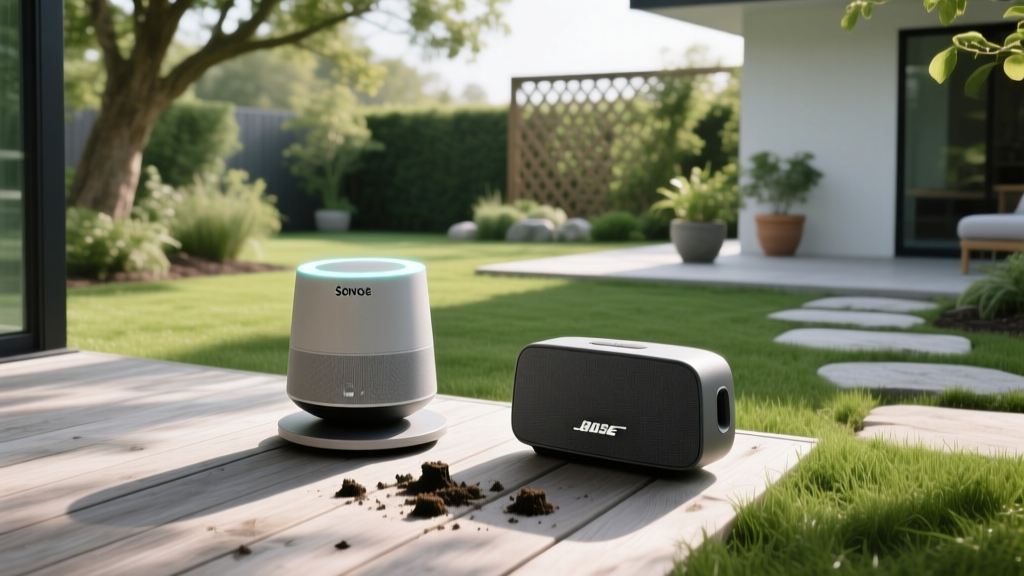
Sonos Move vs Bose Flex: 2026 Aeration Setup
Robert HayesPublished
The Intersection of Premium Audio and Turf Science
As we move through 2026, the modern outdoor living space is defined by a seamless blend of high-end technology and meticulous landscape management. Homeowners are no longer just placing a portable radio on a patio table; they are integrating audiophile-grade soundscapes into their garden ecosystems. However, a critical challenge arises when heavy foot traffic, charging docks, and speaker mounts collide with your lawn's most vital maintenance schedule: core aeration.
Today, we are comparing two titans of outdoor audio—the 2026 Sonos Move and the Bose SoundLink Flex—through the unique lens of a lawn care enthusiast. We will explore how to position, mount, and utilize these speakers without compromising the soil structure, root zones, and the delicate recovery process of a freshly aerated lawn.
Understanding Core Aeration and Outdoor Gear
Core aeration is the mechanical process of removing small plugs of thatch and soil (typically 2 to 3 inches deep) from the lawn to alleviate soil compaction. According to turfgrass experts at the Purdue University Turfgrass Science Program, this process is essential for enhancing water uptake, improving fertilizer absorption, and reducing runoff.
When you introduce outdoor audio equipment into this environment, you risk undoing the benefits of aeration. Dragging heavy speaker stands across a lawn, placing hard plastic charging docks directly on the turf, or running temporary power cables can re-compact the soil and sever the delicate new roots pushing through the aeration holes. Therefore, your speaker setup must be intentional, lightweight, and respectful of the turf's recovery cycle.
Head-to-Head: 2026 Sonos Move vs. Bose SoundLink Flex
Both the Sonos Move (featuring the latest 2026 battery optimization and Auto-Trueplay updates) and the Bose SoundLink Flex remain top contenders for outdoor audio. However, their physical footprints and acoustic profiles interact very differently with an open, aerated landscape.
| Feature | Sonos Move (2026 Profile) | Bose SoundLink Flex |
|---|---|---|
| Weight & Footprint | 6.6 lbs (Heavy, requires hardscape placement) | 1.3 lbs (Lightweight, turf-friendly) |
| IP Rating (Dust/Water) | IP56 (Splash and dust resistant) | IP67 (Fully submersible, mud/dust proof) |
| Acoustic Profile | Omnidirectional, downward-firing woofer | Directional, PositionIQ adaptive EQ |
| Lawn Impact Risk | High (Charging dock compacts soil) | Low (Can hang or rest lightly on grass) |
| Best Placement | Patios, retaining walls, elevated decks | Ground-level, garden stakes, tree branches |
Acoustic Propagation on an Aerated Lawn
An often-overlooked aspect of outdoor audio is how the ground itself affects sound. A lawn suffering from severe compaction and a thick layer of dead thatch acts as an acoustic dampener, absorbing high frequencies and muddying the bass response.
Following a proper core aeration and top-dressing regimen, the soil structure opens up, and the thatch layer is broken down by microbial activity. This creates a firmer, more reflective surface for sound waves. The Bose SoundLink Flex utilizes PositionIQ technology to adapt its EQ based on its orientation. When placed upright on the firm ground of an aerated lawn, the Flex's directional sound bounces cleanly off the turf, delivering crisp vocals and punchy mid-bass across the yard without the muffled effect caused by thick, spongy thatch.
Conversely, the Sonos Move relies on an omnidirectional array. Placing it directly on the grass can muffle its downward-firing woofer. It requires elevation to allow its 360-degree sound to propagate freely over the garden beds and seating areas.
The Core Aeration-Friendly Setup Guide
To integrate these speakers into your 2026 outdoor living space without damaging your lawn's root zone, follow these specialized setup protocols:
1. Hardscape Anchoring for the Sonos Move
Because the Sonos Move requires its proprietary charging ring to maintain its battery health, you must never leave the charging dock on the grass. The rigid plastic base will smother the turf, block sunlight, and severely compact the soil beneath it, negating any recent aeration work.
- Solution: Install a weatherproof outdoor outlet on a nearby retaining wall, pergola post, or patio edge. Mount the Sonos charging ring to this hardscape using masonry or wood screws. This keeps the heavy speaker elevated and entirely off your aerated turf.
2. Low-Impact Ground Placement for the Bose Flex
The Bose SoundLink Flex is rugged enough to sit directly in the garden, but you must be mindful of how you anchor it. Many DIYers use narrow metal spikes or tent pegs to secure outdoor gear, but driving narrow spikes into the ground can sever the lateral rhizomes of warm-season grasses like Bermuda or Zoysia.
- Solution: Utilize the Flex's integrated silicone loop. Instead of staking it into the soil, hang it from the lower branches of ornamental trees, or use wide-base, weighted sandbag mounts if you need it at ground level near the patio. If you must use a ground stake for a garden audio mount, choose a "turf-friendly" helical anchor that twists into the soil like a screw, minimizing root tearing and soil displacement.
3. Timing Your Installation Around Aeration Season
If you are running low-voltage landscape wiring to power permanent outdoor audio docks or lighting, do not trench your lawn immediately after core aeration. The aeration holes need 2 to 4 weeks to fill in with new root growth and top-dressing sand. Trenching too soon will collapse the aeration holes and create severe localized compaction. Always schedule your hardscape and wiring installations for early summer, well before the critical fall aeration window for cool-season grasses.
Smart Home Integration and Irrigation Sync
In 2026, smart home ecosystems are more interconnected than ever. Both Sonos and Bose offer robust app integrations that can be linked to your smart irrigation controllers. Why does this matter for audio? Because watering schedules dictate when your lawn is too soft for foot traffic or heavy speaker placement.
By linking your audio routines to your irrigation system via platforms like Apple HomeKit or SmartThings, you can set your outdoor speakers to automatically power down or switch to "weather-shelter" alerts when the sprinklers activate. Furthermore, watering deeply and infrequently—a best practice recommended by the University of Minnesota Extension to encourage deep root growth—means the lawn will be soft and vulnerable to compaction only a few times a week. Programming your outdoor entertainment zones to align with the lawn's dry, firm periods ensures you get the best acoustic performance while protecting the soil structure.
Final Verdict for the Lawn Enthusiast
Choosing between the Sonos Move and the Bose SoundLink Flex in 2026 ultimately depends on your landscape architecture and your dedication to turf health. If your outdoor living space features expansive patios, raised decks, and pergolas, the Sonos Move provides superior, room-filling omnidirectional sound while safely remaining on hardscapes, far away from your delicate aerated soil.
However, if your entertainment style involves spreading out blankets on the lawn, hosting garden parties among the flower beds, and moving the audio source closer to the action, the Bose SoundLink Flex is the undisputed champion. Its IP67 rating shrugs off mud and top-dressing sand, its lightweight profile prevents soil compaction, and its adaptive EQ ensures pristine audio across the open, healthy expanse of a freshly aerated yard.
