Home & Garden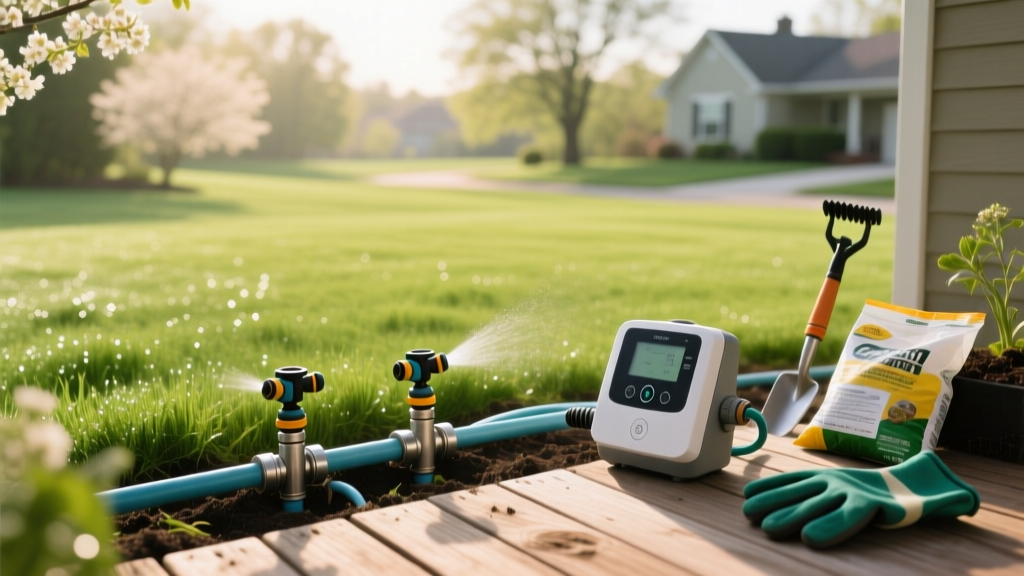
The Ultimate Spring Lawn Care & Smart Irrigation Checklist
Emily WatsonPublished
As the frost thaws and the days grow longer, homeowners face the annual challenge of reviving their lawns after a long winter. However, modern lawn care is no longer just about spreading seed and guessing when to turn on the sprinklers. By bridging traditional horticultural practices with smart home technology, you can achieve a thicker, greener lawn while significantly reducing water waste and utility costs. This comprehensive spring lawn care and smart irrigation checklist will guide you through every step of the season, ensuring your outdoor space is both beautiful and highly efficient.
Early Spring: Soil Prep & Smart Controller Setup
Before you apply a single grain of fertilizer or drop a seed, you must understand the foundation of your lawn: the soil. Early spring (typically March to early April, depending on your hardiness zone) is the ideal time for assessment and preparation.
Soil Testing and Amendment
A professional soil test takes the guesswork out of lawn care. For about $15 to $30, you can send a soil sample to a local university extension office or a private lab like Logan Labs. The results will reveal your soil pH and exact nutrient deficiencies. Most turfgrasses thrive in a pH range of 6.0 to 7.0. If your soil is too acidic, you will need to apply pelletized lime; if it is too alkaline, elemental sulfur is required. Furthermore, smart home integration now allows you to monitor soil conditions in real-time using Bluetooth or Wi-Fi-enabled soil moisture and nutrient sensors placed directly in your garden beds and turf zones.
Upgrading to a Smart Irrigation Controller
If you are still using a traditional timer-based sprinkler controller, early spring is the perfect time to upgrade. According to the EPA WaterSense smart irrigation controllers program, weather-based smart controllers use local evapotranspiration (ET) data to automatically adjust watering schedules based on real-time weather conditions. Devices like the Rachio 3 or Orbit B-hyve connect to your home Wi-Fi and integrate seamlessly with platforms like Amazon Alexa, Google Home, and Apple HomeKit. They feature automatic rain skips, freeze skips, and wind skips, ensuring you never water your lawn during a downpour or when high winds will simply blow the spray away.
Mid-Spring: Fertilizing, Seeding, & Weed Control
As soil temperatures consistently reach the 55°F mark, your grass will begin its most aggressive growth phase of the year. This is the window for mid-spring maintenance, usually falling between mid-April and May.
Pre-Emergent and Post-Emergent Weed Control
Timing is everything when it comes to weed control. Pre-emergent herbicides (such as those containing Prodiamine or Dithiopyr) must be applied before crabgrass seeds germinate. A good natural indicator is when forsythia bushes begin to drop their yellow blooms. If you miss this window and weeds begin to sprout, you will need to switch to a targeted post-emergent broadleaf herbicide, spot-treating only the affected areas to minimize chemical introduction to your landscape.
Strategic Fertilization
Based on your early spring soil test, apply a high-quality, slow-release nitrogen fertilizer. Slow-release formulas, like Milorganite or sulfur-coated urea, feed the grass steadily over 8 to 10 weeks, preventing the rapid, weak growth spikes associated with cheap, quick-release synthetic fertilizers. This steady feeding promotes deep root development, which is crucial for surviving the upcoming summer heat.
Late Spring: Mowing Schedules & Irrigation Calibration
By late May and early June, your lawn should be in full growth mode. Your focus now shifts to maintenance, mowing strategies, and fine-tuning your smart irrigation system for the summer heat.
The 1/3 Mowing Rule
Never cut more than one-third of the grass blade in a single mowing session. For cool-season grasses like Tall Fescue or Kentucky Bluegrass, set your mower deck to 3 or 4 inches. Taller grass shades the soil, reducing water evaporation and naturally choking out weed seeds. For warm-season grasses like Bermuda or Zoysia, a height of 1 to 2 inches is generally preferred. Consider investing in a robotic lawnmower, which can be scheduled via a smartphone app to trim your lawn daily in micro-increments, effectively mulching the clippings and returning valuable nitrogen to the soil.
Calibrating Smart Sprinkler Zones
Even the smartest controller is only as good as the hardware it manages. Perform a 'catch cup test' by placing identical flat-bottomed containers in each sprinkler zone. Run the zone for 15 minutes, measure the water in each cup, and calculate the precipitation rate in inches per hour. Input these custom nozzle precipitation rates into your smart controller app. This ensures the software knows exactly how long to run each specific zone to deliver the precise amount of water your turf requires.
The Smart Irrigation Schedule: Watering by the Numbers
Lawns generally require 1 to 1.5 inches of water per week during the active growing season, including rainfall. The EPA notes that outdoor water use accounts for nearly 30% of total household water use, making efficient irrigation a vital component of home resource management.
The Cycle and Soak Method
If you have heavy clay soil or sloped terrain, running your sprinklers for 30 straight minutes will likely result in massive runoff. Instead, use your smart controller to program a 'Cycle and Soak' schedule. This involves breaking the total watering time into two or three shorter intervals. For example, instead of watering for 20 minutes at once, program the zone to run for 7 minutes, wait 30 minutes for the water to penetrate the soil profile, and then run for another 7 minutes. This promotes deeper root growth and eliminates wasteful runoff.
Integrating Landscaping with Home Energy Efficiency
Proper lawn care and landscaping extend beyond curb appeal; they directly impact your home's energy consumption. According to the U.S. Department of Energy's guide on energy-efficient landscaping, strategically placed shade trees and well-maintained groundcover can significantly reduce the urban heat island effect and lower indoor cooling costs during the summer. A dense, healthy lawn acts as a natural cooling system, with the front lawns of eight average homes having the cooling effect of about 70 tons of air conditioning.
Spring Lawn Care & Smart Home Checklist
Use the table below to track your progress, budget, and smart home integrations throughout the spring season.
| Task | Target Timing | Smart Home Integration | Estimated Cost |
|---|---|---|---|
| Soil Testing | Early March | Use Wi-Fi soil moisture sensors to track real-time data | $15 - $30 |
| Controller Upgrade | Mid-March | Install EPA WaterSense certified smart controller (e.g., Rachio) | $150 - $250 |
| Pre-Emergent Herbicide | Early April (Forsythia bloom) | Set app reminders based on local soil temperature APIs | $40 - $60 |
| Slow-Release Fertilizer | Late April - May | Sync application dates with smart irrigation rain-skip features | $50 - $80 |
| Irrigation Calibration | Late May | Input catch-cup precipitation rates into smart app zones | $0 (DIY) |
| Mowing Schedule | Weekly (May - June) | Schedule robotic mower via app; maintain 3-4 inch height | $800+ (Robotic) or $0 (Manual) |
Conclusion
A thriving, resilient lawn is the result of intentional scheduling and proactive maintenance. By combining the biological needs of your turfgrass with the precision of smart home irrigation technology, you eliminate the guesswork that leads to brown patches, weed infestations, and inflated water bills. Follow this spring checklist to establish a robust root system early in the season, and your lawn will be fully equipped to handle the stress of the summer months while serving as a beautiful, energy-efficient extension of your home.
