Lawn Care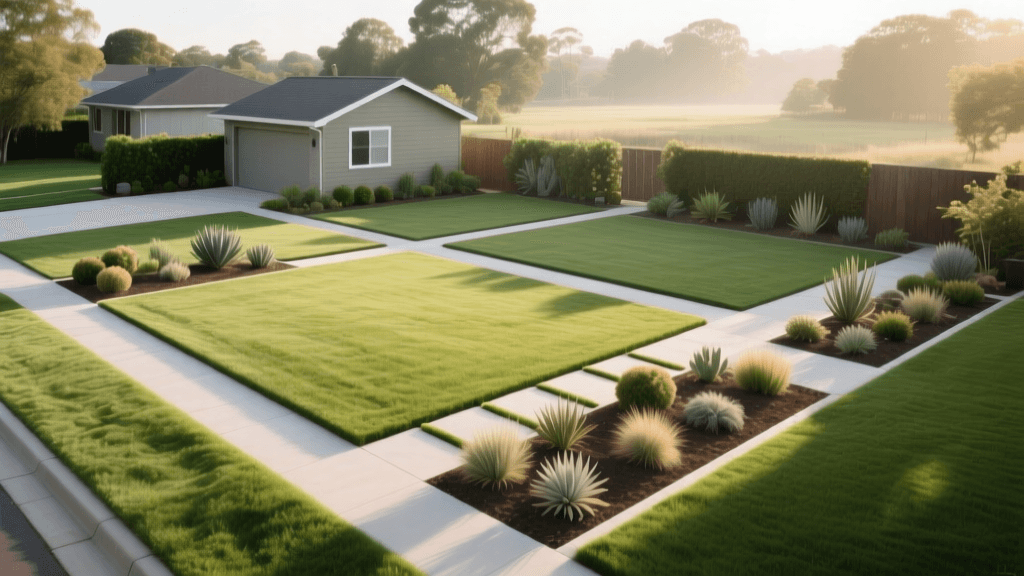
Strategic Lawn Zoning: Planning Turf Areas for Easy Care
When homeowners think about lawn care, they often focus on the weekend chores: mowing, edging, fertilizing, and watering. However, the secret to a truly manageable and stunning landscape begins long before you purchase your first bag of seed or start your mower. It starts with strategic lawn zoning and thoughtful landscape planning. By designing your lawn with maintenance in mind, you can drastically reduce the hours spent on chores while improving the overall health and sustainability of your turf.
Whether you are installing a new lawn from scratch or renovating an existing yard, applying design principles to your turf planning will save you time, water, and money. In this guide, we will explore how to plan functional lawn zones, design borders for mowing efficiency, and match the right grass to the right environment.
The Core Principles of Functional Lawn Zoning
Strategic lawn zoning involves dividing your yard into distinct areas based on their intended use, sunlight exposure, and water requirements. Instead of treating your entire property as a single, uniform blanket of grass, zoning allows you to apply targeted lawn care routines where they are needed most. According to the University of Minnesota Extension, thoughtful landscape planning reduces long-term maintenance and prevents the common frustration of trying to grow turf in areas where it simply does not belong.
Consider dividing your yard into three primary zones:
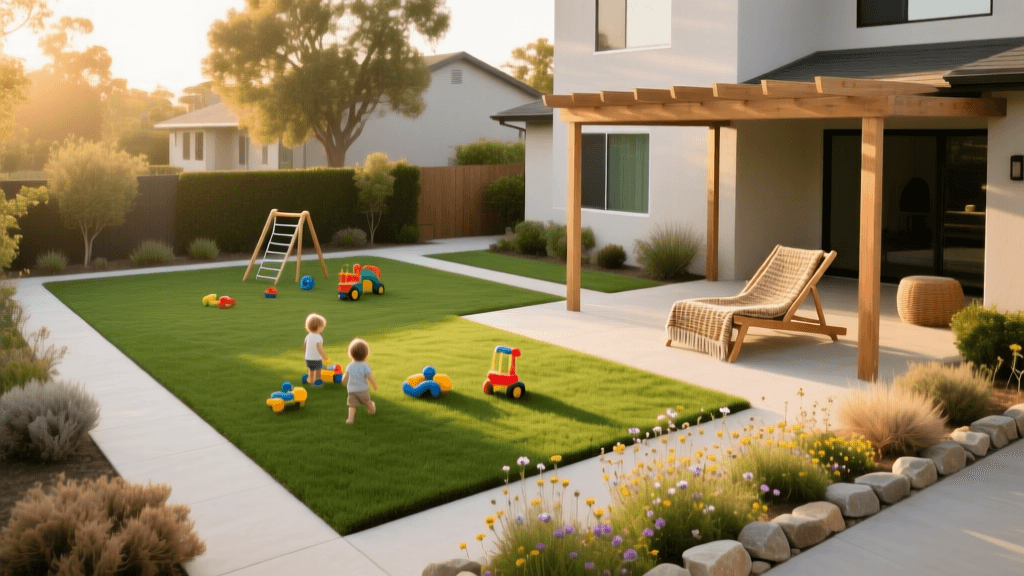
- Primary Recreation Zones: High-traffic areas used for playing, entertaining, or pet activity. These zones require durable, fast-recovering grass types and more frequent maintenance.
- Ornamental Zones: Visual spaces meant to be admired from a distance, such as front yard parkways or side yards. These areas can utilize slower-growing, lower-maintenance turfgrasses.
- Transitional and Natural Zones: Shaded areas under tree canopies, steep slopes, or distant back corners. These zones are often better suited for ground covers, mulch, or native plant beds rather than traditional turf.
Designing Borders and Edges for Mowing Efficiency
One of the most time-consuming aspects of lawn care is string trimming and edging around complex landscape beds. You can eliminate up to 80% of your trimming time by designing intelligent lawn borders during the planning phase. The goal is to create a seamless transition between your turf and your hardscape or garden beds.
The Mowing Strip Technique
A mowing strip is a flush border of pavers, brick, or gravel installed at the same height as your soil line. When you mow, the wheel of your lawnmower rides smoothly over the strip, allowing the deck to cut the grass cleanly right up to the edge. To install an effective mowing strip, excavate a trench 12 to 18 inches wide along the perimeter of your garden beds. Fill it with compacted crushed gravel or lay flat pavers. This not only defines the space beautifully but completely removes the need for a string trimmer in those areas.
Curves vs. Acute Angles
Mowers are designed to move in straight lines or gentle, sweeping curves. Sharp, acute angles and narrow 'peninsulas' of grass force you to stop, reverse, and maneuver the mower repeatedly, which leads to turf damage and wasted time. To plan the perfect curve for your lawn borders, use the classic garden hose trick: lay a 100-foot garden hose on the ground to outline your proposed bed edges. Step back and observe the lines. If the hose creates sharp points or tight zig-zags, adjust it until the curves are broad and gentle enough for your mower's turning radius.
Hydrozoning: Grouping Turf by Water Needs
Hydrozoning is a fundamental concept in sustainable landscape design. It involves grouping plants and turf areas with similar water requirements together on the same irrigation valve. The EPA WaterSense program highly recommends hydrozoning to prevent the overwatering of drought-tolerant areas just to keep a small patch of thirsty grass alive nearby.
When planning your lawn, identify the microclimates in your yard. A south-facing slope will dry out much faster than a flat, shaded area near your home's foundation. By separating your high-water turf zones from your low-water ornamental zones, you can install a smart irrigation controller that delivers precise amounts of water exactly where it is needed. This strategic planning can reduce your outdoor water usage by up to 30% while preventing fungal diseases caused by overwatering.
Matching Grass Types to Usage Zones
Not all turfgrasses are created equal. Planting a delicate, shade-tolerant fescue in a high-traffic play area will result in a muddy, bare mess within a single season. Conversely, planting an aggressive, high-maintenance Bermudagrass in a low-use ornamental strip will result in endless hours of edging to keep it out of your garden beds. The UC IPM Lawn Care Guide emphasizes that selecting the right cultivar for your specific zone is the most critical step in long-term lawn planning.
Use the following table to match your grass type to your designated lawn zones:
| Zone Type | Recommended Grass (Cool-Season) | Recommended Grass (Warm-Season) | Maintenance Level |
|---|---|---|---|
| High Traffic / Play | Kentucky Bluegrass, Perennial Ryegrass | Bermudagrass, Zoysia | High (Frequent mowing, aeration) |
| Ornamental / Visual | Fine Fescue, Tall Fescue | Centipedegrass, St. Augustine | Low to Moderate |
| Shaded / Transitional | Creeping Red Fescue | St. Augustine, Zoysia | Moderate (Careful watering) |
Integrating Hardscape and Mulch Buffers
Strategic planning also means knowing where not to plant grass. Areas beneath the dense drip lines of large trees are notoriously difficult to maintain. Tree roots compete with turf for water and nutrients, while the canopy blocks essential sunlight. Furthermore, mowing around the exposed surface roots of mature trees can damage both the mower blades and the tree's vital vascular system.
Instead of fighting nature, plan a 3-to-4-foot wide mulch buffer around the base of all large trees and shrubs. This buffer retains soil moisture, suppresses weeds, and provides a safe zone for mower turns. When planning patios, walkways, and retaining walls, ensure that the hardscape is elevated slightly above the soil grade or separated by a gravel French drain. This prevents soil and grass clippings from washing onto your hardscape during heavy rains and reduces the need for chemical edging treatments.
Planning Your Irrigation Layout
Before laying sod or seeding, your irrigation system must be mapped out to support your newly defined zones. Traditional spray heads often overspray onto driveways, sidewalks, and fences, wasting water and promoting weed growth in hardscape cracks. When planning your system, utilize rotary nozzles for large primary recreation zones. Rotary nozzles apply water at a slower rate, allowing it to penetrate deep into the soil without causing runoff.
For narrow ornamental zones or areas adjacent to hardscapes, plan for subsurface drip irrigation. Drip lines deliver water directly to the root zone with near-perfect efficiency and eliminate the wind drift associated with overhead spraying. Pair your zoned irrigation system with a Wi-Fi-enabled smart controller that adjusts watering schedules based on local weather data and soil moisture levels.
'A well-designed landscape considers the end-user's maintenance capabilities from day one. Zoning reduces water waste, limits turf to functional areas, and transforms lawn care from a weekly chore into a manageable routine.'
Conclusion: Design for the Future
Strategic lawn zoning is an investment in your property's future. By taking the time to plan functional zones, install mowing strips, and match the right grass to the right environment, you set yourself up for years of lush, healthy turf with minimal effort. Remember that a beautiful lawn is not just about the products you apply; it is about the intelligent design decisions you make before the first seed ever touches the soil. Start with a solid plan, respect the natural microclimates of your yard, and enjoy the benefits of a landscape that works for you, not against you.