Home & Garden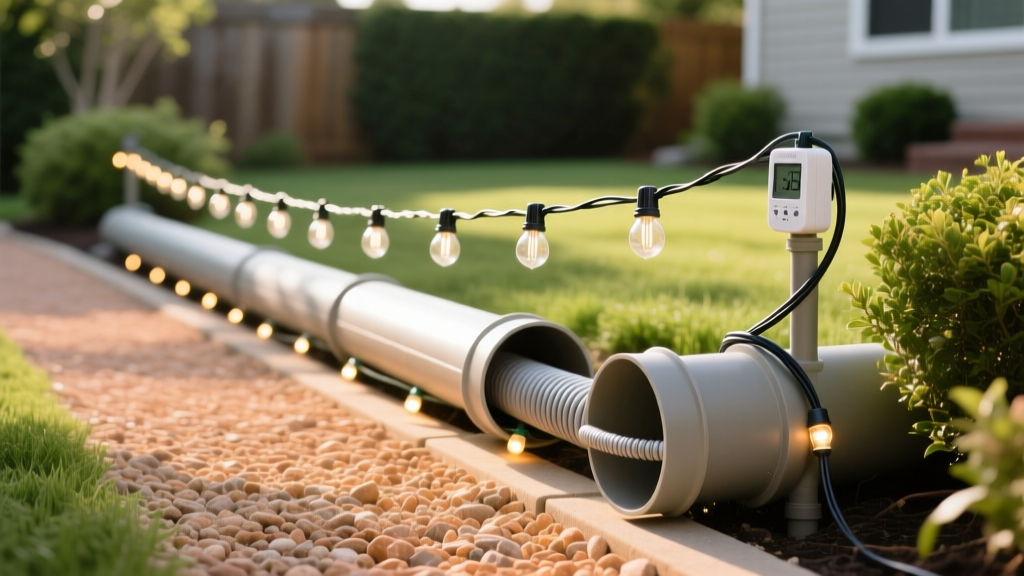
2026 Outdoor String Light Install: Guide Wire & Drainage Pipe
Sarah ChenPublished
As outdoor living spaces evolve in 2026, the line between rugged landscaping and refined entertainment areas continues to blur. Homeowners are no longer just laying patio pavers; they are integrating complex subsurface water management with overhead ambiance. One of the most innovative DIY trends this year is utilizing landscape drainage pipe systems not just for water mitigation, but as protective conduit for outdoor string light wiring. When you combine heavy-duty guide wires, commercial-grade LED bulbs, and Matter-compatible smart timers, you create a resilient, automated lighting system that survives harsh weather and shovel strikes.
The Dual-Purpose Trench: Drainage and Electrical Routing
Trenching is universally the most labor-intensive part of any yard upgrade. If you are installing a French drain, managing a swale, or extending downspout runoff lines, you already have the perfect underground highway for your electrical lines. Running 12-gauge outdoor-rated UF-B cable or low-voltage landscape lighting wire through a 4-inch drainage pipe protects the wiring from soil acidity, moisture pooling near catch basins, and accidental severing during future gardening. According to landscaping and water management experts at the University of Minnesota Extension, proper yard drainage is critical for foundation health, and combining your electrical conduit routing with these necessary drainage trenches saves countless hours of backbreaking labor.
Choosing the Right Drainage Pipe for Dual Use
Not all drainage pipes are created equal when it comes to housing electrical wiring. While corrugated flex pipe is excellent for moving high volumes of water quickly, its ribbed interior can snag fish tapes and wire jackets. Schedule 40 PVC, commonly used for solid downspout extensions and French drain outlets, offers a smooth interior that is ideal for pulling wires. Below is a comparison of the most common landscape drainage pipes used in 2026 for dual water-and-wire management.
| Pipe Type | Primary Drainage Use | Conduit Suitability | 2026 Avg Cost (10ft) |
|---|---|---|---|
| Corrugated Flex (4-inch) | French drains, yard swales | Fair (requires pull string) | $12.50 |
| Schedule 40 PVC (3-inch) | Downspout extensions, solid runs | Excellent (smooth interior) | $18.00 |
| HDPE Corrugated (6-inch) | Heavy commercial runoff | Good (spacious but ribbed) | $24.00 |
| SDR 35 PVC (4-inch) | Main sewer / heavy drain lines | Excellent (ultra-smooth) | $28.50 |
Step-by-Step: Pulling Wire Through Corrugated Drain Pipe
If your landscape design dictates the use of corrugated flex pipe for drainage, you can still safely route your string light power supply through it. First, never run line-voltage (120V) wire through a pipe that actively carries water without waterproof, submersible connectors. The safest approach in 2026 is to use a 12V or 24V low-voltage transformer housed in a weatherproof shed or garage, sending low-voltage wire through the drainage trench.
1. Use a Pull String and Fish Tape
Because corrugated pipe has ridges, pushing a stiff wire through it will result in snags. Instead, use a fiberglass fish tape with a smooth, rounded head. Attach a sturdy nylon mason line (pull string) to the fish tape and push it through the drainage pipe from the transformer location to your patio post. Once the pull string emerges, tape your outdoor-rated wire securely to the string, using electrical tape to create a smooth, tapered bullet shape. Apply a non-petroleum-based wire pulling lubricant to prevent the jacket from tearing on the plastic ridges.
2. Waterproofing the Connections
Even inside a drainage pipe, condensation and minor leaks occur. Use silicone-filled gel wire nuts for all low-voltage splices. These gel caps completely encase the copper connection, preventing oxidation and short circuits even if the drainage pipe temporarily floods during a severe 2026 spring storm.
Installing the Guide Wire and Anchoring to PVC Posts
To achieve that professional, sag-free bistro light look, you must use a steel guide wire. However, mounting heavy guide wire posts near drainage swales can be tricky; you do not want to drive a metal post directly through your newly laid corrugated drain pipe.
The Schedule 40 PVC Post Hack
A brilliant technique gaining traction this year is using thick-walled Schedule 40 PVC drainage pipe as the actual structural post. Dig a hole adjacent to your drainage trench, set a 10-foot length of 3-inch Schedule 40 PVC into a concrete footing, and run your low-voltage wire up through the hollow center of the post. Cap the top with a PVC cleanout plug to keep rain out, and drill a small side hole near the top to feed the wire out to your string lights. This provides a rot-proof, rust-proof mounting pole that seamlessly integrates with your underground drainage aesthetic if painted to match your trim.
Tensioning the Aircraft Cable
Once your posts (or structural tree mounts) are set, string a 1/8-inch galvanized stainless steel aircraft cable between them. Use a 3/16-inch turnbuckle at one end to apply immense tension. The guide wire should be taut enough that it produces a low musical twang when plucked. Attach your commercial-grade LED string lights to the guide wire using stainless steel snap hooks or heavy-duty zip ties spaced every 12 inches. Never let the weight of the electrical cord rest on the guide wire; the guide wire bears the mechanical load, while the cord simply hangs alongside it.
2026 Smart Timer Integration for Energy Efficiency
Leaving outdoor string lights on manually is a relic of the past. In 2026, smart home integration relies heavily on the Matter protocol, ensuring your outdoor lighting communicates seamlessly with Apple HomeKit, Amazon Alexa, and Google Home without relying on proprietary cloud servers that might go offline. Plug your string light transformer or main power cord into a Matter-enabled outdoor smart plug, such as the latest Kasa or Wyze outdoor models. These devices feature IP65 weather resistance and dual independent outlets.
Astronomical Timing and Geofencing
Instead of setting static timers that require constant seasonal adjustment, configure your smart plug to use astronomical timing. This feature uses your exact GPS coordinates to turn the string lights on precisely at local sunset and off at midnight or dawn. Furthermore, you can pair this with ENERGY STAR certified LED Edison bulbs, which draw less than 1 watt per bulb, ensuring your massive patio canopy costs pennies a day to operate. Setting up geofencing routines also allows the lights to trigger automatically when your smartphone enters the driveway, welcoming you home to a beautifully illuminated backyard.
Safety Codes and Best Practices
When mixing water drainage infrastructure with electrical components, safety is paramount. Always consult the latest National Electrical Code (NEC) guidelines regarding outdoor wiring depths and conduit requirements. While low-voltage landscape lighting wire has fewer burial depth restrictions, any line-voltage wiring powering a permanent outdoor receptacle near a drainage catch basin must be buried at least 18 inches deep in rigid metal or Schedule 80 PVC conduit, completely separate from your water drainage lines. Additionally, ensure all outdoor receptacles within 20 feet of a drainage swale or catch basin are protected by a Class A GFCI breaker to prevent shock hazards in wet conditions.
Conclusion
Integrating your outdoor string light installation with your landscape drainage pipe system is the ultimate 2026 DIY hack. It minimizes yard destruction, protects your electrical investments from moisture and rodents, and results in a stunning, automated outdoor living space. By utilizing Schedule 40 PVC for structural posts, pulling low-voltage wire through corrugated flex trenches, and managing the system with Matter-compatible astronomical timers, you ensure your backyard remains the premier neighborhood gathering spot for years to come.
