Home & Garden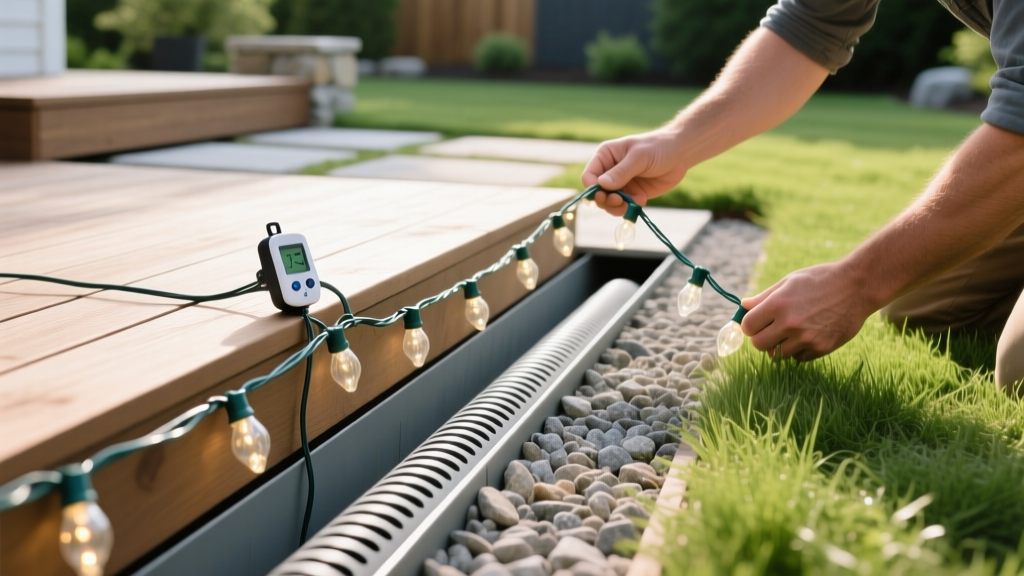
Install String Light Guide Wires Near French Drains 2026
Sarah ChenPublished
The Intersection of Hardscaping and Illumination
As we navigate the outdoor living trends of 2026, homeowners are increasingly focused on maximizing their backyard ROI through dual-purpose upgrades. Two of the most requested landscape improvements are subsurface water management and overhead ambiance. Specifically, installing a French drain to eliminate yard pooling, followed by hanging commercial-grade outdoor string lights to create a resort-like patio atmosphere. However, merging these two projects requires careful planning. From a French drain installation perspective, the subsurface infrastructure is highly vulnerable to the immense physical tension and electrical requirements of modern outdoor lighting setups. If you are planning an outdoor string light installation with guide wire and timer systems, you must understand how to protect your drainage investment while achieving a professional, bistro-style aesthetic.
Why French Drains and Guide Wire Tensioners Clash
A properly installed French drain consists of a perforated corrugated pipe wrapped in filter fabric, surrounded by washed gravel, and buried at a precise gradient to carry water away from your foundation. According to drainage guidelines outlined by the University of Minnesota Extension, the integrity of the gravel bed and the undisturbed soil above the trench are critical for preventing surface water from overwhelming the system. The conflict arises when you attempt to install freestanding wooden or metal posts to anchor your string light guide wires.
Heavy-duty Edison bulb string lights, when pulled taut across a 30-foot patio span, can exert over 150 pounds of lateral tension on the anchor points. To withstand this force in 2026, contractors typically dig deep post holes and pour concrete footings. If you dig a post hole within or immediately adjacent to your French drain trench, you risk puncturing the perforated pipe, collapsing the gravel matrix, or tearing the filter fabric. Once the fabric is compromised, silt will infiltrate the pipe, leading to catastrophic clogging and a flooded yard during the next heavy rainstorm.
The 24-Inch Subsurface Rule
To prevent structural damage to your drainage system, landscape architects in 2026 enforce a strict 24-inch horizontal clearance rule. You must never dig a new post hole or drive a ground anchor within 24 inches of the documented centerline of your French drain trench. This buffer zone protects the lateral spread of the gravel bed and ensures that the soil compaction required for your lighting posts does not crush the flexible corrugated pipe buried below.
Drain-Safe Hardware Matrix for 2026
Because we cannot rely on newly dug freestanding posts near the drainage zones, we must utilize alternative anchoring methods that distribute tension safely. Below is a comparison of 2026-approved anchor types and their compatibility with French drain perimeters.
| Anchor Type | Min. Drain Clearance | Tension Capacity | Best Use Case |
|---|---|---|---|
| House Fascia Lag Screws | 0 inches (Above ground) | 300+ lbs | Attaching guide wires directly to the home exterior, bypassing the yard entirely. |
| Existing Concrete Footings | 12 inches | 250+ lbs | Utilizing pre-existing pergola or deck posts that were dug prior to the drain installation. |
| Surface-Mounted Planter Boxes | 24 inches | 150 lbs | Heavy cedar or composite planter boxes acting as counterweights over undisturbed soil. |
| Freestanding Steel Poles | 36+ inches | 200+ lbs | Deep concrete footings placed far outside the gravel trench perimeter. |
Step-by-Step: Hanging Guide Wires Without Trench Damage
To achieve a professional sag-free lighting display while respecting your subsurface drainage, follow this drain-safe installation protocol.
Step 1: Map and Mark the Trench
Before drilling a single hole, use landscaping marking paint to draw the exact path of your French drain on the surface. Include the daylighting point (where the solid pipe exits the ground to release water). This visual map is your absolute boundary line for any ground-level hardware.
Step 2: Install Structural Eye Hooks
Opt for structural anchors. Drill into the solid wood fascia of your home or into existing deep-set concrete pergola posts using 316 marine-grade stainless steel eye hooks. In 2026, marine-grade hardware is the standard for outdoor lighting due to its superior resistance to micro-corrosion and humidity. Pre-drill your holes and use a socket wrench to drive the lag screws deep into the structural framing, ensuring they can handle the lateral pull.
Step 3: Thread and Tension the Guide Wire
Use a 1/16-inch vinyl-coated stainless steel guide wire. Thread the wire through your eye hooks and attach a heavy-duty turnbuckle at one end. Slowly tighten the turnbuckle with a wrench until the wire is taut. Do not overtighten to the point of bowing your fascia board; the wire should be firm enough that it does not bounce in the wind, but flexible enough to absorb thermal expansion during summer heatwaves.
Step 4: Suspend the Lights
Never wrap the string light cord directly around the guide wire, as wind friction will eventually strip the insulation and create a short circuit. Instead, use UV-rated zip ties or specialized snap-on carabiners spaced every 12 inches to suspend the light cord parallel to the guide wire.
Smart Timers and Electrical Safety Near Drainage Outlets
The second major intersection between outdoor lighting and French drains is the electrical power source. Smart timers in 2026 have evolved significantly, with many utilizing the Matter-over-Thread protocol for seamless mesh network integration, eliminating the need for Wi-Fi extenders in the far corners of your yard. However, placing these timers and their power sources near a French drain outlet requires strict adherence to electrical safety codes.
The daylighting point of a French drain is a high-moisture, high-debris zone. When heavy water flows out of the pipe, it often splashes mud, gravel, and organic matter onto the surrounding surfaces. According to the Electrical Safety Foundation International (ESFI), all outdoor electrical connections must be protected from moisture and physical damage, and GFCI (Ground Fault Circuit Interrupter) protection is non-negotiable in damp locations.
Choosing the Right Enclosure
Do not leave your smart timer plug exposed to the elements. Purchase an IP67-rated outdoor electrical enclosure box. These 2026 models feature neoprene gaskets and adjustable cable glands that clamp down tightly around your string light cord, preventing water intrusion and keeping insects out of the smart timer circuitry.
Strategic Placement
Mount your GFCI outlet and smart timer enclosure at least 18 inches above the ground, and position it at least 3 feet away from the French drain splash block. This ensures that when the drain discharges water during a torrential downpour, the splashback will not reach your electrical connections. Furthermore, mounting the box on a wall or post keeps it clear of the seasonal leaf litter and mulch that often accumulate over buried drain lines.
Seasonal Maintenance: Flushing Drains and Checking Tension
Maintaining a yard that features both a French drain and tensioned overhead lighting requires a biannual checklist. In the spring, use a garden hose to flush out your French drain access catch basins, ensuring that winter debris has not clogged the perforated pipe. While the water is flowing, observe the daylighting exit point to verify that the soil has not eroded and exposed the solid discharge pipe.
Simultaneously, inspect your guide wire turnbuckles. Temperature fluctuations between winter and spring can cause metal cables to stretch or contract. Give the turnbuckle a quarter-turn to re-tension the wire if you notice the string lights sagging. By treating your lighting hardware and your drainage infrastructure as an interconnected ecosystem, you ensure that your patio remains brilliantly lit and perfectly drained for decades to come. Proper planning prevents the nightmare of a flooded yard and a dark patio, securing your outdoor sanctuary for every season ahead.
