Home & Garden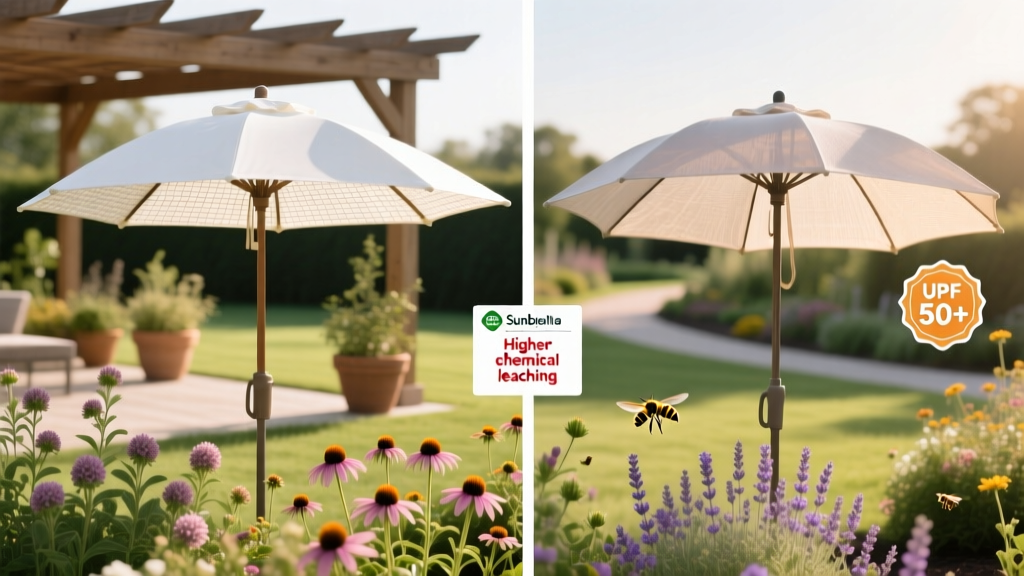
2026 Patio Umbrellas: Sunbrella vs Polyester for Pollinator Gardens
James MillerPublished
The Hidden Impact of Patio Shade on Pollinator Ecosystems
As we navigate the 2026 gardening season, the modern outdoor living space is no longer just a place for human relaxation; it is an integrated extension of the local ecosystem. For homeowners dedicated to pollinator-friendly garden design, every element of the hardscape and patio furniture must be evaluated for its environmental impact. While native plant selection and pesticide-free maintenance are widely discussed, the role of patio shade structures—specifically the fabric of your outdoor umbrella—is frequently overlooked. When your patio borders a nectar corridor or a native milkweed bed, the umbrella canopy above it plays a surprisingly critical role in soil health, microclimate regulation, and the safety of visiting bees and butterflies.
Choosing the right outdoor umbrella fabric is not merely an aesthetic or financial decision; it is an ecological one. In 2026, with prolonged summer heatwaves and record-high UV indexes becoming the norm, the debate between Sunbrella solution-dyed acrylic and traditional polyester umbrellas has taken on new importance. This guide breaks down the UV durability, eco-toxicity, and shade-management capabilities of both fabrics to help you design a patio space that protects both your guests and your garden's vital pollinators.
Sunbrella vs. Polyester: The 2026 UV and Durability Showdown
The primary enemy of any outdoor fabric is ultraviolet radiation. Standard polyester umbrellas, which dominate the budget-friendly market, are typically woven from petroleum-based threads and coated with chemical UV inhibitors. While a 160gsm to 200gsm polyester canopy might look vibrant in the showroom, the intense 2026 summer sun quickly breaks down these chemical coatings. Within six to twelve months, the fabric becomes brittle, fades, and begins to shed microscopic plastic fibers. If your umbrella is positioned over or adjacent to your garden beds, wind and rain will carry these degrading microplastics directly into your soil, potentially disrupting the delicate mycorrhizal fungal networks that native pollinator plants rely on for nutrient uptake.
In stark contrast, Sunbrella fabric is crafted from solution-dyed acrylic. The UV-blocking pigments are integrated into the liquid polymer before the fiber is even extruded, meaning the color and structural integrity are locked in from the core. According to Sunbrella's official sustainability and fabric science documentation, this manufacturing process results in a canopy that resists UV degradation for years without relying on topical chemical coatings that can wash off into the environment. For a pollinator garden where soil purity is paramount, the inert nature of high-quality acrylic is a massive advantage over degrading polyester.
2026 Fabric Comparison Chart for Garden Umbrellas
To help you visualize the long-term value and ecological impact, here is a direct comparison of the leading umbrella canopy materials available on the market this year.
| Feature | Sunbrella Acrylic (2026 Models) | Standard Polyester (160-200gsm) | Premium Olefin (Mid-Tier) |
|---|---|---|---|
| UV Fade Resistance | 5+ Years | 6-12 Months | 1-2 Years |
| Microplastic Shedding | Negligible | High (when degraded) | Moderate |
| Water Runoff Toxicity | Non-Toxic / Inert | Chemical Coatings / PFAS risk | Low Toxicity |
| Avg. 9ft Umbrella Cost | $450 - $850 | $60 - $150 | $180 - $300 |
| Breathability (Heat) | High (Reduces heat dome) | Low (Traps Heat) | Medium |
Eco-Toxicity: Canopy Runoff and Soil Microbiomes
When it rains, the water that washes over your umbrella canopy eventually drips into the surrounding landscape. The National Wildlife Federation's Garden for Wildlife program consistently emphasizes the importance of keeping garden soil free from synthetic toxins to protect ground-nesting bees and the caterpillars of native butterflies. Many budget polyester umbrellas are treated with polyurethane or per- and polyfluoroalkyl substances (PFAS) to achieve water resistance. As these fabrics degrade under UV stress, rainwater can leach these 'forever chemicals' into your garden beds.
Sunbrella fabrics, conversely, achieve water resistance through the tight weave of the acrylic fibers and eco-friendly, fluorocarbon-free finishes that are standard in their 2026 production lines. This means the runoff from a Sunbrella canopy is safe for the soil below. When you are cultivating a pollinator haven featuring deep-rooted natives like Purple Coneflower (Echinacea purpurea) or Swamp Milkweed (Asclepias incarnata), ensuring that your hardscape runoff is non-toxic is just as vital as avoiding synthetic fertilizers.
Strategic Shade: Designing Microclimates for Bees and Butterflies
Pollinators are ectothermic, meaning they rely on external environmental temperatures to regulate their body heat. While bees and butterflies need direct sunlight to warm their flight muscles and forage for nectar, the extreme midday heat of 2026 can be lethal. The Xerces Society for Invertebrate Conservation notes that providing diverse microclimates, including cool, shaded resting areas, is a crucial component of comprehensive pollinator habitat design.
This is where the mechanics of your umbrella come into play. A fixed market umbrella might cast a permanent shadow over a section of your garden, inadvertently blocking the sun from your sun-loving nectar plants. However, a cantilever umbrella equipped with a Sunbrella canopy allows for dynamic shade management. You can tilt and rotate the canopy to provide a cool, shaded 'resting zone' or butterfly puddling station on the patio hardscape, while keeping the adjacent floral borders in full, unfiltered sunlight. Furthermore, the superior breathability of Sunbrella acrylic prevents the 'heat dome' effect common with polyester, creating a genuinely cooler microclimate for both you and resting Lepidoptera.
Actionable Buying Guide: Sizes, Costs, and Placement
To seamlessly integrate an outdoor umbrella into your pollinator-friendly landscape, follow these actionable 2026 purchasing and placement guidelines:
- Opt for a 10-Foot Cantilever Design: A cantilever (offset) umbrella removes the center pole from your seating area and allows you to position the shade exactly where you need it. Look for models from brands like Treasure Garden or ShadeScapes that feature replaceable Sunbrella canopies.
- Maintain a 3-Foot Buffer Zone: Position the umbrella base at least three feet away from your primary pollinator borders. This prevents the heavy base from compacting the soil where ground-nesting solitary bees (like sweat bees and mining bees) might be establishing their tunnels.
- Create a Shade Puddling Station: Use the shaded area created by the umbrella to host a butterfly puddling dish. Fill a shallow terracotta saucer with coarse sand, a pinch of sea salt, and keep it moist. Butterflies will use the cool shade of the umbrella to safely extract minerals from the sand without overheating.
- Calculate the True ROI: While a $90 polyester umbrella seems like a bargain, replacing it annually over five years costs $450, not including the ecological cost of microplastic pollution. A $600 Sunbrella cantilever umbrella will easily last through 2030 and beyond, making it the superior financial and environmental investment.
Conclusion
Designing a pollinator-friendly garden in 2026 requires looking beyond the flowerbed and evaluating the entire outdoor living ecosystem. While polyester umbrellas offer a low initial price point, their rapid UV degradation, microplastic shedding, and chemical runoff pose hidden threats to the soil microbiomes and native insects you are working so hard to protect. By investing in a Sunbrella acrylic canopy and utilizing dynamic shade management, you create a durable, non-toxic, and ecologically harmonious outdoor space. Your patio will remain a vibrant, comfortable sanctuary for human relaxation, while simultaneously serving as a safe, supportive haven for the essential pollinators that bring your garden to life.
