Home & Garden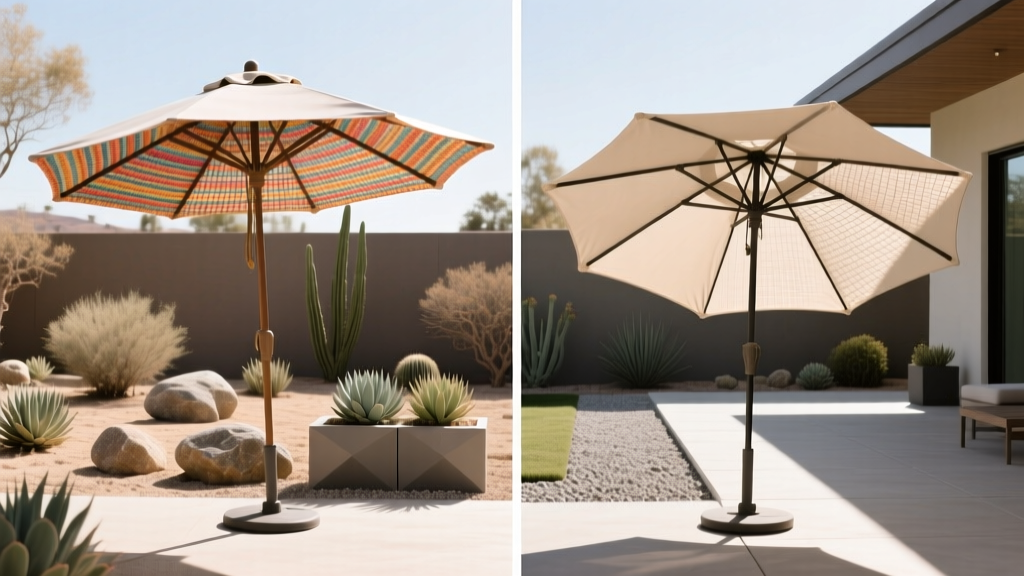
Sunbrella vs Polyester Outdoor Umbrellas: 2026 UV Guide
Mike RodriguezPublished
Introduction to 2026 Outdoor Living and Xeriscaping
As we navigate the peak summer months of 2026, water conservation and extreme heat management remain at the forefront of landscape design. Xeriscaping—the practice of designing landscapes to reduce or eliminate the need for irrigation—has evolved from a niche regional trend into a national standard. Homeowners are replacing thirsty turfgrass with drought-tolerant agaves, native ornamental grasses, and expansive hardscapes. However, while these low-water plants thrive in the sun, human comfort requires reliable shade. Because xeriscaped yards typically lack the broad, sweeping canopies of traditional shade trees, the outdoor patio umbrella has become the primary defense against solar radiation.
When selecting an umbrella for a water-wise landscape, the fabric choice is critical. The two dominant materials on the market in 2026 are solution-dyed acrylic (best known by the flagship brand Sunbrella) and various forms of polyester. Understanding how these fabrics interact with the unique, high-UV environment of a xeriscaped yard is essential for making a sustainable, long-lasting investment.
The Unique UV Environment of a Xeriscaped Yard
To understand why fabric choice matters, we must first look at the microclimate of a xeriscaped yard. According to the Colorado State University Extension, xeriscaping relies heavily on mulches, gravel, and stone to retain soil moisture and suppress weeds. While dark wood mulch absorbs light, the decomposed granite, crushed limestone, and pale river rock favored in modern 2026 xeriscape designs are highly reflective.
This reflectivity creates an 'albedo effect.' UV rays do not just hit the top of your umbrella canopy; they bounce off the light-colored gravel and hardscaping, striking the underside of the fabric. This dual-sided UV exposure accelerates the degradation of standard outdoor textiles. Furthermore, without the ambient humidity provided by traditional lawns, the air in a xeriscaped yard is drier and hotter, placing additional thermal stress on synthetic fibers.
Sunbrella Acrylic: The Gold Standard for Arid Climates
Sunbrella fabric is constructed from solution-dyed acrylic. In this manufacturing process, the color pigment is added to the liquid acrylic polymer before it is extruded into a fiber. This means the color is integral to the core of the thread, much like a carrot that is orange all the way through. Because the UV-blocking pigments are distributed throughout the entire fiber, Sunbrella offers unparalleled resistance to fading and structural breakdown.
For xeriscape enthusiasts, Sunbrella provides a massive advantage: it blocks up to 98% of the sun's harmful UV rays. The Skin Cancer Foundation recognizes the importance of high-UPF shade structures in preventing melanoma and premature skin aging, noting that seeking shade under UV-blocking fabrics is a critical pillar of daily sun safety. In a tree-less xeriscape, a Sunbrella umbrella acts as your primary medical-grade shield against the 2026 solar maximum.
Additionally, acrylic fibers are inherently breathable. They do not trap heat underneath the canopy to the same degree as tightly woven, coated synthetics, allowing hot air to escape and keeping the seating area beneath the umbrella noticeably cooler.
Polyester Umbrellas: Budget Appeal vs. UV Degradation
Polyester is the most common fabric used in budget and mid-tier outdoor umbrellas. In 2026, the market is heavily saturated with rPET (recycled polyethylene terephthalate) polyesters, which appeal to eco-conscious consumers looking to reduce plastic waste. While recycling plastics is a noble environmental goal, the molecular structure of polyester makes it inherently vulnerable to ultraviolet radiation.
Most polyester umbrella canopies are 'piece-dyed,' meaning the fabric is woven first and then dipped in a vat of color. The pigment only coats the outside of the fiber. When intense UV rays strike the canopy, they break down the polymer chains of the polyester and bleach the exterior dye. In a high-albedo xeriscaped yard, a standard piece-dyed polyester umbrella will typically begin to show severe fading, chalking, and brittleness within a single season of peak summer exposure. Once the fibers become brittle, the wind resistance of the canopy drops, leading to tearing along the seams and ribs.
2026 UV and Durability Comparison Chart
The following table breaks down the critical performance metrics for both fabrics when deployed in a low-water, high-reflectivity landscape.
| Feature | Sunbrella (Solution-Dyed Acrylic) | Standard Polyester (Piece-Dyed) | rPET Recycled Polyester (2026 Tech) |
|---|---|---|---|
| UV Ray Blockage | Up to 98% (UPF 50+) | 70% - 85% (Degrades quickly) | 80% - 90% (Improved coatings) |
| Color Fade Warranty | 5 Years (Limited) | None to 6 Months | 1 Year (Limited) |
| Expected Lifespan (Arid Zone) | 7 to 10+ Years | 1 to 2 Years | 2 to 3 Years |
| Underside UV Resistance | Excellent (Core pigment) | Poor (Rapid bleaching) | Fair (Coating dependent) |
| Average 9-Foot Canopy Cost | $180 - $350 | $35 - $70 | $60 - $110 |
| Breathability / Heat Escape | High | Low to Moderate | Moderate |
The Albedo Effect: How Hardscaping Destroys Cheap Fabrics
Many homeowners are confused when their 'outdoor-rated' polyester umbrella fades in just three months, despite only being used on weekends. The culprit is the xeriscape ground cover. Decomposed granite and pale flagstone can reflect up to 30% of UV radiation upward. Standard polyester fabrics are rarely treated with heavy-duty UV inhibitors on the underside of the canopy because manufacturers assume the ground will absorb the light (as dark mulch or green grass does).
When the underside of the polyester canopy is bombarded with reflected UV, the structural integrity of the fabric rots from the inside out. Sunbrella's solution-dyed acrylic is immune to this specific flaw; because the pigment and UV stabilizers are locked inside the molecular structure of the fiber, the upward bounce from your crushed limestone pathways will not compromise the fabric's tensile strength.
Water-Wise Maintenance: Cleaning Without the Hose
A core tenet of xeriscaping is the drastic reduction of water usage. The EPA's WaterSense program emphasizes that outdoor water conservation extends beyond irrigation to how we maintain our outdoor living spaces. Cleaning your umbrella canopy should not require a power washer or a running garden hose, which wastes dozens of gallons of potable water.
Because xeriscaped yards are often situated in dry, dusty, or pollen-heavy environments, umbrella canopies will accumulate a fine layer of silt. Here is the 2026 low-water maintenance protocol for Sunbrella and polyester fabrics:
- Dry Brushing: Use a soft-bristle broom or a microfiber duster to remove loose dust, pollen, and desert sand. Do this weekly before the dust embeds into the fabric weave.
- Spot Cleaning: Mix a solution of mild dish soap and water in a small spray bottle. Mist only the soiled area and gently agitate with a soft sponge. Wipe away the suds with a damp cloth. This uses less than a single cup of water.
- Avoid Harsh Chemicals: Never use bleach on polyester, as it will instantly destroy the already fragile polymer chains. Sunbrella can tolerate a diluted bleach solution for stubborn mold, but in dry xeriscape environments, mold is rarely an issue.
Cost-Benefit Analysis for 2026
When outfitting a patio adjacent to a drought-tolerant garden, it is tempting to purchase multiple cheap polyester umbrellas from big-box stores. However, the math heavily favors premium acrylic. A $50 polyester umbrella that succumbs to UV rot and tearing by August must be replaced annually. Over a five-year period, you will spend $250, generate significant landfill waste with discarded aluminum frames and torn synthetic fabric, and suffer through periods of inadequate shade.
Conversely, a $220 replacement Sunbrella canopy (fitted onto a high-quality, wind-vented aluminum or teak frame) will easily last through the end of the decade. When amortized over its lifespan, the cost per year of premium shade drops to roughly $25, making it the more economically sound and environmentally sustainable choice for the eco-conscious xeriscaper.
Final Verdict
For homes utilizing traditional, water-heavy lawns with dense oak or maple shade trees, a polyester umbrella might suffice for a few seasons. But the modern xeriscaped yard of 2026 is a high-UV, high-reflectivity environment that demands industrial-grade textile performance. Sunbrella's solution-dyed acrylic provides the necessary UPF 50+ protection, resists the upward albedo bounce from decorative gravels, and aligns perfectly with the low-water maintenance ethos. By investing in premium acrylic, you ensure that your outdoor oasis remains vibrant, cool, and structurally sound for years to come.
