Home & Garden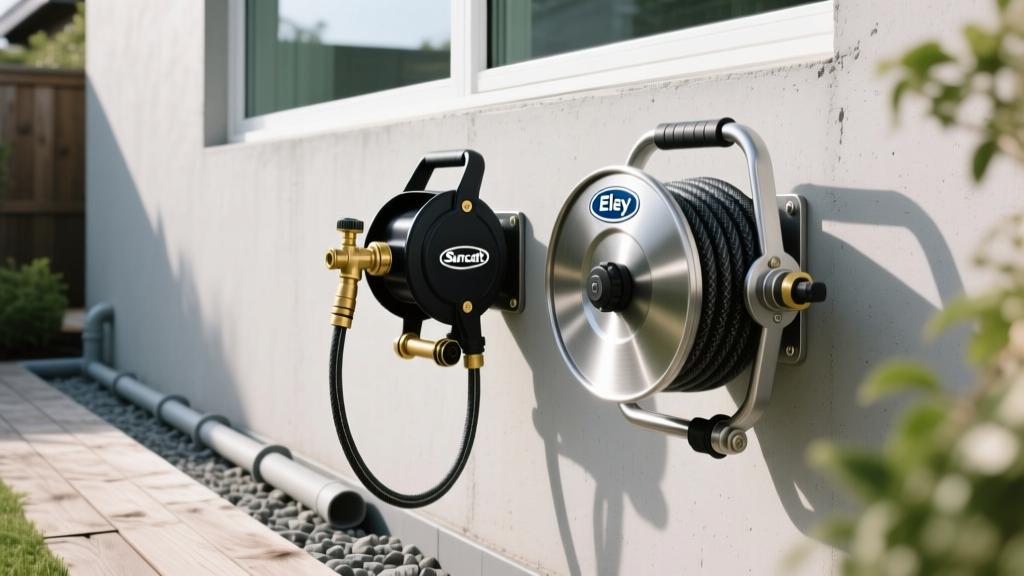
Suncast vs Eley Wall Reels: 2026 French Drain Cleanup Guide
Emily WatsonPublished
Introduction: The Hidden Challenge of French Drain Installations
As we navigate the 2026 landscaping season, extreme weather patterns and heavier spring rains have made DIY French drain installations more popular than ever. Homeowners are taking matters into their own hands to protect their foundations and save their lawns from turning into seasonal swamps. However, while most guides focus on trenching, gravel, and perforated PVC pipe, they often overlook one of the most grueling and critical phases of the project: site cleanup, tool washing, and drain flushing.
Installing a French drain is an incredibly messy endeavor. You will move hundreds of pounds of topsoil, clay, and crushed gravel. Your shovels, rakes, wheelbarrows, and boots will become caked in thick mud. Furthermore, before you backfill the trench, you must thoroughly flush the perforated pipe to ensure no soil or debris is blocking the weep holes. This requires a high-volume, heavy-duty garden hose. And if you are dragging a 100-foot, water-filled hose through a muddy construction zone, the wall-mount hose reel you rely on will either be your greatest asset or your most frustrating point of failure.
In this comprehensive 2026 guide, we are comparing two of the most popular wall-mount hose reels on the market—the budget-friendly Suncast resin models and the premium Eley cast aluminum and polyurethane reels—specifically through the lens of a heavy-duty French drain installation project.
Why Your Hose Reel Matters for French Drain Projects
When you are managing a major yard drainage project, your hose reel is not just a storage device; it is an active piece of construction equipment. According to drainage experts at Penn State Extension, proper water management and grading require precise testing and site preparation, both of which demand reliable water access.
Consider the physical realities of a French drain installation:
- Pre-Soaking Hard Soil: If you are digging through dense summer clay, pre-soaking the trench line a day before digging can save your back. This requires leaving a heavy hose deployed across the yard for hours.
- Flushing the Perforated Pipe: Once your PVC or corrugated pipe is laid in the gravel bed, you must blast water through the entire run to verify flow and clear out any dirt that fell into the weep holes during installation.
- The Great Cleanup: Washing down tools, the wheelbarrow, and the staging area requires dragging the hose back and forth across a muddy, uneven, and debris-filled trench zone.
- Weight and Strain: A standard 100-foot, 5/8-inch rubber or heavy-duty hybrid hose can weigh over 40 pounds when filled with water. When you crank that weight back onto a wall-mounted reel, the torque applied to the mounting bracket and the internal gear mechanism is immense.
If your reel is built from flimsy plastics or lacks a robust braking system, the crank handle will snap, the internal gears will strip, or the entire unit will rip right out of your exterior siding. Let us look at how Suncast and Eley handle this punishment in 2026.
Suncast Wall-Mount Reels: The Budget-Friendly Resin Option
Suncast has been a household name in outdoor resin storage for decades. Their wall-mount hose reels, such as the popular BWH200 and similar 2026 resin models, are staples in big-box hardware stores. They are designed to be affordable, lightweight, and rust-proof.
The Pros for Landscaping Projects
The primary advantage of a Suncast reel is its cost. Priced generally between $50 and $80 in 2026, it is an accessible option for homeowners who are already stretching their budget on French drain materials like landscape fabric, gravel, and catch basins. The blow-molded resin construction is completely immune to rust, which is beneficial if you are storing it in a damp, shaded side-yard where the drain exits.
The Cons for Heavy-Duty Drainage Work
Where Suncast struggles is under heavy mechanical load. The internal gearing on most resin models is plastic. When you attempt to reel in 100 feet of a heavy, water-logged rubber hose while standing in mud, the resistance is significant. Users frequently report that the plastic crank handles bend or snap under the torque required for heavy-duty cleanup. Additionally, the mounting flanges, while adequate for lightweight vinyl hoses, can crack if the reel is jerked or if the hose is pulled at a sharp downward angle while snagged on a pile of gravel.
Eley Wall-Mount Hose Reels: The Premium Polyurethane Workhorse
On the opposite end of the spectrum is Eley (formerly known as Rapid Reel). Eley has dominated the premium hose reel market for years, and their 2026 wall-mount models, particularly the 1041 series, are engineered for extreme durability. Constructed from aircraft-grade aluminum and rugged polyurethane, these reels are built to withstand commercial landscaping abuse.
The Pros for French Drain Installations
Eley reels feature a massive, ergonomic crank handle and a stainless-steel braking system that allows you to stop the reel instantly, preventing the hose from unspooling onto your muddy work site. The aluminum and polyurethane construction means the reel will not bend, warp, or degrade under UV exposure or the physical strain of a heavy 125-foot hose. For a French drain project, where you might be aggressively yanking the hose around the corner of the house or over a pile of excavated topsoil, the Eley's reinforced mounting bracket and swivel joint provide unmatched reliability.
The Cons to Consider
The barrier to entry is price. An Eley wall-mount reel typically costs between $220 and $300 in 2026, depending on the hose capacity and finish. Furthermore, because the unit is heavier and more robust, it requires secure mounting into structural wall studs or masonry, which might be daunting for a DIYer who is already exhausted from digging a 50-foot trench.
Head-to-Head 2026 Comparison Chart
To help you decide which reel fits your drainage project budget and physical demands, review the comparison table below.
| Feature | Suncast Resin Wall-Mount | Eley 1041 Wall-Mount |
|---|---|---|
| Primary Material | Blow-Molded Poly Resin | Cast Aluminum & Polyurethane |
| Max Hose Capacity | 100 ft (5/8 in) | 125 ft (5/8 in) or 100 ft (3/4 in) |
| Crank Mechanism | Plastic Gearing | Stainless Steel & Brass |
| Brake System | Basic Friction Lock | Adjustable Stainless Steel Disc Brake |
| 2026 Est. Price | $50 - $80 | $230 - $290 |
| Warranty | 1 to 5 Years | 10-Year No-Leak / Lifetime Structural |
| French Drain Suitability | Light Cleanup / Small Yards | Heavy-Duty Trenching / Large Properties |
Step-by-Step: Using Your Reel for French Drain Maintenance
Whether you choose Suncast or Eley, proper hose management during your French drain installation will extend the life of your equipment and ensure the drain functions correctly. The University of Minnesota Extension emphasizes that keeping drainage aggregates and pipes free of fine silt during installation is crucial for long-term water percolation.
Step 1: The Pre-Soak Deployment
Before cutting your sod and digging your 18-inch deep trench, lay out your hose along the proposed path. Use a soaker attachment or a gentle spray to saturate the ground. If using an Eley reel, utilize the adjustable brake to let the hose spool out smoothly without it unraveling onto the grass. If using a Suncast reel, manually pull the hose to avoid stripping the plastic gears.
Step 2: Trench and Pipe Flushing
Once your landscape fabric is lined and your perforated pipe is seated in the washed gravel, attach a high-flow nozzle to your hose. Walk the length of the trench, blasting water into the pipe access points. You need high water pressure to push any clay or silt out of the pipe and down the exit line. A heavy-duty reel ensures your hose connection point remains stable and does not leak under high PSI.
Step 3: The Tool Wash Station
Set up a designated cleanup zone near your reel. As you finish backfilling the trench with soil and sod, bring your muddy tools to the reel. The ability to pull out exactly the length of hose you need, and lock it in place with a reliable brake, prevents the hose from dragging through your freshly laid sod or collapsing the edges of your backfilled trench.
"A French drain is only as good as its installation. Introducing fine silts and clays into the gravel bed or the weep holes during the backfilling process can clog the system before it ever sees its first rainstorm. Thorough washing of your aggregates and pipes using a reliable, high-volume water source is a non-negotiable step for DIY landscapers."
Expert Insights on Yard Drainage and Water Management
When integrating a French drain into your landscape, you are fundamentally altering how water moves across your property. It is not just about digging a ditch; it is about calculating the slope, understanding your soil composition, and managing the discharge point. According to ongoing research highlighted by university extension programs, improper discharge from a French drain can lead to severe soil erosion or even undermine neighboring structures.
This is where your hose setup plays a secondary but vital role. After a heavy rain, you should use your hose reel to simulate rainfall and test the discharge area. By blasting water into the catch basin or the exposed drain inlet, you can observe how the water exits the pop-up emitter or splash block at the end of the line. If the discharge area pools or erodes the soil, you will need to adjust your gravel spread or install a dry well. Having a premium reel like the Eley allows you to deploy and retract the heavy hose required for this high-volume testing without fighting a tangled, kinked mess in your muddy yard.
Final Verdict for 2026
Choosing between a Suncast and an Eley wall-mount hose reel for a French drain installation ultimately comes down to the scale of your project and your tolerance for physical frustration.
If you are installing a short, 20-foot French drain in a small urban backyard to fix a minor puddle, and you are using a lightweight 50-foot hybrid hose, the Suncast resin reel will serve you adequately. It is budget-friendly, rust-proof, and perfectly capable of handling light tool cleanup and basic pipe flushing.
However, if you are tackling a massive 100-foot perimeter drain, moving cubic yards of clay, and utilizing a heavy 100-foot or 125-foot rubber hose, the Eley wall-mount reel is an absolute necessity. The sheer mechanical advantage of its brass and stainless-steel gearing, combined with the structural integrity of its aluminum frame, will save your shoulders and your siding. In the context of a grueling, multi-day French drain installation, investing in an Eley reel in 2026 is an investment in your own sanity, ensuring that when the trench is finally closed, the cleanup process is smooth, efficient, and entirely hassle-free.
