
Landscaping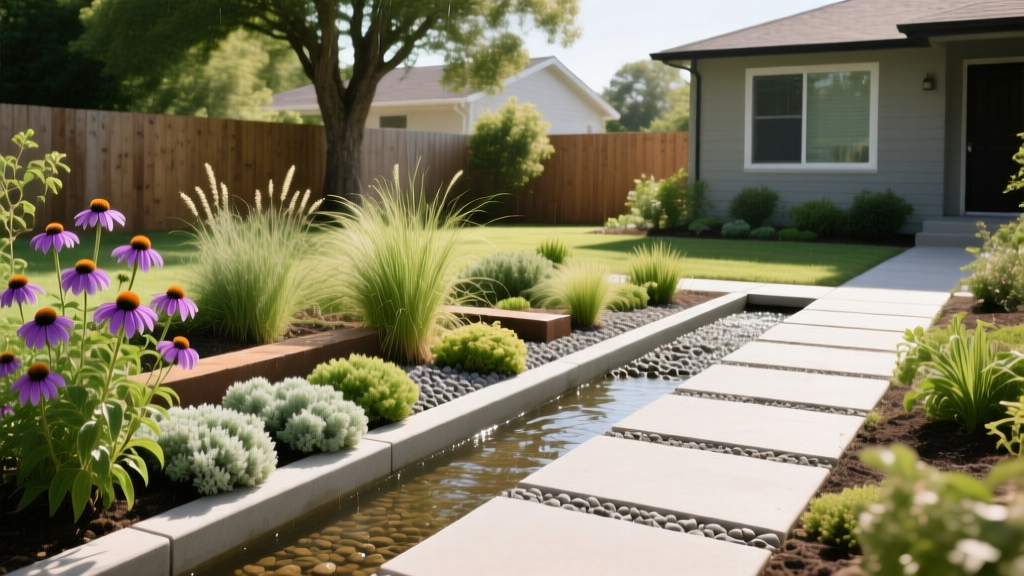
Eco-Friendly Yard Drainage: Rain Gardens & Permeable Pavers
Mike RodriguezPublished
The Hidden Environmental Cost of Traditional Drainage
When rain falls on a conventional landscape, it rarely stays where it lands. Traditional hardscaping materials like solid concrete, asphalt, and heavily compacted turf act as impervious surfaces. Instead of soaking into the earth, stormwater rushes across these surfaces, picking up lawn fertilizers, pet waste, motor oil, and sediment along the way. This toxic cocktail is then funneled directly into municipal storm drains, ultimately polluting local rivers, lakes, and oceans. According to the Environmental Protection Agency (EPA), green infrastructure solutions are critical for mimicking natural hydrology, reducing runoff volume, and filtering pollutants before they reach sensitive waterways.
For homeowners looking to embrace eco-friendly and sustainable landscaping methods, solving yard drainage issues does not require burying PVC pipes or channeling water into overwhelmed municipal sewers. Instead, two highly effective, sustainable solutions can transform your landscape into an ecological asset: rain gardens and permeable pavers. By integrating these features, you can eliminate standing water, recharge local groundwater tables, and dramatically boost your property's curb appeal.
Rain Gardens: Nature's Sponge
A rain garden is a shallow, strategically planted depression designed to capture, hold, and filter stormwater runoff from roofs, driveways, and lawns. Unlike a water garden or a bog, a rain garden is not meant to hold water permanently. It is engineered to capture runoff and allow it to slowly infiltrate the soil within 24 to 48 hours, which prevents mosquito breeding and ensures the health of the surrounding landscape.
Step-by-Step Guide to Building a Rain Garden
Building a rain garden requires careful planning regarding soil composition, sizing, and plant selection. As outlined by the Rutgers Water Resources Program, the success of a rain garden hinges on its ability to percolate water efficiently, even in areas with heavy clay soils.
- Step 1: Location and Sizing. Place your rain garden at least 10 feet away from your home's foundation to prevent basement seepage. A standard rule of thumb is to size the rain garden at about 20% to 30% of the impervious catchment area (like your roof or driveway) that drains into it.
- Step 2: The Percolation Test. Dig a test hole 12 inches deep and fill it with water. If it drains within 24 hours, your native soil is suitable. If water remains after 48 hours, you will need to heavily amend the soil or install an underdrain.
- Step 3: Excavation and Soil Amendment. Excavate the basin to a depth of 6 to 8 inches, creating a flat bottom with gently sloping sides. If your native soil is heavy clay, remove it and replace it with a highly permeable engineered soil mix. The ideal sustainable blend is 50% coarse builder's sand, 25% topsoil, and 25% organic compost. This mixture ensures rapid infiltration while providing nutrients for plants.
- Step 4: Mulching. Apply 2 to 3 inches of double-shredded hardwood mulch. Avoid pine bark or lightweight mulches, as they will float away during heavy rain events. Hardwood mulch knits together, protecting the soil from erosion while it decomposes and feeds the soil microbiome.
Permeable Pavers: Hardscaping That Breathes
If you need a durable surface for a patio, driveway, or walkway, permeable pavers offer a sustainable alternative to traditional poured concrete. Permeable Interlocking Concrete Pavers (PICP) are designed with wider joints than standard pavers. These joints are filled with small, open-graded crushed stone rather than sand or mortar, allowing water to pass directly through the surface and into a deep, stone-filled reservoir base below.
The EPA notes that permeable pavements can significantly reduce the urban heat island effect, decrease the burden on municipal storm sewers, and naturally filter out heavy metals and hydrocarbons from car exhaust and tire wear. When installed correctly, a permeable patio can handle the runoff of a massive 100-year storm event without pooling a single drop of water on the surface.
The Anatomy of a Permeable Paver Installation
The magic of permeable hardscaping lies beneath the surface. The base acts as a temporary underground reservoir, holding water until it can slowly percolate into the native subgrade.
- Subgrade Preparation: The native soil is compacted to provide a stable foundation, but it is not sealed. A geotextile fabric may be used only if the native soil is extremely fine and prone to migrating upward into the aggregate.
- Reservoir Base Course: A 12 to 18-inch layer of open-graded, washed crushed stone (typically ASTM No. 57, which is roughly 1 to 2 inches in diameter) is laid down. Because this stone has no fine particles, it creates massive void spaces that can hold up to 40% of its volume in water.
- Bedding Course: A 2-inch layer of smaller, open-graded aggregate (ASTM No. 8 or No. 9, roughly the size of peas) is screeded over the base. This provides a smooth, level surface for the pavers to rest on while maintaining permeability.
- Pavers and Joint Fill: The concrete pavers are laid, and the joints are swept full of the same No. 8 or No. 9 aggregate, ensuring water flows freely through the surface.
Comparison: Rain Gardens vs. Permeable Pavers
Choosing between a rain garden and permeable pavers depends on your specific landscaping needs, budget, and the primary function of the space. Below is a comparison to help you decide which eco-friendly drainage solution is right for your yard.
| Feature | Rain Garden | Permeable Pavers (PICP) |
|---|---|---|
| Primary Use Case | Managing roof and lawn runoff in planted beds | Driveways, patios, walkways, and fire lanes |
| Average Installed Cost | $5 to $15 per square foot | $15 to $30 per square foot |
| Maintenance Level | Moderate (weeding, seasonal pruning, mulch refresh) | Low to Moderate (vacuum sweeping joints annually) |
| Eco-Impact | High (supports pollinators, deep carbon sequestration) | High (reduces heat island, filters heavy metals) |
| Lifespan | Indefinite (evolves as a natural ecosystem) | 25 to 40+ years (with proper base maintenance) |
Native Plant Selection for Eco-Friendly Drainage
A rain garden is only as effective as the plants growing within it. Sustainable landscaping relies heavily on native flora because these plants have evolved to survive the extreme wet and dry cycles inherent to rain garden environments. Furthermore, native plants possess massive, deep root systems—some reaching 10 to 15 feet deep—that act as biological drills, breaking up compacted soil and creating channels for water infiltration.
Top Native Plants for Rain Gardens
- Swamp Milkweed (Asclepias incarnata): A must-have for eco-friendly gardens, this plant thrives in wet soil and is a primary host plant for the endangered Monarch butterfly. It features beautiful pink blooms and deep taproots.
- Blue Flag Iris (Iris versicolor): Excellent for the wettest part of the rain garden (the center). Its dense, fibrous root system is incredible for filtering sediment and trapping pollutants.
- Switchgrass (Panicum virgatum): A tough, native ornamental grass that tolerates both temporary flooding and severe drought. It provides excellent winter interest and seeds for local bird populations.
- New England Aster (Symphyotrichum novae-angliae): Best planted on the drier, upper slopes of the rain garden. It provides crucial late-season nectar for pollinators preparing for winter.
Calculating Your Catchment Area
To design an effective eco-friendly drainage system, you must understand how much water you are actually dealing with. You can calculate the volume of runoff generated by your roof using a simple formula:
Catchment Area (sq. ft.) x Rainfall (inches) x 0.623 = Gallons of Runoff
For example, a 1,000-square-foot roof section will generate roughly 623 gallons of water during a standard one-inch rainstorm. By sizing your rain garden or permeable paver base reservoir to accommodate this volume, you ensure that your landscape captures 100% of the runoff, effectively disconnecting your home from the municipal storm drain system.
Maintenance and Long-Term Care
Sustainable landscaping is not 'no-maintenance' landscaping; it is 'smart-maintenance' landscaping. To keep your eco-friendly drainage systems functioning at peak capacity, follow these seasonal guidelines:
- Rain Garden Care: In the first two years, regular weeding and watering during dry spells are necessary to help native plants establish their deep root systems. After year three, the garden should be largely self-sustaining. Leave the dead plant stalks standing through the winter to provide overwintering habitats for native bees and beneficial insects, cutting them back only in early spring.
- Permeable Paver Care: The most common cause of permeable paver failure is the clogging of joint stones with dirt, leaves, and organic debris. Sweep the surface regularly with a stiff broom. Once a year, use a wet-dry vacuum or a specialized regenerative air street sweeper to pull fine sediments out of the joints, then top them off with fresh, clean ASTM No. 8 aggregate. Never use sand or polymeric sand in the joints, as this will instantly seal the surface and ruin its permeability.
Conclusion
Transitioning to eco-friendly yard drainage is one of the most impactful sustainable upgrades a homeowner can make. By replacing impervious concrete with breathable permeable pavers and transforming soggy lawn depressions into vibrant, pollinator-friendly rain gardens, you actively participate in local watershed conservation. These methods not only solve frustrating drainage issues and protect your home's foundation, but they also create a dynamic, living landscape that gives back to the environment every time it rains.

