
Landscaping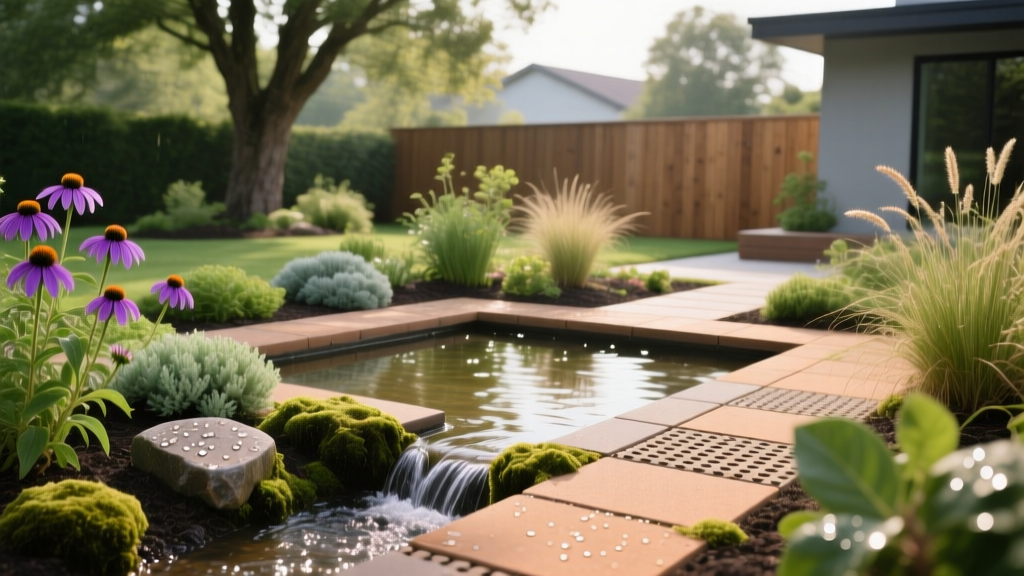
Sustainable Yard Drainage: Rain Gardens and Permeable Pavers
Anna KowalskiPublished
Water management is one of the most critical aspects of sustainable landscaping. As extreme weather events become more frequent, homeowners are increasingly faced with the challenge of managing heavy rainfall, preventing soil erosion, and protecting local waterways from polluted runoff. Traditional landscaping methods often rely on impervious surfaces like solid concrete patios and compacted turf, which exacerbate flooding and strain municipal storm drains. Fortunately, eco-friendly landscaping offers powerful, aesthetically pleasing solutions. By integrating rain gardens and permeable pavers into your outdoor living spaces, you can transform problematic yard drainage into a sustainable ecosystem that recharges groundwater and supports local biodiversity.
The Environmental Impact of Impervious Surfaces
In a natural, undeveloped environment, forests and deep-rooted prairie grasses absorb and filter up to 90% of rainfall. However, in suburban landscapes dominated by roofs, driveways, and traditional hardscaping, up to 55% of rainfall becomes surface runoff. According to the Environmental Protection Agency (EPA), this stormwater runoff picks up oil, heavy metals, fertilizers, and pesticides, carrying them directly into local streams and lakes. This nonpoint source pollution is a leading cause of water quality issues in the United States. Transitioning to green infrastructure techniques not only mitigates these environmental hazards but also reduces the burden on aging municipal sewer systems, preventing costly combined sewer overflows.
Designing and Installing a Native Rain Garden
A rain garden is a strategically placed, shallow depression designed to capture, hold, and filter stormwater runoff from impervious surfaces like roofs and driveways. Unlike a pond, a properly constructed rain garden should drain within 24 to 48 hours, preventing mosquito breeding while allowing water to percolate deeply into the soil.
Sizing and Strategic Placement
To effectively manage runoff, your rain garden should ideally be sized to capture the water from a 1-inch rainfall event. As a general rule of thumb, the garden should encompass about 10% to 15% of the total impervious area draining into it. For example, if you have a 500-square-foot roof section draining via a downspout, your rain garden should be approximately 50 to 75 square feet. Place the garden at least 10 feet away from your home's foundation to prevent basement seepage, and avoid placing it directly over septic systems or underground utilities.
The Ideal Bioretention Soil Mix
Native clay soils are too dense for rapid infiltration, while pure sand lacks the nutrients required to support lush plant life and filter pollutants. The University of Minnesota Extension recommends a specialized bioretention soil mix for optimal drainage and plant health. Excavate your depression to a depth of 18 to 24 inches and fill it with a blend consisting of:
- 50% to 60% Coarse Builder's Sand: Provides essential pore space for rapid water infiltration.
- 20% to 30% Topsoil: Supplies structure and essential minerals.
- 20% to 30% Organic Compost: Retains moisture, feeds soil microbes, and binds to heavy metals and excess phosphorus.
Selecting Deep-Rooted Native Plants
The true engines of a rain garden are native plants. Their extensive root systems—some reaching 8 to 15 feet deep—act as natural biological pipes, breaking up compacted subsoil and filtering pollutants. When selecting plants, choose species that can tolerate both temporary inundation and periods of summer drought. Excellent eco-friendly choices include:
- Swamp Milkweed (Asclepias incarnata): Thrives in wet conditions and is a vital host plant for Monarch butterflies.
- Blue Flag Iris (Iris versicolor): Features stunning spring blooms and a dense root mass excellent for soil stabilization.
- New England Aster (Symphyotrichum novae-angliae): Provides crucial late-season nectar for pollinators and tolerates fluctuating moisture levels.
- Switchgrass (Panicum virgatum): A robust, deep-rooted ornamental grass that adds vertical structure and winter interest.
Cost and Timing: DIY installation of a rain garden typically costs between $3 and $5 per square foot, while professional landscaping services range from $10 to $15 per square foot. The best time to plant is in the spring or early fall when moderate temperatures and natural rainfall help establish root systems.
Hardscaping with Permeable Interlocking Concrete Pavers (PICP)
While rain gardens manage runoff after it leaves the surface, permeable hardscaping prevents runoff from forming in the first place. Permeable Interlocking Concrete Pavers (PICP) are an outstanding eco-friendly alternative to traditional poured concrete or asphalt for patios, walkways, and driveways. Unlike standard pavers laid on a bed of impermeable sand and mortar, PICP systems are designed with wider joints filled with small, open-graded crushed stone, allowing water to pass directly through the surface into a massive underground reservoir.
The Anatomy of a Permeable Base
The success of a permeable patio relies entirely on its base preparation. According to the Interlocking Concrete Pavement Institute (ICPI), a properly engineered base acts as a structural foundation and a temporary water storage reservoir. The standard cross-section includes:
- Subgrade (Native Soil): Compacted to provide a stable foundation, though left slightly rough to encourage downward infiltration.
- Reservoir Base Course (6 to 12 inches): A layer of open-graded, washed crushed stone (typically ASTM No. 57, roughly 3/4-inch to 1-inch in size). The void spaces between the stones can temporarily store hundreds of gallons of stormwater during heavy downpours.
- Bedding Course (2 inches): A finer, open-graded crushed stone (ASTM No. 8, roughly 1/4-inch) that provides a level surface for laying the pavers while maintaining permeability.
- Pavers and Joint Filler: The concrete pavers themselves, with joints filled with the same ASTM No. 8 or No. 9 stone to prevent weed growth while allowing water passage.
Cost and Durability: Permeable paver installation is highly specialized and generally costs between $10 and $20 per square foot installed. However, they are incredibly durable, capable of withstanding freeze-thaw cycles without cracking, and can easily support the weight of passenger vehicles when installed with an adequate base depth.
Feature Comparison: Rain Gardens vs. Permeable Pavers
Choosing between a rain garden and permeable pavers depends on your specific landscape goals, budget, and spatial constraints. Many sustainable landscapes successfully incorporate both. Below is a structured comparison to help you decide which eco-friendly drainage solution fits your project.
| Feature | Rain Garden (Bioretention) | Permeable Pavers (PICP) |
|---|---|---|
| Primary Function | Captures, filters, and slowly infiltrates runoff. | Allows immediate surface infiltration and underground storage. |
| Best Application | Lawn areas, downspout outlets, swales. | Patios, walkways, driveways, parking pads. |
| Average Cost | $3 - $15 per sq. ft. | $10 - $20 per sq. ft. |
| Biodiversity Impact | High (supports pollinators, birds, soil microbes). | Low (inorganic surface, but protects local waterways). |
| Maintenance Level | Moderate (weeding, mulching, seasonal pruning). | Low to Moderate (vacuuming joints, weed control). |
| Lifespan | Indefinite (evolves as a natural ecosystem). | 25+ years (individual pavers can be replaced). |
Long-Term Eco-Friendly Maintenance
Sustainable landscaping is not a "set it and forget it" endeavor; it requires mindful, eco-friendly maintenance to ensure long-term functionality. For rain gardens, avoid using synthetic fertilizers or chemical herbicides, which will wash into the groundwater you are trying to protect. Instead, apply a 2-inch layer of double-shredded hardwood mulch annually to suppress weeds and retain moisture. Hand-pull invasive weeds before they go to seed, and leave dead plant stalks standing through the winter to provide overwintering habitat for native bees and beneficial insects.
For permeable pavers, the primary maintenance concern is the clogging of joint stones by wind-blown sediment, leaves, and organic debris. Sweep the surface regularly with a stiff bristle broom. Once or twice a year, use a specialized vacuum sweeper or a wet-dry shop vac to pull fine sediment out of the stone joints. If the joints become heavily compacted with dirt, you may need to vacuum out the top inch of stone and refill it with fresh, clean ASTM No. 8 aggregate to restore maximum permeability. Never use traditional polymeric sand or mortar in the joints, as this will completely seal the surface and defeat the purpose of the eco-friendly design.
Conclusion
Embracing eco-friendly drainage methods transforms a landscape liability into an environmental asset. Whether you are cultivating a vibrant, pollinator-friendly rain garden to capture roof runoff or installing a sophisticated permeable paver patio for your outdoor living space, you are actively reducing your ecological footprint. By mimicking natural hydrological cycles, these sustainable landscaping techniques protect local watersheds, conserve vital water resources, and create a healthier, more resilient outdoor environment for generations to come.

