Home & Garden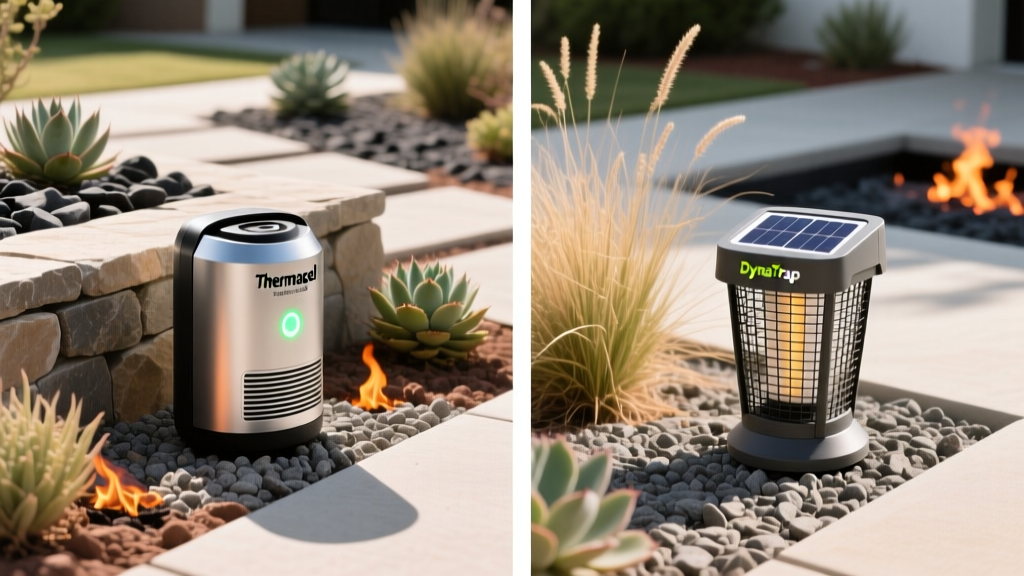
Thermacel vs DynaTrap 2026: Fire-Safe Mosquito Control
Sarah ChenPublished
The Fire-Resistant Landscaping Dilemma in 2026
As we navigate the 2026 outdoor living season, homeowners in Wildland-Urban Interface (WUI) zones face a complex dual threat: devastating wildfires and relentless mosquito populations. Designing a fire-resistant landscape is no longer just a recommendation; it is a critical necessity for protecting your home and family. However, traditional mosquito control methods often directly contradict fire-safe landscaping principles. Tiki torches, citronella candles, propane-powered foggers, and open-flame bug zappers introduce severe ignition risks into your defensible space, especially during dry, windy conditions or red flag warnings.
According to CAL FIRE defensible space guidelines, the immediate 5-foot zone around your home must be completely free of combustible materials and ignition sources. This means your patio and perimeter landscaping must rely on non-flammable, ember-resistant pest control solutions. In 2026, the debate for effective, fire-safe yard coverage comes down to two leading technologies: Thermacel spatial repellents and DynaTrap UV/CO2 insect traps. But which one truly offers the best protection without compromising your fire-resistant landscape?
Thermacel in 2026: Spatial Repellent Technology
Thermacel has long been the gold standard for personal and patio mosquito control. The brand creates a 15-to-20-foot invisible shield of repellent (typically allethrin or metofluthrin) that disrupts mosquito sensory receptors. For 2026, Thermacel's lineup is distinctly split into two categories: butane-powered thermal repellents and lithium-ion rechargeable models like the E55 and the smart-home-integrated Thermacel Liv system.
The Fire Risk of Butane Models
While classic butane-powered Thermacel units (like the Patio Shield) are highly effective, they are fundamentally problematic for fire-resistant landscaping. The butane cartridges pose a storage hazard in high-heat environments, and the heating element, while enclosed, represents an unnecessary ignition source in Zone 0 of your defensible space. If you are strictly adhering to fire-safe landscaping protocols, butane models should be avoided or used with extreme caution and constant supervision.
The Battery-Powered Alternative
The 2026 Thermacel E55 and Liv systems eliminate the open flame and combustible gas, relying instead on lithium-ion batteries and plug-in power sources. These are vastly superior for fire-safe zones. The E55 provides up to 9 hours of protection on a single charge and covers a 20-foot radius. The Liv system integrates directly with your smart home network, allowing you to schedule repellent release based on your smart irrigation system's timing, ensuring you are protected exactly when you step outside.
DynaTrap in 2026: UV and CO2 Trapping
DynaTrap approaches mosquito control from a completely different angle. Instead of repelling insects, it attracts and eliminates them. The 2026 DynaTrap models, such as the DT1260 and the high-capacity 1-acre Wi-Fi enabled traps, use a combination of UV light, a titanium dioxide (TiO2) coated funnel, and a quiet vacuum fan. The TiO2 coating reacts with the UV light to produce trace amounts of CO2, mimicking human breath to lure mosquitoes in. Once inside, the fan pulls them into a retention cage where they dehydrate and die.
Zero Fire Risk and Continuous Coverage
From a fire-resistant landscaping perspective, DynaTrap is the undisputed champion of safety. There are no flames, no heated elements capable of igniting dry mulch, and no combustible gases. You can safely place a DynaTrap near your fire-resistant plantings, such as high-moisture succulents, agave, or yarrow, without worrying about ember intrusion or accidental ignition. Furthermore, because they plug into standard outdoor GFCI outlets or utilize heavy-duty solar-assisted battery bases, they offer 24/7 continuous coverage, actively reducing the local mosquito population over time.
Placement and Efficacy
The primary drawback of DynaTrap is that it requires strategic placement and patience. The CDC recommends placing traps away from human gathering areas to draw mosquitoes away from your patio, rather than right next to your outdoor dining table. It also takes 2 to 3 weeks of continuous operation to break the local breeding cycle. For immediate relief during a weekend barbecue, a trap alone may not suffice without supplementary EPA-registered topical repellents.
Head-to-Head Comparison Chart
| Feature | Thermacel E55 / Liv (2026) | DynaTrap DT1260 / 1-Acre (2026) |
|---|---|---|
| Primary Mechanism | Spatial Repellent (Metofluthrin) | UV Light + TiO2 CO2 Trap |
| Coverage Area | 20-foot radius (Patio/Zone) | Up to 1/2 to 1 Acre (Yard-wide) |
| Fire Risk Level | Very Low (Battery/Plug-in only) | None (Zero heat/flame) |
| Power Source | Rechargeable Li-ion / Hardwired | 110V Outdoor GFCI / Solar Base |
| Onset of Effectiveness | Immediate (15-20 minutes) | Delayed (2-3 weeks for population drop) |
| Smart Home Integration | Yes (Liv app, Alexa, irrigation sync) | Yes (Wi-Fi models, IFTTT support) |
| Estimated 2026 Cost | $65 (E55) to $350 (Liv multi-node) | $130 (DT1260) to $250 (1-Acre) |
| Ongoing Costs | Repellent mats/refills required | Replacement UV bulbs annually |
Integrating Pest Control with Smart Irrigation and Flora
A true fire-resistant landscape relies heavily on high-moisture, drought-tolerant plants like aloe, ice plant, and lavender. However, improper irrigation can create the very standing water that mosquitoes need to breed. This is where smart home integration bridges the gap between fire safety and mosquito control.
In 2026, advanced smart irrigation controllers (like the Rachio 4 or Hydrawise Pro) utilize hyper-local weather data and soil moisture sensors to deliver precise drip irrigation. By ensuring your fire-resistant flora receives only the water it needs—without creating puddles or saturated soil—you eliminate primary mosquito breeding grounds. You can pair this with the Thermacell Liv system: program your smart home hub to activate the Thermacel spatial repellent nodes 30 minutes before your smart irrigation system turns off, ensuring the patio is mosquito-free by the time the watering cycle completes and you step outside.
Strategic Device Placement in Defensible Zones
When placing these devices, respect the zoning rules of defensible space. Zone 0 (0-5 feet from the home) should be hardscape or non-combustible gravel. Mount your Thermacel Liv nodes directly to the exterior masonry or stucco of your home. For Zone 1 (5-30 feet), where you might have well-spaced, fire-resistant shrubs and stone pathways, place your DynaTrap units near the perimeter of this zone, plugged into weatherproof landscape lighting circuits. This draws mosquitoes away from the house and into the trap, utilizing the open spacing required for firebreaks to your advantage.
The Expert Verdict for 2026
Choosing between Thermacel and DynaTrap for a fire-resistant landscape ultimately depends on your immediate needs and yard size. If you require instant, on-demand protection for a localized patio area and want to integrate your pest control with your smart home ecosystem, the battery-powered Thermacel E55 or Liv system is exceptional. It completely eliminates the fire hazards associated with older butane models while providing immediate relief.
However, if your goal is comprehensive, whole-yard coverage with absolutely zero ignition risk, the DynaTrap is the superior choice for fire-safe landscaping. It operates silently, poses no threat to your defensible space, and actively reduces the overall mosquito population over the course of the summer. For the ultimate 2026 fire-safe outdoor living experience, many landscaping experts recommend a hybrid approach: use a DynaTrap at the edge of your property to thin the herd, and keep a rechargeable Thermacel E55 on your outdoor dining table for immediate, guaranteed protection.
