Home & Garden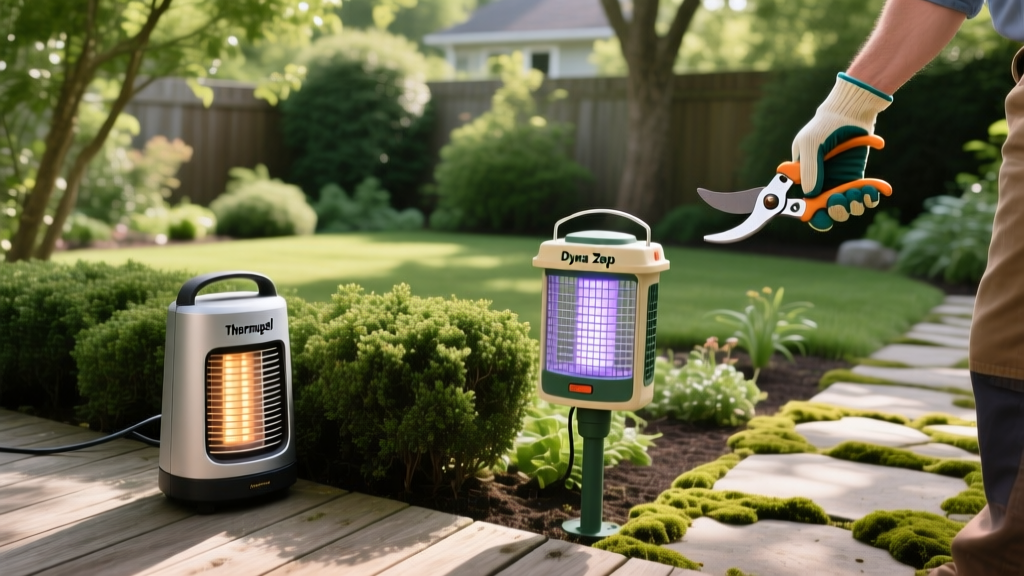
Thermacel vs DynaTrap 2026: Pruning for Mosquito Control
Mike RodriguezPublished
The Intersection of Landscaping and Mosquito Control in 2026
As outdoor living spaces become increasingly sophisticated, homeowners in 2026 are looking beyond simple bug sprays to create truly usable yards. Two of the most popular technological solutions for mosquito control are the Thermacel spatial repellent systems and the DynaTrap UV/CO2 insect traps. However, even the most advanced 2026 models will underperform if your landscaping works against them. The secret to maximizing your yard coverage lies in an often-overlooked horticultural practice: strategic pruning. By understanding pruning methods and timing, you can eliminate mosquito breeding microclimates and dramatically improve the efficacy of both Thermacel and DynaTrap devices.
The Microclimate Connection: Why Overgrown Yards Attract Mosquitoes
Mosquitoes are notoriously weak fliers and highly sensitive to desiccation (drying out). During the heat of the day, they seek refuge in cool, humid, and shaded microclimates. Overgrown shrubs, dense groundcovers, and unpruned tree canopies create the perfect daytime resting habitats. According to the Centers for Disease Control and Prevention (CDC), modifying your landscape to eliminate these resting areas and improve airflow is a critical first line of defense in integrated pest management.
When foliage is too dense, it blocks the natural breezes that would otherwise carry away the carbon dioxide and lactic acid emissions that attract mosquitoes to you. Furthermore, dense landscaping physically blocks the dispersion of spatial repellents and obscures the ultraviolet light used by insect traps. To make your 2026 pest control technology work, you must prune your garden to disrupt these microclimates.
Core Pruning Methods for Mosquito Deterrence
To optimize your yard for devices like the Thermacel LIV system or the DynaTrap 1-Acre series, you need to employ specific pruning techniques designed to increase airflow and sunlight penetration.
1. Thinning Cuts for Airflow
Thinning involves removing entire branches back to their point of origin (the trunk or a larger lateral branch). Unlike heading cuts, which stimulate dense, bushy new growth, thinning opens up the plant's architecture. By selectively removing crossing branches, inward-growing shoots, and deadwood, you allow wind to pass through the shrub. This increased airflow disrupts the humid stillness that mosquitoes crave and creates an unobstructed path for Thermacel's active ingredients to form a protective dome over your patio.
2. Limbing Up and Canopy Elevation
Lower tree branches often create a dark, damp umbrella over lawn areas and garden beds. 'Limbing up' involves removing the lowest branches of a tree to elevate the canopy. Aim to clear at least 6 to 8 feet of vertical space beneath the canopy. This not only allows more UV sunlight to reach the ground (which dries out damp soil where mosquitoes breed) but also provides an unobstructed line of sight for the UV bulbs on your DynaTrap, ensuring the light can be seen from across the yard.
3. Groundcover and Perimeter Clearing
Mosquitoes love resting in tall grass, ivy, and dense perimeter hedges. Maintain a 3-foot 'dry zone' around your patio, deck, and the specific area where you plan to place your mosquito trap. Keep groundcovers trimmed low and remove accumulated leaf litter, which holds moisture and provides daytime shelter for adult mosquitoes.
Strategic Timing: When to Prune for Pest Control
Timing your pruning correctly is just as important as the method. The goal is to open up the landscape before the spring mosquito hatch and maintain it throughout the peak summer breeding season.
- Late Winter to Early Spring (Dormant Season): This is the ideal time for major structural pruning, thinning cuts, and canopy elevation on deciduous trees and summer-flowering shrubs. Because the leaves are gone, you can easily see the branch structure and remove the exact limbs causing density issues. Doing this in February or March ensures the yard is open and breezy before the first spring rains create standing water.
- Early Summer (Pre-Peak Season): Perform light maintenance pruning to remove the flush of rapid spring growth. Focus on thinning out fast-growing hedges and clearing vegetation away from your designated outdoor seating areas and trap placement zones.
- Mid-to-Late Summer: Avoid heavy pruning during extreme heat, as it can stress plants. Instead, focus on 'deadheading' and removing water-holding debris. Ensure that no new foliage is blocking the sightlines of your DynaTrap or the airflow around your Thermacel emitters.
Proper thinning cuts, as detailed by the University of Minnesota Extension, improve air circulation and reduce the humidity that fosters both fungal plant diseases and mosquito habitats.
Thermacel 2026: Spatial Repellents and Airflow Dynamics
The 2026 lineup of Thermacel products, including the smart-home-integrated LIV system and the highly portable E65 rechargeable repeller, rely on creating a 15-to-20-foot dome of protection using active ingredients like metofluthrin or allethrin. These devices do not kill mosquitoes; they create an invisible chemical barrier that irritates the insects' sensory organs, forcing them to flee the area.
Why Pruning Matters for Thermacel: Spatial repellents require a gentle, consistent breeze to disperse the active ingredient evenly across your seating area. If your patio is surrounded by an unpruned, dense privacy hedge, the chemical plume will pool against the foliage, leaving gaps in your protection. By thinning the perimeter hedges and elevating nearby tree canopies, you allow the repellent vapor to flow smoothly across the patio, maintaining an unbroken 20-foot dome of coverage. Furthermore, removing dense overhead foliage prevents the chemical from being absorbed or blocked by thick, waxy leaves.
DynaTrap 2026: UV/CO2 Traps and Line-of-Sight Placement
DynaTrap takes a different approach. The 2026 models, such as the DT1260 (1/2 Acre) and the flagship 1-Acre series, use a combination of warm UV light, a titanium dioxide (TiO2) coated surface that generates trace amounts of CO2, and a whisper-quiet vacuum fan to trap and dehydrate mosquitoes.
Why Pruning Matters for DynaTrap: For a UV trap to be effective, the light must be visible to mosquitoes from a distance. If you place a DynaTrap behind an overgrown hydrangea bush or under a low-hanging, unpruned weeping willow, the UV light is blocked, and the CO2 plume becomes trapped in the dense foliage rather than drifting out to attract insects. Experts recommend placing traps 3 to 5 feet off the ground, away from competing human scents (like your patio seating). By limbing up trees and thinning mid-level shrubs, you create clear 'flight corridors' and unobstructed sightlines, allowing the trap to draw mosquitoes away from your living spaces and into the capture basket.
Head-to-Head Comparison: Thermacel vs. DynaTrap (2026 Models)
Choosing between these two systems depends on your yard's layout, your pruning willingness, and how you use your outdoor space. Below is a comparison of how they integrate with a well-pruned landscape.
| Feature | Thermacel LIV / E65 (2026) | DynaTrap 1-Acre Series (2026) |
|---|---|---|
| Coverage Area | Up to 20 ft radius (Patio/Deck) | Up to 1 Acre (Whole Yard) |
| Mechanism | Spatial Repellent (Chemical Plume) | UV Light + CO2 + Vacuum Fan |
| Pruning Requirement | High: Needs open airflow to disperse the chemical dome without foliage blocking the vapor. | Moderate: Needs clear line-of-sight for UV light and open space for CO2 drift. |
| Placement Strategy | Placed on tables or mounted under pergolas within the seating area. | Placed 30-40 feet away from seating, in a shaded but open transition zone. |
| Impact of Overgrowth | Chemical pools against dense hedges, leaving seating area exposed. | UV light is blocked; trap catches zero mosquitoes. |
| 2026 Avg. Cost | $250 - $350 (Starter Kit + Refills) | $150 - $220 (Unit + Replacement Bulbs) |
Integrating Landscaping and Technology for a Bug-Free Yard
The most effective mosquito control strategy in 2026 is not reliant on a single gadget, but rather a holistic approach that bridges horticulture and technology. The Environmental Protection Agency (EPA) notes that spatial repellents and traps are most effective when used as part of a broader integrated pest management plan that includes source reduction and habitat modification.
Start your season with aggressive dormant pruning to open the canopy and eliminate resting zones. Follow up with strategic thinning of perimeter hedges to ensure your Thermacel LIV system can push its protective dome across your dining area. Finally, limb up your transition-zone trees to give your DynaTrap the unobstructed sightlines it needs to quietly vacuum up the local mosquito population. By aligning your pruning methods and timing with the specific operational needs of your pest control devices, you can reclaim your outdoor living space and enjoy a beautifully landscaped, bite-free garden all year long.
