Home & Garden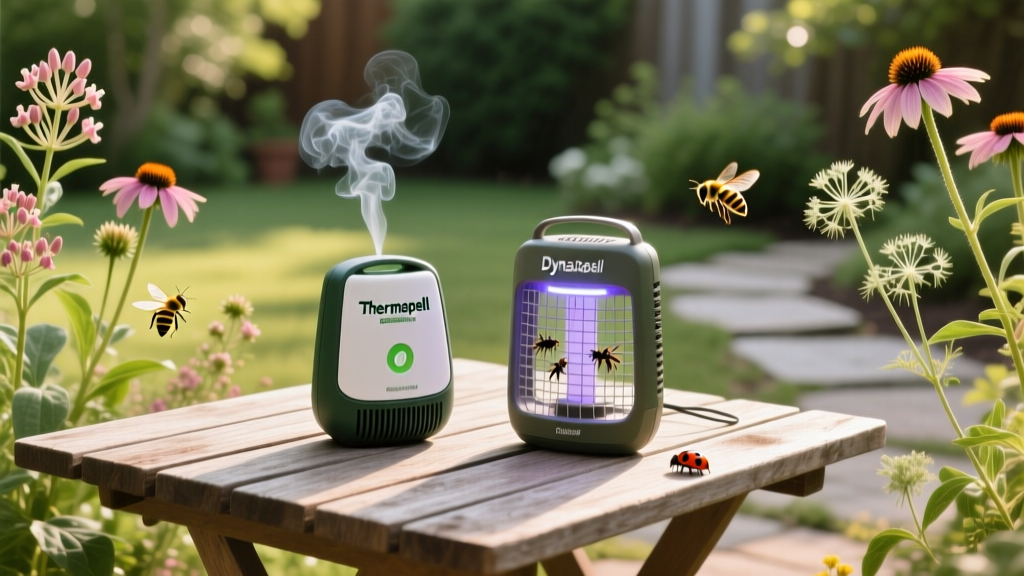
Thermacell vs DynaTrap 2026: Mosquito Control & Beneficial Bugs
David ParkPublished
The 2026 Bio-Control Dilemma: Comfort vs. Ecology
As we navigate the 2026 gardening season, the balance between comfortable outdoor living and ecological stewardship has never been more critical. Homeowners want to enjoy their patios and garden beds without being swarmed by mosquitoes, but the methods we choose to repel these pests can have devastating collateral damage on the local ecosystem. For gardeners who rely on beneficial insects and biological control (bio-control) to manage aphids, caterpillars, and other garden pests, choosing the right mosquito management system is paramount.
Two of the most popular non-spray mosquito control systems on the market are the Thermacell spatial repellent systems and the DynaTrap UV suction traps. Both promise a bug-free yard, but they operate on fundamentally different principles. When viewed through the lens of beneficial insect conservation and bio-control preservation, one of these systems emerges as a significantly safer choice for your garden's food web. In this comprehensive guide, we break down Thermacell vs. DynaTrap yard coverage, analyzing their efficacy, operational costs, and most importantly, their impact on your garden's vital bio-control agents.
Understanding Your Garden's Bio-Control Army
Before evaluating mosquito traps and repellents, it is essential to understand what is at stake. Biological control relies on a diverse population of predatory and parasitic insects to keep garden pests in check naturally. Ladybugs, green lacewings, parasitic wasps, hoverflies, and predatory ground beetles are the unsung heroes of the home garden. A single green lacewing larva can consume up to 200 aphids a week, while parasitic wasps naturally regulate hornworm and caterpillar populations.
Furthermore, night-flying insects like moths and beetles form the foundational food source for local bird and bat populations. Broad-spectrum insecticide barrier sprays are notorious for wiping out these beneficial populations, forcing gardeners into a cycle of chemical dependency. But what about localized traps and spatial repellents? Do they spare the good bugs while targeting the bad ones? The answer depends entirely on the mechanism of action.
Thermacell Yard Coverage: Spatial Repellents and Pollinator Safety
Thermacell devices, including the portable E65 and the smart-home-integrated Thermacell LIV system, utilize a heat-activated mechanism to vaporize a synthetic pyrethroid (typically allethrin or metofluthrin). This creates an invisible, odorless dome of protection that disrupts the sensory receptors of mosquitoes, effectively repelling them from the immediate area.
How Thermacell Works in 2026
The 2026 Thermacell LIV Smart System allows homeowners to daisy-chain up to three hubs, providing a customized yard coverage of up to 1,050 square feet. Because it is a spatial repellent rather than a trap, it does not attract insects; it simply creates a 'no-fly zone' for mosquitoes in the areas where humans are actively gathering.
Impact on Beneficial Insects
Allethrin is derived from chrysanthemum flowers and is highly toxic to bees and aquatic invertebrates upon direct contact. However, according to guidelines published by the Xerces Society for Invertebrate Conservation, the risk to foraging pollinators from localized, heat-vaporized spatial repellents is remarkably low when used correctly. Because the Thermacell dome is restricted to a 15-to-20-foot radius around the patio or seating area, beneficial insects foraging in the broader garden beds remain completely unaffected. Furthermore, because Thermacell units are typically only turned on when humans are present (often in the early evening or during daytime patio use), the exposure window for daytime pollinators is minimal. By turning the system off when you go inside, you allow your garden's bio-control agents to operate unimpeded.
DynaTrap Yard Coverage: UV Suction and the Bycatch Problem
DynaTrap systems, such as the popular DT1290 and DT1260 models, use a completely different approach. These devices utilize ultraviolet (UV-A) fluorescent bulbs combined with a titanium dioxide (TiO2) coated surface that produces a mild plume of carbon dioxide (CO2) when exposed to the UV light. A quiet, continuous vacuum fan then sucks approaching insects into a retention cage where they dehydrate and die.
The Non-Target Impact of UV Traps
While DynaTrap advertises coverage of up to one acre for their flagship 2026 models, the reality of mosquito biology complicates this claim. Mosquitoes are primarily attracted to human odor, lactic acid, and concentrated CO2 plumes—not UV light. While the TiO2 CO2 generation helps, the UV light is overwhelmingly attractive to thousands of other insect species. This leads to a massive 'bycatch' problem.
Entomological studies consistently show that UV light traps catch vast quantities of non-target insects. For every biting mosquito caught in a DynaTrap, hundreds of beneficial or harmless insects are also vacuumed up. This includes nocturnal moths (crucial pollinators and bat food), predatory ground beetles, and green lacewings. By running a UV trap 24/7 as recommended by the manufacturer, you are actively depleting your yard's bio-control army. Removing these predatory insects weakens your garden's natural defenses, often leading to secondary pest outbreaks, such as severe aphid or spider mite infestations, which then require chemical interventions to fix.
Head-to-Head Comparison: Thermacell vs. DynaTrap
| Feature | Thermacell LIV (2026 Smart System) | DynaTrap DT1290 (2026 Model) |
|---|---|---|
| Mechanism | Heat-vaporized spatial repellent (Allethrin) | UV Light + TiO2 (CO2) + Vacuum Fan |
| Claimed Coverage | Up to 1,050 sq. ft. (with 3 nodes) | Up to 1 Acre |
| Target Specificity | High (Repels mosquitoes from human zones) | Low (Attracts all phototactic insects) |
| Pollinator Risk | Low (If kept away from blooming beds) | Moderate to High (Night-flying moths trapped) |
| Predatory Insect Risk | Very Low (Localized dome effect) | High (Lacewings & beetles caught in bycatch) |
| Operating Schedule | On-demand via smartphone app | Continuous 24/7 operation required |
| Est. Annual Cost | ~$120 (Repellent mats/cartridges) | ~$45 (Replacement UV bulbs & electricity) |
The Verdict: Which is Safer for Beneficial Insects?
When prioritizing beneficial insects and biological control, the Thermacell spatial repellent system is the clear winner. While the active ingredient (allethrin) is inherently toxic to insects, its application method—a localized, on-demand dome of protection—ensures that the broader garden ecosystem remains untouched. You are only repelling mosquitoes from the specific 15-foot radius where you are sitting, leaving your vegetable garden, flower beds, and the surrounding perimeter completely safe for ladybugs, parasitic wasps, and native bees to do their work.
Conversely, the DynaTrap functions as an indiscriminate insect vacuum. The Centers for Disease Control and Prevention (CDC) and various entomological societies have long noted that UV bug zappers and suction traps kill vastly more beneficial insects than actual pest mosquitoes. By running a DynaTrap continuously, you are inadvertently sabotaging your garden's natural bio-control mechanisms, stripping the local food web of vital predatory insects and nocturnal pollinators.
Best Practices if You Must Use a UV Trap
If you already own a DynaTrap or prefer a trap-based system, you can mitigate the damage to your bio-control agents through strategic placement. Never place a UV trap near your garden beds, patio, or doorways. Instead, place it at the far, downwind edge of your property, at least 40 feet away from where humans gather and away from your most valuable planting zones. This draws insects away from your living space while minimizing the trap's interference with the dense foliage where predatory insects hunt and breed.
True Bio-Control Alternatives for 2026
While spatial repellents protect your patio, they do nothing to reduce the overall mosquito population breeding in your yard. For true, ecologically sound mosquito control that perfectly aligns with a bio-control philosophy, you must target the larvae without harming non-target species.
1. BTI Dunks and Bits
Bacillus thuringiensis israelensis (Bti) is a naturally occurring soil bacterium that is lethal only to mosquito and black fly larvae. It has zero toxicity to bees, butterflies, ladybugs, birds, or pets. The Environmental Protection Agency (EPA) heavily endorses Bti as a safe, targeted biological control agent. By placing Bti dunks in rain barrels, birdbaths, and pond features, you halt the mosquito life cycle at the source while preserving every single beneficial insect in your yard.
2. Beneficial Nematodes
For damp soil areas where some mosquito species lay their eggs, applying beneficial nematodes (such as Steinernema feltiae) to the soil in early spring provides a dual-purpose bio-control solution. These microscopic worms hunt down mosquito larvae in the soil, while simultaneously controlling fungus gnats, flea larvae, and grub populations, protecting your lawn and garden roots without a single drop of synthetic chemicals.
3. Encouraging Natural Predators
Finally, invite natural mosquito predators into your landscape. Installing bat houses can dramatically reduce local mosquito populations, as a single brown bat can consume over 1,000 mosquito-sized insects in an hour. Similarly, maintaining a small, unchlorinated water feature stocked with mosquito-eating fish (like Gambusia or native minnows, where legally permitted) provides a permanent, self-sustaining bio-control system that works in perfect harmony with your garden's ecology.
Final Thoughts
In 2026, effective home and garden care means working with nature, not against it. By choosing localized spatial repellents like Thermacell for your immediate seating areas, and relying on targeted biological agents like Bti for source reduction, you can enjoy a mosquito-free outdoor living space while ensuring your garden's beneficial insects thrive. Protecting your bio-control army is the smartest, most sustainable investment you can make for the long-term health and beauty of your landscape.
