Home & Garden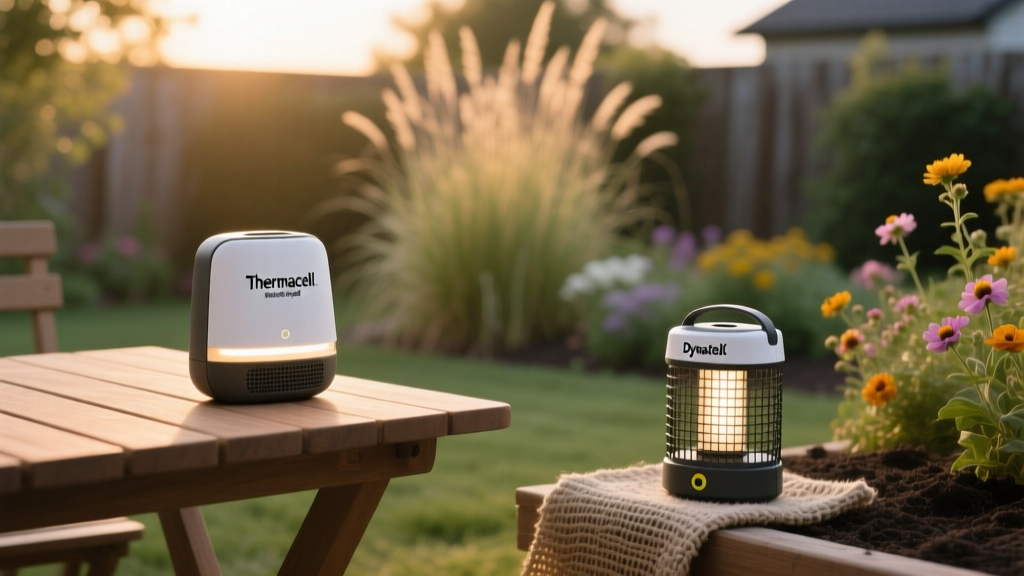
Thermacell vs DynaTrap 2026: Mosquito Control for Garden Photography
Lisa ThompsonPublished
The Magic and Misery of Golden Hour Garden Photography
For garden photographers and botanical documentarians, the most breathtaking light occurs during the golden hours of dawn and dusk. The soft, directional sunlight illuminates dew drops on spiderwebs, highlights the translucent petals of blooming echinacea, and casts long, dramatic shadows across landscaped pathways. However, these peak lighting conditions perfectly overlap with the peak feeding times of mosquitoes. When you are trying to capture a 45-image focus stack of a fragile orchid bloom or monitor a multi-week time-lapse setup, even the slightest twitch from a mosquito bite can ruin your shot sequence.
In 2026, the debate over the best mosquito control for outdoor stationary work centers on two industry giants: Thermacell and DynaTrap. While both offer exceptional pest management, they operate on fundamentally different scientific principles and serve entirely different photographic workflows. Choosing the right system depends on whether you are a mobile macro-shooter moving through garden beds or a time-lapse documentarian leaving gear in the yard for weeks on end.
The Photographer’s Dilemma: Stationary Shoots and Peak Mosquito Hours
Garden photography requires an unnatural level of stillness. Unlike wildlife photographers who might use blinds, garden documentarians are often out in the open, kneeling in damp soil, or standing motionless next to a tripod while an intervalometer clicks away. Mosquitoes are attracted to the carbon dioxide we exhale, our body heat, and the dark clothing we often wear to prevent light reflections on our subjects.
According to the Centers for Disease Control and Prevention (CDC), many mosquito species are most aggressive during the twilight hours of early morning and late evening. This creates a hostile environment for photographers. Traditional bug sprays can leave greasy residues on camera grips, and the fumes can be distracting when you are peering through a viewfinder for extended periods. This is where spatial repellents and UV traps become essential tools in the modern garden photographer's kit.
Thermacell in 2026: The Mobile Macro-Shooter’s Shield
Thermacell devices create a 15-foot dome of protection by heating a repellent mat or liquid cartridge containing allethrin or metofluthrin—synthetic versions of a naturally occurring insecticide found in chrysanthemum flowers. For the 2026 season, the Thermacell E55 and the smart-home-enabled Thermacell Liv system are the top choices for active photographers.
Why Thermacell Excels for Active Photography
- Total Silence: The E55 and Liv models operate with zero fan noise. When you are documenting garden soundscapes or recording video B-roll of pollinators, you cannot afford the hum of a vacuum fan in your audio track.
- Immediate Deployment: If you spot a rare blooming event and need to set up your macro rail instantly, Thermacell establishes a protective zone in about 15 minutes. You simply clip the E55 to your belt or camera bag and step into the garden.
- Wind Adaptability: The 2026 E55 model features improved wind-resistance algorithms that adjust the heating element to maintain the repellent plume even in light garden breezes.
The Limitations
Thermacell is a localized shield. It moves with you, but it does not reduce the overall mosquito population in your garden. Furthermore, if you are shooting in a heavily wooded, humid corner of your property with zero air movement, the repellent dome can sometimes pool too closely to your body, requiring you to reposition the device slightly away from your shooting stance.
DynaTrap in 2026: The Time-Lapse and Wide-Area Defender
DynaTrap takes a completely different approach. Instead of repelling mosquitoes, it attracts and eliminates them. Using a combination of UV light, a titanium dioxide (TiO2) coating that generates trace amounts of CO2 when exposed to light, and a quiet vacuum fan, DynaTrap lures insects into a capture basket where they dehydrate. The 2026 models, such as the DynaTrap DT1260 and the high-capacity DT1700, feature sleeker, matte-finish housings that blend beautifully into garden backgrounds, ensuring they do not become distracting elements in your wide-angle landscape shots.
Why DynaTrap Excels for Long-Term Documentation
- Area-Wide Population Reduction: The American Mosquito Control Association notes that consistent trapping can significantly disrupt local breeding cycles. If you are setting up a 30-day time-lapse of a raised bed's growth cycle, running a DynaTrap 24/7 will drastically reduce the number of mosquitoes in the entire yard, protecting both you and your subjects (like delicate butterfly larvae that might otherwise be disturbed by swarms).
- Zero Chemical Emissions: For photographers documenting organic, garden-to-table vegetable plots or sensitive pollinator habitats, the chemical-free nature of DynaTrap ensures no airborne residues settle on the produce or the delicate wings of the bees you are photographing.
- Set-and-Forget Convenience: Once plugged in, the DT1700 covers up to 3/4 of an acre. You can leave your time-lapse rig and the trap running for weeks, only returning to empty the catch basket.
The Limitations
DynaTrap is not an instant fix. It takes two to three weeks of continuous operation to break the local mosquito breeding cycle. Additionally, while the fan is quiet, it is not entirely silent, which may interfere with sensitive parabolic microphone recordings of garden ambiance. Finally, it requires a continuous power source, meaning you must manage outdoor extension cords carefully to avoid tripping hazards in your shooting lanes.
2026 Feature Comparison Chart: Thermacell vs. DynaTrap
| Feature | Thermacell E55 / Liv (2026) | DynaTrap DT1260 / DT1700 (2026) |
|---|---|---|
| Mechanism | Spatial Repellent (Allethrin/Metofluthrin) | UV Light + TiO2 CO2 + Vacuum Trap |
| Coverage Area | 15-foot radius (Portable) | 1/2 to 3/4 acre (Stationary) |
| Setup Time | 15 minutes to full efficacy | 2-3 weeks to break breeding cycle |
| Noise Level | Completely Silent | Low hum (Quiet fan) |
| Power Source | USB-C Rechargeable / Smart Hub | Continuous AC Power (Outdoor Outlet) |
| Best Photo Scenario | Macro focus-stacking, roaming golden hour shoots | Long-term time-lapses, wide-area garden prep |
| 2026 Est. Cost | $65 - $250 (plus refills) | $120 - $180 (plus replacement bulbs) |
Strategic Deployment for Garden Documentation Projects
To achieve the best results, professional garden documentarians in 2026 are increasingly using a hybrid approach, deploying both systems based on the specific photographic task at hand.
Scenario 1: The Dawn Macro Session
You are heading out at 5:30 AM to capture the morning dew on hosta leaves before the sun burns it off. You are moving from plant to plant, setting up a geared tripod head, and using a focus rail. Strategy: Clip the Thermacell E55 to your belt. The silent, chemical-plume shield moves with you, keeping your immediate workspace clear of pests without requiring you to run power cords through the wet grass.
Scenario 2: The 14-Day Bloom Time-Lapse
You are documenting the unfurling of a rare Agave bloom using a weather-sealed camera rig mounted on a heavy-duty stand. You will be visiting the rig daily to swap batteries and check the intervalometer. Strategy: Install a DynaTrap DT1700 about 20 feet away from the rig (to avoid the UV light causing unwanted color casts or lens flare in your daytime frames). Run it continuously to suppress the local population, ensuring your daily maintenance visits are bite-free.
Protecting Your Camera Gear: Picaridin vs. DEET
Even with the best spatial repellents and traps, a backup personal repellent is necessary for extreme conditions. However, garden photographers must be incredibly careful about the chemical composition of their skin sprays. DEET is highly corrosive to plastics, polycarbonate, and rubberized coatings. If you apply DEET-based repellent to your hands and then handle your camera body, adjust your focus rings, or swap lenses, you risk permanently melting the rubberized grips and degrading the anti-reflective coatings on your expensive glass.
The Environmental Protection Agency (EPA) recognizes Picaridin as a highly effective, long-lasting alternative to DEET. Crucially for photographers, Picaridin is non-corrosive to plastics, synthetic fabrics, and camera gear. A 20% Picaridin lotion or spray provides up to 8 hours of protection against mosquitoes and ticks, making it the undisputed choice for outdoor photographers who need to protect both their skin and their thousands of dollars in imaging equipment.
Conclusion: Mastering the Environment for the Perfect Shot
Successful garden photography and botanical documentation require mastering not just light and composition, but the environment itself. In 2026, the choice between Thermacell and DynaTrap is not about which product is universally better, but which tool fits your specific shooting methodology. Use Thermacell for silent, mobile, and immediate protection during those fleeting golden hour macro sessions. Rely on DynaTrap to establish a wide-area, chemical-free sanctuary for long-term time-lapse projects and heavy garden documentation workflows. By pairing the right mosquito control strategy with gear-safe Picaridin, you can finally focus entirely on the art of the garden, undisturbed by the swarm.
