Home & Garden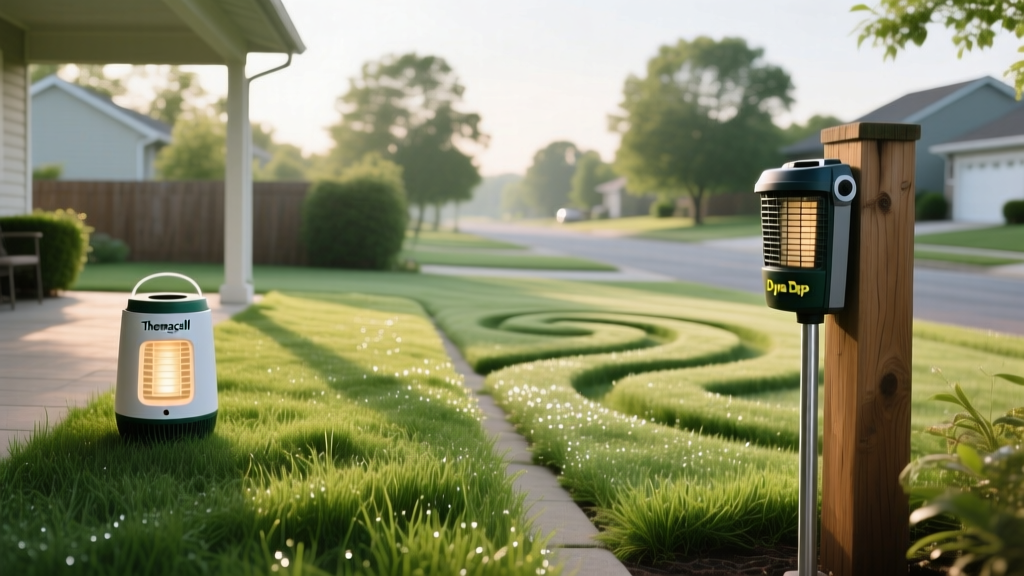
Thermacell vs DynaTrap 2026: Mosquito Control & Mowing
James MillerPublished
The Hidden Link Between Mowing Patterns and Mosquito Habitats
When homeowners think about mosquito control, they rarely think about their lawn mowing routine. Yet, as we navigate the 2026 outdoor season, landscaping professionals and entomologists agree that your mowing techniques and patterns are the first line of defense against these biting pests. Mosquitoes are notoriously weak fliers and rely on cool, damp, and shaded microclimates to rest during the heat of the day. Tall grass, uneven turf, and soil compaction ruts created by repetitive mowing patterns provide the perfect sanctuary for adult mosquitoes to hide and breed.
If you are investing in premium mosquito control technology like Thermacell spatial repellents or DynaTrap CO2-based insect traps, your efforts will be severely undermined if your lawn care routine is inadvertently cultivating a mosquito nursery. In this comprehensive guide, we will break down the Thermacell vs. DynaTrap showdown for 2026 yard coverage, and more importantly, how to adapt your mowing techniques and patterns to maximize the efficacy of these devices while naturally starving mosquitoes of their preferred habitats.
Thermacell vs. DynaTrap: The 2026 Yard Coverage Showdown
Choosing between Thermacell and DynaTrap is not necessarily an either-or decision; rather, it is about understanding their distinct mechanisms of action and how they integrate with your outdoor lifestyle and lawn maintenance schedule. Both brands have released updated, highly efficient models for 2026, catering to different aspects of yard coverage.
Thermacell: The Spatial Repellent Shield
Thermacell devices, including the popular E55 rechargeable repeller and the smart-home-integrated Thermacell Liv system, work by heating a mat or cartridge containing allethrin or metofluthrin. This creates an invisible, odorless dome of protection that disrupts the mosquito's ability to locate a host. Thermacell is highly effective for immediate, localized coverage—such as a patio, a seating area, or even clipped to your belt while you are actively mowing the lawn. It does not kill mosquitoes; it simply creates a 'no-fly zone' that forces them away from your immediate vicinity.
DynaTrap: The 24/7 Population Reducer
DynaTrap takes a different approach. Models like the DT1260 and the sleeker 2026 Flylight series utilize a combination of UV light and a titanium dioxide-coated surface that produces trace amounts of CO2, mimicking human breath. A quiet fan then sucks the approaching insects into a retaining cage where they dehydrate. DynaTrap is designed for continuous, broad-yard background coverage. It works best when left running 24/7 to systematically break the breeding cycle by catching egg-laying females. However, its placement is critical, and this is where your mowing patterns come into play.
Feature Comparison: Thermacell vs. DynaTrap
| Feature | Thermacell (E55 / Liv System) | DynaTrap (DT1260 / Flylight) |
|---|---|---|
| Primary Mechanism | Spatial Repellent (Allethrin/Metofluthrin) | UV Light + CO2 + Vacuum Fan |
| Coverage Area | 15 to 20-foot radius (Localized) | Up to 1/2 acre (Broad Area) |
| Best Use Case | Patios, outdoor dining, riding mowers | Background yard placement, garden edges |
| Mowing Interference | Low (Can be worn or moved easily) | High (Must avoid clipping discharge and dust) |
| Smart Home Integration | High (Liv system uses app & geofencing) | Low (Mostly plug-and-play standalone) |
| Ongoing Cost | Refill cartridges/mats required | Minimal (Bulb replacement every few years) |
Advanced Mowing Techniques to Starve Mosquito Habitats
To get the most out of your DynaTrap or Thermacell system, you must eliminate the resting zones that protect mosquitoes from wind and sun. Here is how your mowing techniques directly impact your yard's mosquito population.
The 3-Inch Rule and Clipping Management
Maintaining your turf at exactly 3 inches is the gold standard for 2026 lawn care. Cutting grass shorter than this scalps the lawn, exposing soil to the sun, which stresses the roots and encourages weeds. However, letting it grow past 4 inches creates a humid, shaded canopy at the soil level—the exact environment mosquitoes seek out to avoid desiccation. Furthermore, always use a mulching blade to finely chop clippings, or bag them if the grass is wet. Large, wet clumps of grass clippings left on the lawn ferment and hold moisture, creating localized breeding grounds for pests.
Alternating Mowing Patterns to Eliminate Puddles
One of the most common mistakes homeowners make is mowing in the exact same horizontal or vertical stripes every week. This repetitive wheel traffic causes severe soil compaction along the mower's tire paths. When it rains, or when your smart irrigation system runs, these compacted ruts fail to drain, resulting in shallow puddles. Even a puddle the size of a bottle cap is enough for a female mosquito to lay hundreds of eggs. By strictly alternating your mowing patterns—switching from horizontal to vertical, and then to diagonal checkerboard patterns every other week—you distribute the weight of your mower evenly, preventing rut formation and ensuring proper surface water drainage.
Edge Trimming and the 'Transition Zone'
Mosquitoes love the transition zone between your manicured lawn and your dense garden beds. When mowing, ensure you are using a string trimmer to vertically edge the borders of your lawn. Overgrown edges create a bridge of tall, damp vegetation that allows mosquitoes to safely travel from your garden beds into your patio area. By keeping a crisp, clean edge, you expose these transition zones to sunlight and airflow, making them inhospitable to resting pests.
Strategic Placement Based on Mowing Routes and Wind
Integrating your mosquito traps with your mowing routine requires strategic foresight. If you are using a DynaTrap, placement is everything. According to the American Mosquito Control Association, traps should be placed in shaded areas, away from competing light sources, and ideally upwind from where people gather. However, you must also place the trap away from your primary mowing discharge chute. If you routinely mow in a clockwise circle around your yard, your side-discharge mower will constantly blow fine grass dust, pollen, and clippings toward the center or the edges. If your DynaTrap is in the line of fire, its fan intake will clog with lawn debris, drastically reducing its efficiency and potentially burning out the motor.
Conversely, Thermacell devices are perfect for the active mower. If you use a zero-turn riding mower, mounting a Thermacell E55 on the roll bar or keeping it in your pocket creates a moving bubble of protection. As you disturb the tall grass at the edges of your property, you will inevitably flush out dozens of resting mosquitoes. The spatial repellent ensures that these disturbed pests are repelled before they can land on you during your 45-minute mowing window.
Smart Home Integration: Irrigation and Lighting
In 2026, bridging the gap between outdoor living and smart home technology is essential for holistic pest control. Mosquitoes are inextricably linked to moisture. If you are utilizing a smart irrigation controller like Rachio or B-hyve, ensure you are programming your system for 'cycle and soak' watering methods. Watering deeply but less frequently encourages deep root growth while allowing the surface to dry out completely between cycles, denying mosquitoes the damp topsoil they crave.
Furthermore, consider your outdoor smart lighting. Traditional bright white LED floodlights can attract a variety of nocturnal insects, which in turn attract insect-eating wildlife and disrupt the local ecosystem. While mosquitoes are not strongly attracted to light, other bugs are. By programming your smart outdoor lighting to shift to a warmer, amber hue (around 2200K) after 9 PM, you reduce the overall insect activity in your yard, allowing your DynaTrap's UV light to stand out more effectively against the ambient background without competing with your patio illumination.
Environmental Considerations and Expert Guidelines
When deploying chemical or physical controls, it is vital to follow environmental guidelines. The Environmental Protection Agency (EPA) emphasizes that source reduction—eliminating standing water and maintaining proper yard hygiene—is always the most effective and environmentally friendly first step in mosquito management. Spatial repellents like Thermacell are EPA-registered and generally safe for use around humans when used as directed, but care should be taken around aquatic features, as allethrin is highly toxic to fish and bees. DynaTraps, being chemical-free, offer a safe alternative near koi ponds or pollinator gardens, provided they are placed where they will not inadvertently trap beneficial daytime pollinators (though mosquitoes are primarily active at dawn and dusk, when the trap is most effective).
Conclusion
Winning the war against mosquitoes in 2026 requires a multi-pronged approach that goes far beyond simply buying a gadget. By understanding the distinct advantages of Thermacell for immediate, localized protection and DynaTrap for long-term population reduction, you can tailor your defense to your specific yard layout. More importantly, by mastering your mowing techniques—alternating patterns to prevent soil compaction, maintaining the 3-inch rule, and keeping crisp edges—you actively destroy the microclimates that mosquitoes need to survive. Combine these cultural lawn care practices with smart irrigation and strategic trap placement, and you will reclaim your outdoor living spaces for garden-to-table dinners and evening relaxation, completely bite-free.
