
Landscaping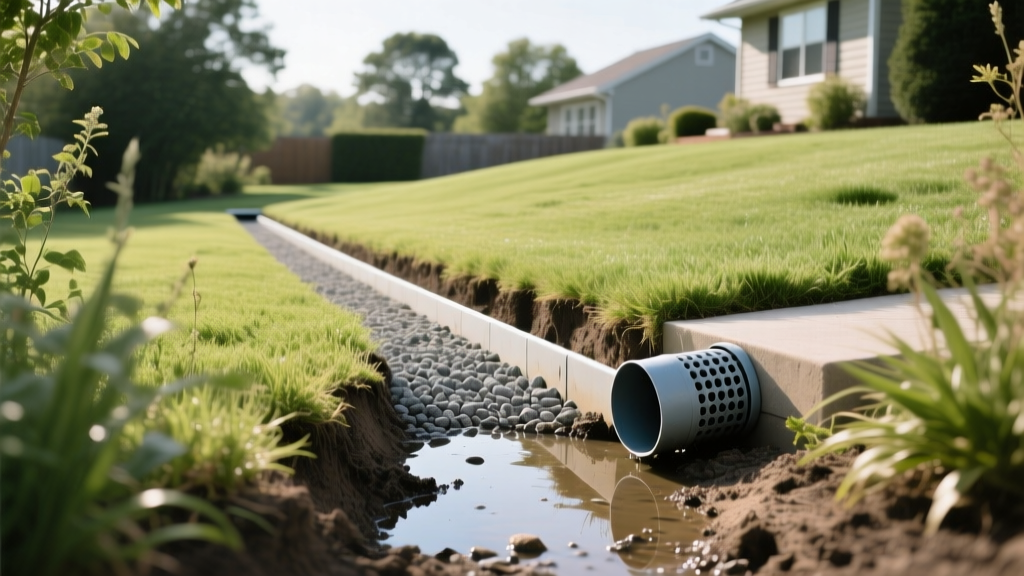
Troubleshooting Yard Drainage: Fixing a Failed French Drain
Anna KowalskiPublished
Why Your Landscape Drainage System is Failing
You invested time and money into installing a French drain to protect your landscaping and foundation, yet after a heavy rainstorm, your yard is still a swamp. Water pooling in garden beds, soggy turf, and flooded hardscaping are clear signs that your drainage solution is not performing as intended. Troubleshooting a failed landscape drainage system requires moving beyond guesswork and applying systematic problem diagnosis. According to the Texas A&M Agrilife Extension, improper grading, misunderstood drainage mechanics, and poor material choices are the leading causes of residential landscape water issues. Before you start digging up your entire yard, you must accurately diagnose the root cause of the failure.
Diagnosing the Root Cause of Yard Flooding
The first step in troubleshooting is matching the specific symptom you are seeing in your yard to its underlying mechanical or environmental cause. Many homeowners assume a 'French drain' is a catch-all solution for any water problem, but landscape drainage is highly specialized. Use the diagnostic chart below to pinpoint exactly where your system is breaking down.
| Symptom | Likely Cause | Diagnostic Action |
|---|---|---|
| Water pools over the drain trench | Clogged filter fabric or wrong gravel type | Inspect fabric type; check for fine silt infiltration |
| Water backs up into catch basins | Insufficient slope or a 'belly' in the pipe | Run a string line or laser level to verify 1% grade |
| Drain works in light rain, fails in storms | Undersized pipe or inadequate inlet capacity | Calculate roof runoff volume; upgrade to 6-inch pipe |
| Water surfaces near the outlet | Blocked pop-up emitter or frozen discharge | Clear debris from emitter; install a freeze-proof weep hole |
Common French Drain Failures and How to Fix Them
1. Misdiagnosing Surface vs. Subsurface Water
The most common reason a newly installed drainage system fails is that the wrong system was chosen for the type of water present. A traditional French drain consists of a perforated pipe surrounded by washed gravel, wrapped in filter fabric. It is specifically designed to intercept subsurface water and high water tables. It is notoriously ineffective at capturing surface runoff from heavy downpours or impervious surfaces like driveways. If your problem is surface puddling, water simply will not percolate through the gravel fast enough during a storm. The Fix: Install a solid-pipe system connected to surface catch basins, such as the NDS Pro Series 12-inch catch basins, to rapidly capture and channel surface water away from the property.
2. The Filter Fabric and Gravel Mistake
If your French drain worked well for the first year but now overflows during every rain event, your gravel envelope is likely clogged with silt and clay. This almost always happens when contractors use cheap, woven landscape fabric instead of professional-grade non-woven geotextile fabric. Woven fabrics quickly blind (clog) with fine soil particles, turning your drain trench into an impermeable mud pit. Furthermore, using pea gravel or unwashed river rock introduces dirt and sand into the pipe. The Fix: You will need to excavate the trench, remove the clogged gravel, and rebuild the drain using 3/4-inch washed, crushed angular stone and a minimum 4 oz. non-woven geotextile fabric (such as US Fabrics or Mirafi). The angular stone creates larger void spaces for water flow, while the non-woven fabric acts as a true soil separator without blinding.
3. Incorrect Slope and Pitch Issues
Gravity is the engine of any landscape drainage system. A French drain requires a minimum slope of 1% (a 1/8-inch drop per linear foot) to maintain enough water velocity to carry sediment through the pipe and out to daylight. If the trench was dug by eye, or if the soil has settled over time creating a 'belly' in the trench, water will pool inside the pipe and stagnate. The Fix: Perform a string line test. Stake a string at the highest point of the drain and run it to the outlet. Use a line level to measure the drop. If the slope is less than 1/8-inch per foot, you must excavate the pipe and regrade the trench base using a compacted sand or crusher run base to hold the proper pitch.
4. Undersized or Crushed Corrugated Pipe
Many DIYers and budget landscapers use flexible black corrugated pipe for French drains. While inexpensive and easy to bend, this pipe has a low crush rating. When buried under heavy clay soil or driven over by lawn tractors, it easily collapses. Additionally, the interior ridges of corrugated pipe create friction, slowing water flow and allowing algae and sediment to build up. The Fix: Replace failing corrugated sections with rigid SDR 35 PVC pipe or Schedule 40 PVC. SDR 35 is the industry standard for subsurface drainage; it features a smooth interior for high flow rates and a rigid wall that withstands deep burial and heavy loads. For areas under driveways, always sleeve the pipe in Schedule 80 PVC or encase it in concrete.
5. Outlet and Pop-Up Emitter Blockages
Your drain might be perfectly constructed, but if the water has nowhere to go, the entire system will back up. Pop-up emitters are popular for discharging water into lawn areas, but they are highly susceptible to clogging from lawn clippings, freezing in the winter, and damage from lawnmowers. According to stormwater management guidelines outlined by the Penn State Extension, ensuring unobstructed discharge points is critical for preventing localized flooding and soil erosion. The Fix: Inspect your outlet after every major storm. If using a pop-up emitter, ensure it has a built-in weep hole or a specialized French drain sump at the base so residual water can drain into the soil after the storm passes, preventing freeze-thaw damage in colder climates. Where possible, daylight the pipe into a ditch, dry well, or storm sewer (if local codes permit) rather than relying solely on pop-up emitters.
Step-by-Step Troubleshooting Guide
If you are unsure where the blockage or failure is occurring, follow this systematic diagnostic process before breaking ground:
- Step 1: The Water Hose Test. Run a garden hose into the upstream catch basin or cleanout for 10 minutes. Observe the outlet. If water flows freely, your pipe is clear, and your issue is likely inadequate inlet capacity or surface grading.
- Step 2: The Flush Test. If water backs up, use a plumbing snake or a high-pressure hose nozzle to attempt to clear the line. If the water suddenly releases, you had a sediment or root blockage.
- Step 3: Camera Inspection. If flushing fails, rent a sewer camera or hire a professional to scope the line. This will reveal collapsed pipes, severe root intrusion, or massive trench bellies without requiring you to dig blindly.
- Step 4: Grading Verification. Use a 4-foot carpenter's level or a laser level to check the surface grading around your foundation. Ensure the soil slopes away from the house at a minimum of 6 inches over the first 10 feet.
Cost Estimates for Drainage Repairs
Understanding the financial scope of your drainage repair will help you decide whether to tackle the fix as a DIY weekend project or hire a licensed landscape contractor. Below are average national cost estimates for troubleshooting and repairing failed drainage systems:
- Hydro-jetting / Line Flushing: $150 - $350 (Professional service to clear silt and roots)
- Camera Inspection: $250 - $500 (Crucial for diagnosing collapsed pipes or bellies)
- Catch Basin & Inlet Replacement: $300 - $600 per basin (Upgrading to high-flow NDS grates)
- Full French Drain Excavation & Replacement: $20 - $35 per linear foot (Includes trenching, SDR 35 pipe, washed gravel, and non-woven fabric)
- Dry Well Installation: $1,500 - $3,000 (For properties where daylighting the outlet is impossible)
Conclusion
A failed French drain or landscape drainage system is rarely a mystery; it is almost always the result of misdiagnosed water types, poor material selection, or improper grading. By systematically testing your inlets, verifying your slope, and upgrading to professional-grade materials like SDR 35 PVC and non-woven geotextile fabrics, you can permanently solve your yard flooding issues. Remember that effective landscaping relies on a dry, stable foundation—troubleshooting your drainage today will save your hardscaping, garden beds, and home foundation from catastrophic water damage tomorrow.

