
Landscaping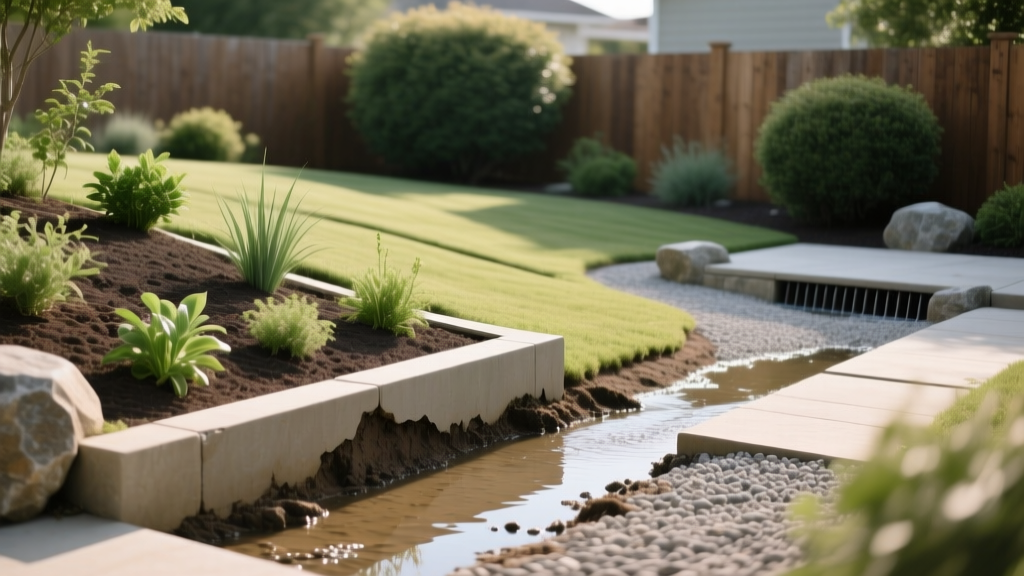
Troubleshooting Landscape Drainage and Grading Issues
Mike RodriguezPublished
Identifying the Root Cause of Landscape Drainage Failures
Water is the most destructive force in your landscape. When left unmanaged, poor drainage leads to heaving hardscapes, rotting retaining walls, suffocated plant roots, and severe foundation damage. Troubleshooting landscape drainage requires a systematic approach to identify whether the issue stems from surface grading, soil composition, or a high water table. According to the USDA Natural Resources Conservation Service, soil structure and compaction play a massive role in how water infiltrates the ground. Clay-heavy soils can restrict water movement to less than an inch per hour, while compacted subsoil from construction equipment creates an impermeable barrier that traps water in garden beds and lawns.
Before purchasing materials or renting trenching equipment, you must diagnose the exact point of failure. Is water pooling on the surface due to negative grading? Is it surfacing in low spots because of a subsurface hardpan? Or is your hardscape impermeable patio shedding runoff directly into your garden beds? Answering these questions will dictate your troubleshooting strategy.
The Percolation Test: Diagnosing Soil Drainage
To determine if your soil is the culprit behind soggy garden beds, perform a simple percolation (perc) test. This diagnostic step measures the exact absorption rate of your soil, helping you decide between amending the soil, installing a French drain, or building a rain garden.
- Step 1: Dig a hole 12 inches deep and 12 inches wide in the problematic area.
- Step 2: Fill the hole with water and let it drain completely. This pre-soaks the soil and simulates saturated conditions.
- Step 3: Refill the hole with water to the top. Place a ruler or measuring stick in the center.
- Step 4: Measure the water level drop every 15 minutes for one hour.
Diagnosis: If the water drops less than 1 inch per hour, you have severe drainage issues typical of heavy clay or compacted soil. If it drops 1 to 2 inches, you have moderate drainage. If it drops more than 4 inches, your soil is highly permeable (sandy), and surface grading is likely the actual issue.
Troubleshooting Common Hardscape and Garden Bed Issues
Use the diagnostic table below to match your landscape symptoms with their probable causes and required interventions.
| Symptom | Probable Cause | Quick Fix | Long-Term Solution |
|---|---|---|---|
| Water pooling against home foundation | Negative grading or settled backfill | Add topsoil to create a 5% slope away from the house | Regrade yard, extend downspouts 10+ feet away |
| Soggy garden beds killing shrubs | Clay soil hardpan or mulch dam | Aerate soil with a broadfork, reduce mulch depth to 2 inches | Install a subsurface French drain or curtain drain |
| Patio pavers heaving or growing moss | Improper base compaction or poor edge runoff | Apply moss killer, sweep in polymeric sand | Rebuild base with 6 inches of compacted crushed gravel |
| Downspout water eroding lawn | Concentrated point-source runoff | Attach a flexible downspout diverter | Install a subterranean dry well or pop-up emitter |
Actionable Solutions: Grading, French Drains, and Dry Wells
1. Regrading and Swales
Surface water should always be directed away from structures. The universal standard for hardscape and foundation grading is a minimum slope of 1/4 inch per foot for the first 10 feet. If your patio or walkway is trapping water, you may need to mudjack the concrete or re-lay the pavers to restore this pitch. For lawn areas, creating a shallow swale (a gently sloping ditch) lined with river rock and deep-rooted native grasses can intercept runoff and channel it toward a municipal storm drain or rain garden.
2. Installing a French Drain
When surface grading is impossible due to property lines or existing hardscapes, a French drain is the ultimate subsurface troubleshooting tool. To install a standard French drain:
- Dig a trench 12 inches deep and 8 inches wide, maintaining a constant slope of 1/8 inch per foot toward the discharge point.
- Line the trench with non-woven geotextile landscape fabric to prevent soil intrusion.
- Place a 4-inch SDR 35 PVC pipe (superior to corrugated black pipe, which crushes and clogs easily) with the holes facing downward.
- Cover the pipe with 3/4-inch washed crushed stone (never use pea gravel, as it shifts and lacks structural void space).
- Fold the fabric over the gravel and cover with 2 inches of topsoil or sod.
For extensive runoff management, the University of Minnesota Extension recommends combining French drains with dry wells to handle large volumes of roof runoff without overwhelming municipal systems.
3. Dry Wells and Rain Gardens
If you have nowhere to daylight a French drain, a dry well is your best option. A standard residential dry well consists of a 50-gallon perforated plastic basin buried 3 feet underground, surrounded by gravel. It captures downspout runoff and allows it to slowly percolate into the subsoil over 24 to 48 hours. Alternatively, consider adopting EPA's Green Infrastructure guidelines by converting a chronically wet depression into a rain garden. By excavating 18 inches of clay soil and replacing it with a 50/50 mix of compost and coarse sand, you can plant moisture-tolerant species like Swamp Milkweed and Blue Flag Iris that act as biological sponges.
Upgrading Hardscapes: Permeable Pavers and Channel Drains
Impermeable hardscapes like traditional concrete patios and asphalt driveways generate massive volumes of surface runoff. When troubleshooting a landscape that floods immediately after a heavy rainstorm, the hardscape footprint is often the primary culprit. To mitigate this, consider retrofitting your outdoor living spaces with permeable pavers. Unlike standard pavers, permeable systems are installed over a deep, open-graded aggregate base that acts as a subterranean reservoir, allowing water to pass through the joints and infiltrate the soil below. According to environmental studies cited by the EPA's Green Infrastructure guidelines, permeable pavements can reduce stormwater runoff volume by up to 80% while filtering out heavy metals and pollutants.
If replacing a patio is not in your budget, install a prefabricated linear channel drain along the edge of the hardscape where water naturally sheets off. These 4-inch-wide trench drains feature a metal or plastic grate that sits flush with the surface, capturing water before it can erode adjacent garden beds. Connect the channel drain to a solid 4-inch PVC pipe and route it to a daylighted pop-up emitter or a dry well. Ensure the channel drain is set in a bed of concrete to prevent the surrounding pavers from shifting under foot traffic.
Cost Estimates and Material Breakdown
Budgeting for landscape drainage troubleshooting depends heavily on the scale of the intervention. Here is a breakdown of typical costs for residential projects:
- Regrading (DIY vs. Pro): Renting a mini-excavator and laser level costs roughly $300 to $400 per day. Hiring a professional landscaping crew to regrade a 500-square-foot yard typically ranges from $1,000 to $2,500, depending on soil removal and disposal fees.
- French Drain Installation: DIY materials (PVC pipe, washed gravel, geotextile fabric) cost about $8 to $12 per linear foot. Professional installation ranges from $20 to $40 per linear foot, heavily influenced by the difficulty of trenching through tree roots or existing hardscape.
- Dry Well System: A 50-gallon polyethylene dry well basin costs between $150 and $250. Factoring in gravel and labor, expect to pay around $600 to $900 for a complete downspout-to-dry-well connection.
When to Call a Professional
While many garden bed and hardscape drainage issues can be solved with a weekend of shoveling and PVC glue, certain red flags require professional engineering. If water is actively seeping into your basement or crawlspace, or if your retaining wall is bulging and weeping holes are failing, consult a licensed landscape architect or geotechnical engineer. Furthermore, if your property sits at the bottom of a hill and receives municipal runoff, you may need a permitted catch basin system that complies with local stormwater ordinances. Proper diagnosis today prevents catastrophic structural failures tomorrow, ensuring your landscape remains beautiful, functional, and structurally sound for decades.

