
Landscaping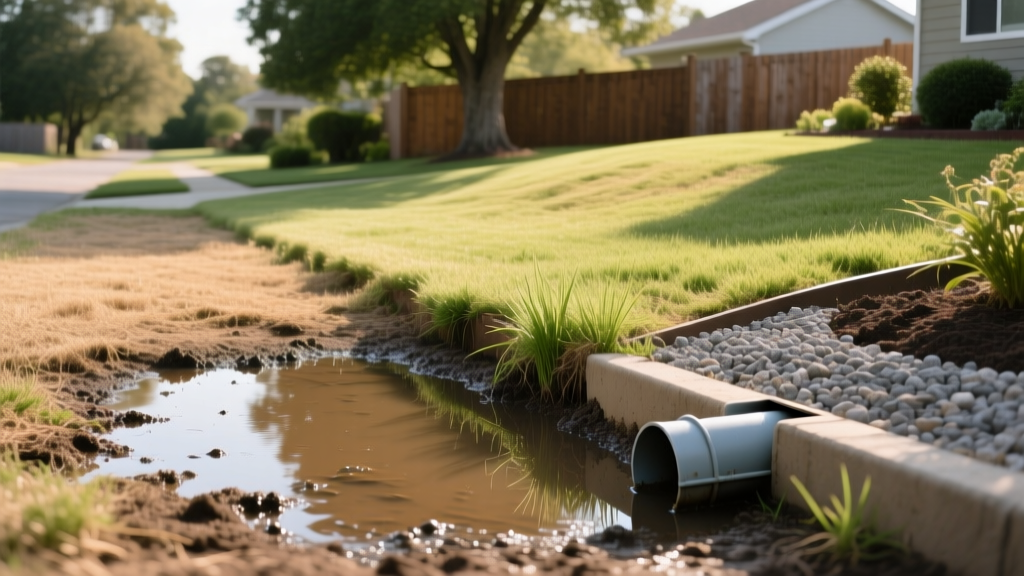
How to Diagnose and Fix Poor Yard Drainage Problems
Mike RodriguezPublished
The Hidden Dangers of Standing Water
Water pooling in your yard after a heavy rainstorm is more than just a temporary nuisance; it is a critical landscaping issue that can lead to severe structural and ecological problems. When standing water lingers for more than 24 hours, it threatens your home’s foundation, causes basement flooding, and creates an ideal breeding ground for disease-carrying mosquitoes. Furthermore, saturated soil suffocates turfgrass roots, leading to widespread lawn death and fungal diseases like Pythium blight. According to the Environmental Protection Agency (EPA), managing residential stormwater runoff through proper landscaping is essential not only for protecting your private property but also for preventing sediment and fertilizer pollution in local waterways. Diagnosing the root cause of poor yard drainage is the mandatory first step toward reclaiming a dry, usable, and healthy outdoor space.
Step 1: Diagnosing the Source of Standing Water
Before you purchase materials or start digging trenches, you must understand how water moves across your property. The best time to diagnose drainage issues is during or immediately after a significant rainfall. Put on your rain boots and observe the yard. Take note of where water enters the property, how it flows across the lawn, and exactly where it begins to pool. Look for hardpan areas where water sits on the surface, and check if water is migrating from neighboring properties or hardscapes like driveways and patios.
The Soil Percolation Test
To determine if your soil structure is the primary culprit, perform a simple percolation test. Dig a hole approximately 12 inches deep and 12 inches wide in the area where water typically pools. Fill the hole with water and let it drain completely to saturate the surrounding soil. Refill the hole to the top, and place a ruler in the center. Measure how many inches the water level drops in one hour. If the water drops less than 1 inch per hour, you are dealing with heavy clay soil or severe compaction, which naturally restricts subsurface drainage. The USDA Natural Resources Conservation Service emphasizes that understanding your soil's infiltration rate is the foundation of any successful water management plan.
Step 2: Identifying Common Drainage Culprits
Once you understand your soil type, you can identify the specific physical or structural issues causing the water to accumulate. Most yard drainage problems stem from one of three common culprits.
1. Negative Grading and Foundation Settlement
Over time, the soil around a home’s foundation naturally settles, often creating a negative grade where the ground slopes toward the house instead of away from it. Building codes generally require a minimum positive grade of 5 percent, meaning the soil should drop at least 6 inches over the first 10 feet extending outward from the foundation. If your yard lacks this slope, water will pool against your siding and seep into your crawlspace or basement.
2. Soil Compaction and Thatch Buildup
Heavy foot traffic, parking vehicles on the lawn, and the use of heavy commercial mowers can compress the soil particles, eliminating the pore spaces required for water infiltration. Additionally, a thick layer of thatch (more than half an inch) acts like a sponge, holding water at the surface and preventing it from reaching the soil profile. Core aeration and deep raking are necessary troubleshooting steps to alleviate this surface tension.
3. Downspout Mismanagement
A standard 1,000-square-foot roof can shed over 600 gallons of water during a one-inch rainstorm. If your gutter downspouts simply dump this massive volume of water directly at the base of your home, the soil will quickly become overwhelmed. Troubleshooting this requires installing rigid PVC or NDS corrugated downspout extensions to carry the water at least 10 to 15 feet away from the foundation, ideally discharging into a dry well, a municipal storm drain, or a designated swale.
Step 3: Advanced Landscaping Drainage Solutions
When basic regrading and downspout extensions are not enough to solve the problem, you must implement engineered landscaping solutions to capture, redirect, or absorb the excess water.
French Drains
A French drain is a classic, highly effective subsurface drainage system. It involves digging a trench (typically 12 to 18 inches deep) with a slight downward slope of 1 inch per 8 feet. The trench is lined with permeable landscape fabric, fitted with a perforated PVC or corrugated drainage pipe, and backfilled with 3/4-inch washed drainage gravel. This system intercepts groundwater and surface water, channeling it safely away from problem areas to a lower discharge point. Ensuring the landscape fabric completely wraps the gravel and pipe creates a barrier that keeps fine silt out while allowing water to enter.
Rain Gardens
For properties with heavy clay soil where moving water off-site is impossible, a rain garden is an eco-friendly troubleshooting solution. A rain garden is a shallow, engineered depression planted with deep-rooted, water-tolerant native species. According to Penn State Extension, utilizing native plants like swamp milkweed, blue flag iris, and red osier dogwood allows the garden to act as a biological sponge, capturing runoff and allowing it to slowly percolate into the groundwater table while filtering out pollutants. The soil mix for a rain garden typically consists of 50 percent sand, 25 percent topsoil, and 25 percent compost to maximize infiltration.
Dry Creek Beds
If you need to move large volumes of surface water across a sloped yard without causing erosion, a dry creek bed is both a functional and aesthetic solution. By carving a shallow swale and lining it with heavy river rock, boulders, and landscaping fabric, you create a designated channel that mimics a natural stream, safely guiding stormwater to a lower retention area or street curb.
Comparison of Yard Drainage Solutions
| Solution | Best Used For | Estimated Cost (DIY) | Difficulty Level |
|---|---|---|---|
| Regrading Soil | Negative slope near foundation | $50 - $150 per cubic yard | Moderate (Requires manual labor or mini-excavator) |
| Core Aeration | Compacted soil, minor surface pooling | $80 - $150 (Machine Rental) | Easy |
| French Drain | Subsurface water, heavy saturation | $20 - $30 per linear foot | Hard (Requires deep trenching) |
| Rain Garden | Low spots, eco-friendly absorption | $5 - $15 per square foot | Moderate (Requires plant knowledge) |
| Dry Creek Bed | Surface runoff on slopes | $10 - $25 per linear foot | Moderate |
Long-Term Maintenance of Yard Drainage Systems
Installing a drainage solution is only half the battle; maintaining it ensures your yard remains dry for decades. French drains can become clogged with fine silt and soil particles over time, especially if the landscape fabric was improperly installed or damaged. To prevent this, ensure the fabric completely wraps the gravel and pipe, creating a burrito effect that keeps soil out while letting water in. For dry creek beds, seasonal maintenance involves removing fallen leaves, twigs, and debris that can create dams and force water to erode the banks. Rain gardens require weeding, mulching, and occasional pruning to maintain the health of the deep-rooted native plants that do the heavy lifting of water absorption. Downspout extensions should be inspected every autumn to ensure they have not become disconnected or clogged with roof gutter debris.
When to Call a Professional Landscaper
While many drainage issues can be resolved with weekend landscaping projects, certain red flags require professional intervention. If water is actively infiltrating your basement, if you suspect your foundation is shifting due to hydrostatic pressure, or if your property requires tapping into a municipal storm sewer system, it is time to hire a licensed landscape contractor or a civil engineer. Furthermore, always remember to call 811 before you dig to ensure you do not strike underground utility lines, gas pipes, or fiber optic cables.
Conclusion
Troubleshooting poor yard drainage requires a methodical approach, starting with careful observation and soil testing before moving on to physical landscaping interventions. By correctly diagnosing whether your issue stems from negative grading, soil compaction, or hardscape runoff, you can select the most cost-effective and permanent solution. Whether you install a French drain, cultivate a native rain garden, or simply extend your downspouts, taking control of your yard's hydrology will protect your home's structural integrity and restore the beauty of your landscape.

