Home & Garden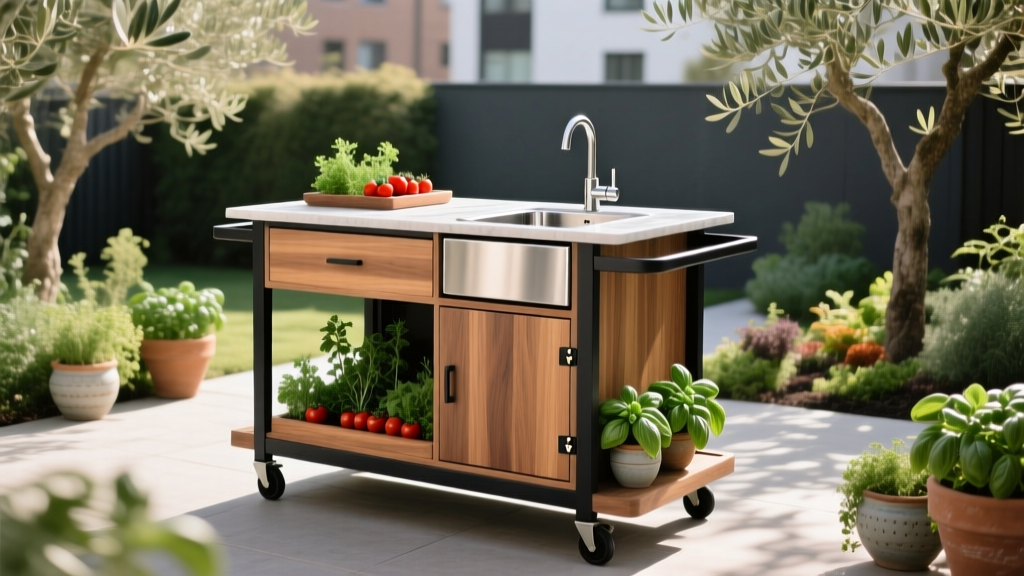
2026 Outdoor Bar Cart Setup: Weatherproof Sink & Foodscaping
Emily WatsonPublished
The Intersection of Foodscaping and Outdoor Entertaining in 2026
Foodscaping—the art of integrating edible plants into your ornamental landscape—has completely transformed how we interact with our outdoor spaces. As we move through 2026, the trend has shifted from simply growing food to seamlessly harvesting, prepping, and entertaining right where the produce grows. The ultimate bridge between your edible garden and your guests is a dedicated outdoor bar cart setup equipped with weatherproof storage and an integrated sink. This mobile or semi-permanent station allows you to wash freshly picked berries, muddle garden-grown mint, and serve craft cocktails without ever tracking soil into your indoor kitchen.
Why Your Edible Landscape Demands a Weatherproof Prep Station
When you cultivate an edible landscape, you are dealing with dirt, pollen, sap, and moisture. Harvesting root vegetables like carrots or potatoes, or picking delicate crops like raspberries, requires immediate cleaning and sorting. An outdoor bar cart with a built-in sink serves as a vital transitional zone. According to the USDA's gardening guidelines, handling fresh produce safely and efficiently begins the moment it leaves the soil. Having a dedicated outdoor washing station ensures that your harvest is cleaned using fresh water before it ever touches your indoor countertops.
Furthermore, from an entertaining perspective, a bar cart situated near your herb spirals or citrus trees allows for true garden-to-table mixology. You can snip fresh rosemary, basil, or lavender and drop it directly into a shaker. The weatherproof storage underneath keeps your muddlers, shakers, cutting boards, and garden shears completely dry and protected from sudden rainstorms or morning dew.
Material Showdown: Weatherproofing Your 2026 Bar Cart
In 2026, outdoor furniture manufacturing has leaned heavily into advanced polymers and specialized metal treatments. When selecting a bar cart that will house a sink and withstand the elements year-round, you must choose materials that resist warping, rust, and UV degradation. Below is a comparison of the top materials used for foodscaping bar carts this year.
| Material | 2026 Avg. Cost | Weather Resistance | Maintenance Level | Best Foodscaping Use |
|---|---|---|---|---|
| Marine-Grade HDPE (Polymer) | $1,200 - $1,800 | Exceptional (UV & Moisture Proof) | Very Low (Wash with hose) | Heavy washing of root veggies and muddy herbs |
| Powder-Coated Aluminum | $800 - $1,400 | High (Rust-proof, can scratch) | Low (Wipe down, avoid abrasives) | Sleek cocktail prep and lightweight mobility |
| Marine-Grade Teak | $2,000 - $3,500 | Moderate (Needs oiling to prevent gray patina) | High (Annual sealing/oiling) | Aesthetic integration with formal edible gardens |
| Stainless Steel (304 Grade) | $1,500 - $2,500 | High (Prone to water spots, highly sanitary) | Moderate (Requires polishing) | Commercial-level food prep and meat/produce handling |
For the dedicated foodscaper, Marine-Grade HDPE has emerged as the 2026 favorite. It mimics the look of painted wood but will never rot, splinter, or harbor bacteria in the grain, making it incredibly safe for direct food contact and heavy-duty produce washing.
Sink Integration and Smart Greywater Routing
The defining feature of this setup is the sink. In 2026, smart-flow faucets with motion sensors are standard for outdoor prep stations, allowing you to rinse muddy hands or dirty potatoes without turning handles with soiled fingers. But where does the water go? This is where your foodscaping knowledge truly shines.
Instead of routing your bar cart sink to a municipal sewer line, you can set up a greywater system that irrigates your landscape. The EPA's Water Reuse guidelines highlight the immense environmental benefits of capturing and reusing greywater for landscaping. By using biodegradable, plant-safe soaps, the water draining from your bar cart sink can be routed through a simple PVC pipe or flexible hose directly into a mulch basin surrounding a nearby fruit tree, such as a lemon or fig tree.
Steps to Route Your Sink Greywater:
- Install a Catch Basin: Place a small, screened catch basin under the sink drain to filter out large food particles, seeds, and soil clumps.
- Use Plant-Safe Cleaners: Only use pH-neutral, sodium-free, and boron-free soaps when washing produce or cocktail shakers to protect your soil microbiome.
- Direct to Mulch: Run the discharge hose under your garden pathways and terminate it in a mulch-filled trench near the drip line of your fruit trees. The mulch acts as a final biological filter before the water reaches the roots.
Weatherproof Storage for Garden Tools and Garnishes
A bar cart designed for foodscaping must balance hospitality with horticulture. The cabinetry or drawers beneath the prep surface must be fully weather-sealed to protect your investments. In 2026, look for carts featuring magnetic weather-stripping on cabinet doors and silicone-gasketed drawer slides.
Pro Foodscaping Tip: Dedicate the top drawer to your 'harvest and snip' kit. Store your stainless steel bonsai shears, a hori-hori knife, twine, and plant labels here. Dedicate the lower cabinet to your 'shake and stir' kit, keeping glass shakers, ice molds, and strainers safe from UV damage and dust.
Many premium 2026 models also feature integrated living walls or planter boxes on the sides of the cart. This allows you to plant trailing edibles like creeping thyme, nasturtiums (which offer edible, peppery flowers for cocktails), or compact dwarf basil varieties right on the cart itself, ensuring your garnishes are literally growing on your bar.
Garden-to-Table Workflow: From Soil to Shaker
To truly maximize your outdoor bar cart setup, establish a workflow that respects both the garden and the guest. Here is how a perfect evening of foodscaping entertainment unfolds:
- The Harvest: Take your shears from the weatherproof drawer and harvest fresh ingredients. Snip sprigs of mint from your nearby water feature or pick a few kumquats from your patio citrus tree.
- The Wash: Activate the motion-sensor sink faucet. Rinse the herbs and fruit in a stainless steel colander. The greywater flows directly to your ornamental hydrangeas or fruit trees.
- The Prep: Move to the integrated HDPE cutting board. Muddle the kumquats and mint directly in your shaker. The non-porous surface prevents citrus oils from lingering.
- The Serve: Pour your garden-fresh cocktail over ice, garnish with an edible nasturtium flower picked from the cart's side planter, and serve to your guests right in the heart of your edible landscape.
Food Safety and Produce Washing
When your bar cart doubles as a produce washing station, food safety is paramount. Even if you are growing organically, outdoor elements introduce bird droppings, insects, and soil-borne pathogens. Always wash your harvested greens and fruits under cold, running water from your sink before consumption or muddling. Never use bleach or harsh chemical soaps on your harvest. Rely on the mechanical friction of running water and a dedicated, clean produce brush stored in your weatherproof drawer to remove dirt from root vegetables and thick-skinned squashes.
Final Thoughts on the Ultimate Foodscaping Hub
The integration of an outdoor bar cart with a sink and weatherproof storage represents the pinnacle of 2026 edible landscaping design. It acknowledges that the garden is not just a place to grow food, but a place to live, prep, and celebrate. By choosing durable materials like marine-grade polymer, implementing smart greywater routing, and organizing your storage for both horticulture and hospitality, you create a seamless flow from soil to shaker. Your foodscape becomes a fully functional, interactive outdoor kitchen that honors the harvest and elevates your home entertainment.
