
Landscaping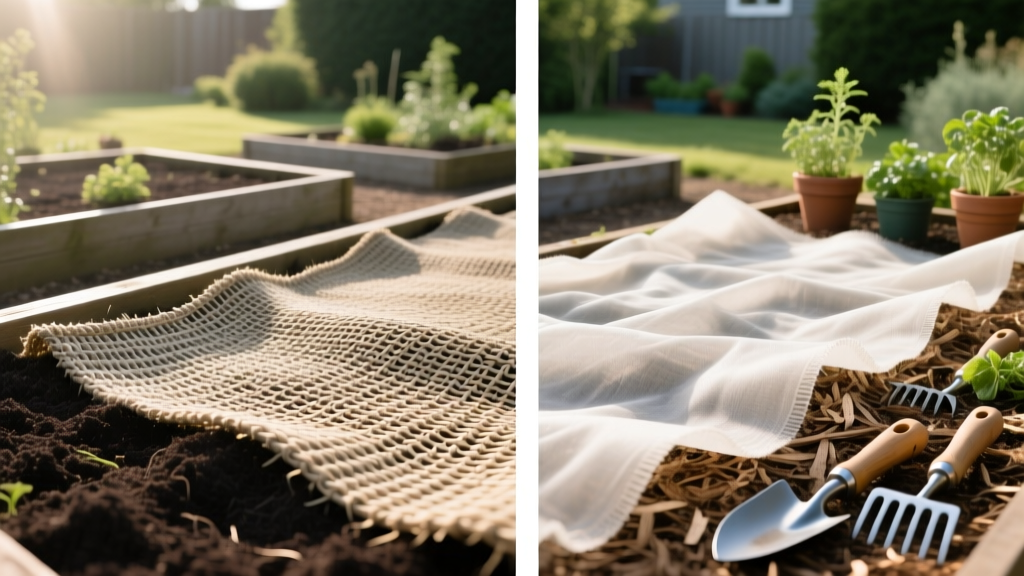
Woven vs Non-Woven Landscape Fabric: Top Weed Barriers Reviewed
Landscape fabric and drainage fabric serve fundamentally different purposes based on their manufacturing process. Landscape fabric is typically a woven geotextile designed to block weeds while allowing minimal water passage, making it ideal for garden beds and pathways. Drainage fabric is a nonwoven geotextile engineered for high water flow and soil filtration, essential for French drains and retaining walls. Using the wrong fabric leads to waterlogging or system failure.
This guide helps homeowners, landscaping contractors, and DIY hardscapers select the correct geotextile for their specific outdoor projects. Understanding the structural differences prevents costly excavation repairs and ensures long-term landscape health.
Key Takeaways
- Landscape Fabric (Woven): Best for weed suppression and soil stabilization under mulch or gravel.
- Drainage Fabric (Nonwoven): Best for water filtration, French drains, and preventing soil clogging in pipes.
- Core Rule: Never use woven landscape fabric to wrap a French drain pipe, as its low permeability will cause water to pool and flood the trench.
The Core Difference: Woven vs Nonwoven Geotextiles
The distinction between these materials lies entirely in how the synthetic fibers are bound together. This manufacturing choice dictates the fabric's tensile strength, water flow rate, and primary function in outdoor construction.
Woven Geotextile Definition
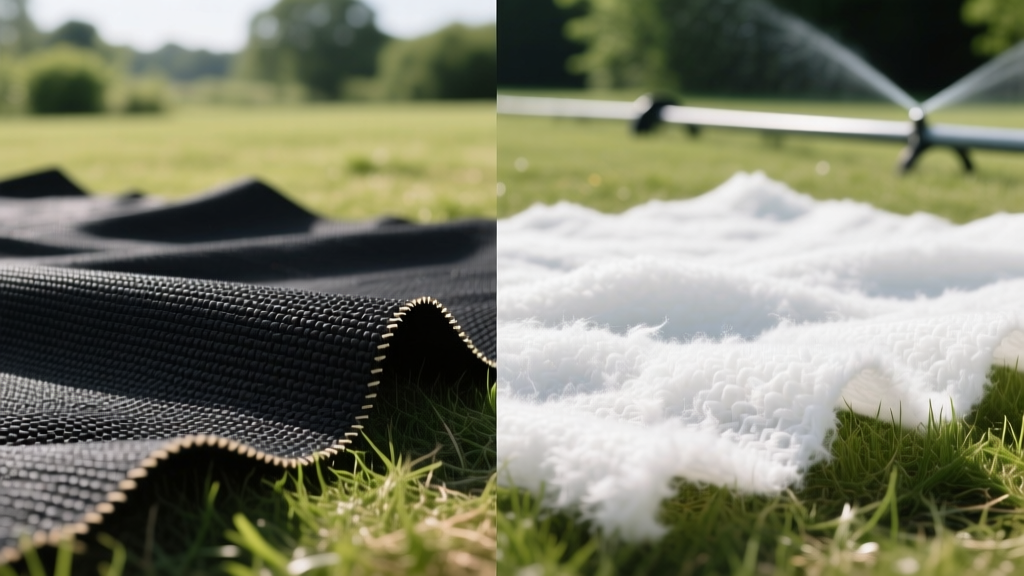
A synthetic fabric created by weaving polypropylene or polyethylene tapes on a mechanical loom. This manufacturing process results in a high-tensile-strength material with relatively low permeability, primarily used for soil stabilization, pathway reinforcement, and long-term weed suppression in garden beds.
Nonwoven Geotextile Definition
A synthetic material manufactured by bonding continuous polypropylene fibers together through heat, chemicals, or mechanical needle-punching. This felt-like structure creates a highly porous three-dimensional matrix that excels at water filtration and subsurface drainage, preventing fine soil particles from clogging water management systems.
Material Composition and Permeability Rates
Woven landscape fabrics are extruded into flat tapes and woven in a crisscross pattern. This tight weave creates a physical barrier that blocks sunlight and restricts root penetration. According to testing standards outlined by the American Society for Testing and Materials (ASTM) D4491 standard, woven fabrics typically exhibit a water flow rate of only 10 to 15 gallons per minute per square foot.
Nonwoven drainage fabrics resemble thick felt due to the needle-punching process that entangles the fibers. This creates thousands of microscopic voids that allow water to pass through rapidly while trapping soil particles. These fabrics routinely achieve flow rates exceeding 120 gallons per minute per square foot, making them mandatory for high-volume water management.
Weight and thickness also vary significantly between the two categories. Standard woven landscape fabrics weigh between 4 to 6 ounces per square yard, providing a thin but tough barrier. Heavy-duty nonwoven drainage fabrics typically weigh 8 to 16 ounces per square yard, providing the necessary thickness to prevent sharp aggregate from puncturing the material during backfilling.
Use Cases: Where to Apply Each Fabric
Woven Landscape Fabric Applications
Woven geotextiles excel in areas requiring high structural support and weed control. Landscaping contractors use them beneath gravel driveways, patios, and walkways to prevent the base rock from sinking into the subgrade soil. The Geosynthetic Institute (GSI) notes that woven fabrics provide superior separation between dissimilar soil layers under heavy loads.
They are also deployed in ornamental garden beds beneath bark mulch or river rock. The tight weave blocks weed seeds from germinating in the soil below while preventing the decorative mulch from mixing into the dirt. However, they are poorly suited for vegetable gardens, as they restrict the vital exchange of water and air to plant root zones.
Nonwoven Drainage Fabric Applications
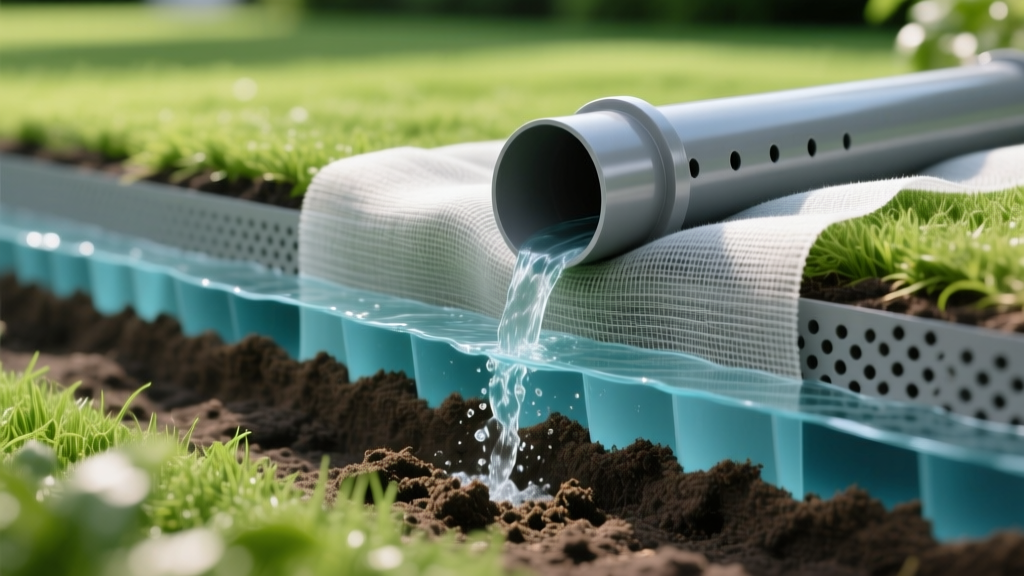
Nonwoven geotextiles are the industry standard for subsurface water collection systems. They are used to wrap perforated pipes in French drains, ensuring that groundwater enters the pipe while fine silt and clay remain in the surrounding soil. This filtration capability prevents the 0.75-inch to 1.5-inch drain rock from becoming clogged with mud over time.
Retaining wall construction also relies heavily on nonwoven fabric. Builders place the material directly behind the wall blocks and backfill it with clear crushed stone. This creates a continuous drainage plane that relieves hydrostatic pressure, preventing the retaining wall from bulging or collapsing during heavy rainfall.
Selection Matrix and Decision Framework
Use the comparison table below to verify you are purchasing the correct material for your specific project requirements.
| Feature | Woven Landscape Fabric | Nonwoven Drainage Fabric |
|---|---|---|
| Primary Function | Weed suppression, soil separation | Water filtration, drainage |
| Water Permeability | Low (10-15 gal/min/sq ft) | High (120+ gal/min/sq ft) |
| Tensile Strength | Very High | Moderate |
| Average Cost | $0.45 to $0.85 per square foot | $0.60 to $1.20 per square foot |
| Expected Lifespan | 20 to 25 years (UV protected) | 20 to 25 years (buried) |
| Best Project Match | Gravel paths, garden beds, patios | French drains, retaining walls |
Frequently Asked Questions
Can I use landscape fabric for a French drain?
No, you should never use woven landscape fabric to wrap a French drain pipe. Its low permeability restricts water entry, causing the trench to flood and defeat the purpose of the drainage system. Always use a needle-punched nonwoven drainage fabric that allows rapid water flow while filtering out soil particles.
What is the difference between woven and nonwoven geotextile fabric?
Woven geotextile is made by weaving synthetic tapes together on a loom, creating a strong, tight barrier ideal for blocking weeds and stabilizing ground. Nonwoven geotextile is made by bonding fibers together with heat or needles, creating a porous, felt-like material designed to filter water and prevent soil clogging.
Does drainage fabric stop weeds?
Nonwoven drainage fabric is not an effective long-term weed barrier. While it may temporarily block sunlight, its high porosity allows weed roots to easily penetrate the material. Furthermore, the fuzzy surface traps windblown soil and organic matter, creating a perfect seedbed for weeds to grow on top of the fabric.
Project Selection and Next Steps
Choosing between landscape fabric and drainage fabric depends entirely on your project's primary goal: weed suppression or water management. Woven fabrics provide the structural integrity and light blocking needed for pathways and garden beds, while nonwoven fabrics offer the critical filtration required for subsurface drainage systems. For your next step, measure your project area in square feet and order a woven polypropylene roll for your landscaping beds, or a needle-punched nonwoven roll for your French drain trench.

