Home & Garden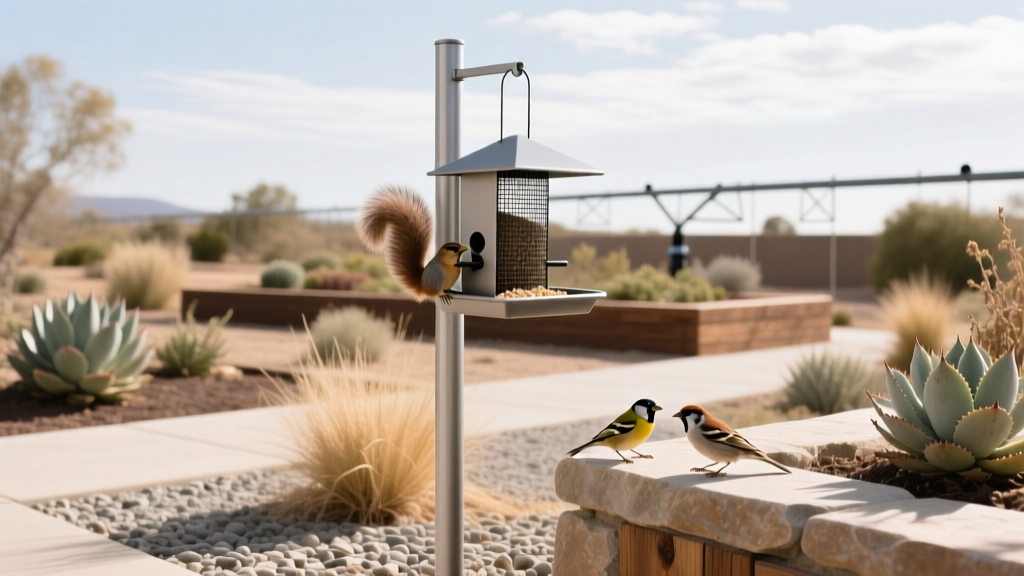
Xeriscape Bird Feeder Pole & Squirrel Baffle Guide 2026
Mike RodriguezPublished
The Intersection of Xeriscaping and Backyard Birding in 2026
As water conservation becomes a top priority for homeowners in 2026, xeriscaping and low-water landscaping have transitioned from niche gardening trends to essential yard management strategies. Replacing thirsty turfgrass with drought-tolerant native plants, succulents, and permeable hardscapes like decomposed granite (DG) or river rock saves thousands of gallons of water annually. However, integrating a bird feeder station into a xeriscaped environment presents unique ecological and structural challenges.
A standard bird feeder setup often results in scattered seeds, which can sprout into invasive weeds that compete with your carefully curated low-water plants for scarce moisture. Furthermore, driving a pole mount into rocky, arid soil or navigating around the sensitive root systems of established agaves and native grasses requires specialized techniques. This comprehensive 2026 guide will walk you through selecting the right pole mount, installing an effective squirrel baffle, and maintaining a thriving bird habitat without compromising your water-wise landscape.
Selecting the Ideal Pole Mount for Arid Climates
In a xeriscape, your garden hardware is exposed to intense, unfiltered sunlight and extreme temperature fluctuations. Wooden poles warp and crack in dry heat, while cheap plastics become brittle and shatter under high UV index conditions. For 2026, the industry standard for low-water landscapes is powder-coated galvanized steel or heavy-duty anodized aluminum.
When choosing a pole mount, consider the thermal properties of the material. Birds will avoid feeders attached to poles that radiate excessive heat. Anodized aluminum reflects sunlight and remains relatively cool to the touch, making it the superior choice for desert and arid-zone xeriscapes. Additionally, ensure the pole features a modular, telescoping design so you can adjust the height without needing to dig a new hole, preserving your delicate hardscape layouts.
| Pole Material | UV Resistance | Heat Retention | Durability in Arid Zones | Estimated 2026 Cost |
|---|---|---|---|---|
| Powder-Coated Steel | High | Moderate-High | 8/10 | $45 - $65 |
| Anodized Aluminum | Excellent | Low | 10/10 | $60 - $85 |
| Copper | Moderate (Patina) | Moderate | 7/10 | $90 - $120 |
| Recycled Composite | High | Low | 9/10 | $55 - $75 |
Squirrel Baffles: Protecting Feeders and Hardscapes
Squirrels are notorious for digging up xeriscape beds, particularly in loose substrates like gravel or DG, to bury nuts or search for dropped birdseed. This digging behavior can uproot shallow-rooted drought-tolerant groundcovers and disrupt your landscape fabric. Installing a high-quality squirrel baffle on your pole mount is not just about protecting the birdseed; it is about protecting your hardscape integrity.
For pole-mounted stations, a torpedo-style baffle is the most effective option in 2026. Unlike dome baffles, which can catch wind and act as sails during dry-season monsoons or desert haboobs, torpedo baffles are aerodynamic and sleek. Mount the baffle at least 5 feet off the ground to prevent squirrels from jumping over it, and ensure the pole is positioned at least 10 feet away from any overhanging branches, pergolas, or patio roofs that could serve as a launchpad.
Seed Selection: Preventing Weeds in Low-Water Beds
The biggest mistake homeowners make when placing a bird feeder in a xeriscape is using standard seed mixes containing black oil sunflower seeds or millet in their shells. When these seeds fall into gravel or DG beds, they can germinate after rare rain events, sprouting into aggressive weeds that steal vital water from your native plantings. According to the National Audubon Society, choosing the right seed is critical for both avian health and yard maintenance.
To maintain a pristine, low-water landscape, you must eliminate the 'waste' and 'sprout' factors. Opt for 'no-mess' or hulled seeds. While the upfront cost is higher, you are paying for 100% edible nutrition, meaning zero hulls drop onto your landscape fabric to decompose or sprout.
Top Xeriscape-Friendly Seeds for 2026
- Hulled Sunflower Hearts: The gold standard for attracting cardinals, chickadees, and finches. Because the shell is removed, nothing sprouts in your gravel beds. Expect to pay around $35 for a 20lb bag in 2026.
- Safflower Seed: A brilliant white seed that attracts cardinals and grosbeaks but is naturally bitter to squirrels and grackles. It rarely sprouts in arid, low-moisture soils.
- Nyjer (Thistle) Seed: Heat-sterilized before import, making it completely incapable of germinating. Perfect for goldfinches and ideal for scattering over delicate succulent arrangements without weed risk.
Installing Pole Mounts in Decomposed Granite and Gravel
Traditional pole installation involves digging a deep hole and pouring concrete. In a xeriscape, this is highly discouraged. Concrete alters the soil pH and drainage patterns, potentially causing root rot in nearby drought-adapted plants that require fast-draining soil. Furthermore, the EPA's WaterSense program emphasizes maintaining permeable surfaces to allow natural aquifer recharge.
Instead, utilize a heavy-duty ground sleeve or a spiral auger anchor designed for rocky soils. If your xeriscape features a base of decomposed granite (DG), the material is naturally compactable. You can use a 24-inch galvanized steel drive-in spike with a wide stabilizing fin at the top. To install, pre-drill a pilot hole using a masonry bit or rock bar to bypass any subterranean river rocks, then drive the spike flush with the DG surface. Slide your modular pole over the spike and tighten the set screws. This method provides immense stability against wind without disturbing the surrounding low-water root zones.
Integrating Smart Tech with Xeriscape Birding
The smart home ecosystem of 2026 extends to the garden. Solar-powered, Wi-Fi-enabled bird feeders can now be mounted on your pole station. These devices use AI to identify bird species and send alerts to your phone. Because they are solar-powered, they require no trenching for low-voltage wires, preserving your hardscape. Position the solar panel so it faces true south, ensuring it captures maximum sunlight even during shorter winter days.
Additionally, consider integrating a smart drip-irrigation controller nearby. While the bird feeder itself requires no water, placing a small, shallow birdbath on a secondary pole mount, connected to a solar recirculating pump and a smart drip line, provides a crucial hydration station. Creating a wildlife-friendly space aligns perfectly with the National Wildlife Federation's backyard birding guidelines, which highlight the necessity of water sources in arid environments.
Seasonal Maintenance for Drought-Tolerant Zones
Maintaining a bird station in a xeriscape is significantly easier than in a traditional lawn, but it still requires seasonal attention. In the spring, use a leaf blower or a stiff-bristled broom to clear any accumulated dust, pollen, or microscopic seed debris from the surface of your gravel or DG. This prevents the formation of a sludge layer that can harbor mold or block soil permeability.
Clean the feeders themselves every two weeks using a 10% bleach solution to prevent avian diseases, which can spread rapidly at feeding stations. Rinse thoroughly and allow to dry completely before refilling. By combining the right hardware, smart seed selection, and respectful installation techniques, your xeriscape can serve as a vibrant, water-efficient sanctuary for local wildlife throughout 2026 and beyond.
