
Landscaping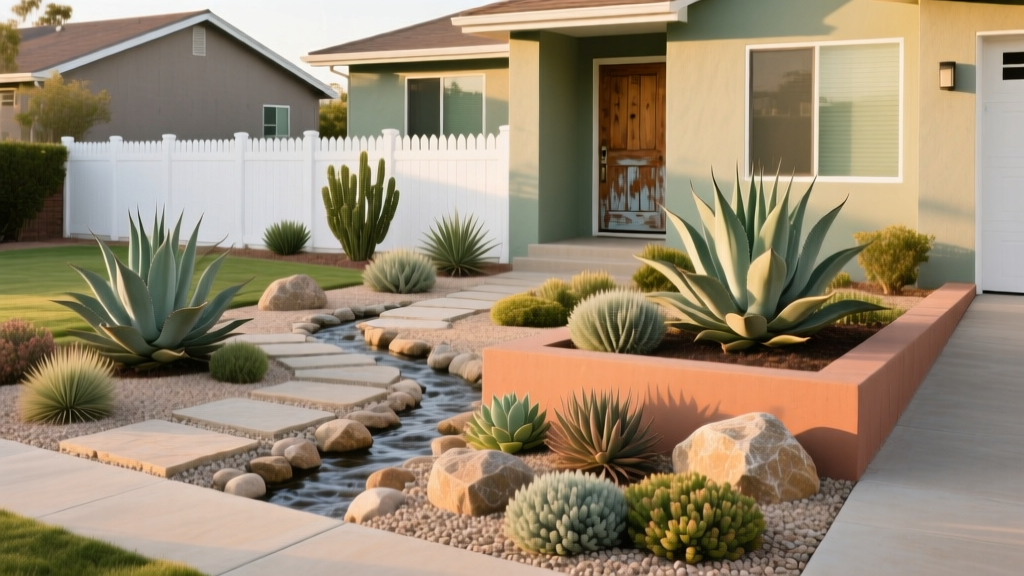
Xeriscape Front Yard Design: Plan a Drought-Tolerant Landscape
Anna KowalskiPublished
The Paradigm Shift: Why Xeriscape Front Yard Design?
As water restrictions become more common and environmental consciousness grows, homeowners are rethinking their outdoor spaces. Xeriscape front yard design is no longer just a trend for arid climates; it is a sophisticated, sustainable landscaping approach that dramatically reduces water usage while boosting curb appeal. Contrary to the misconception that xeriscaping means a barren 'zeroscape' of rocks and cacti, a well-planned xeriscape is a lush, vibrant, and ecologically balanced environment. According to the EPA WaterSense program, outdoor water use accounts for nearly 30% of total household water consumption, with traditional turf grass lawns being the primary culprit. By transitioning to a drought-tolerant landscape, homeowners can reduce outdoor water use by 50% to 75%.
Planning a xeriscape front yard requires a strategic approach to site analysis, soil preparation, hardscaping, and plant selection. This comprehensive guide will walk you through the actionable steps to design a stunning, low-maintenance front yard that thrives in challenging conditions and saves you money year after year.
Step 1: Site Analysis and Hydrozoning
The foundational principle of xeriscape design is 'hydrozoning'—the practice of grouping plants with similar water, sun, and soil requirements together. This prevents overwatering drought-tolerant species and underwatering thirsty ones. Before buying a single plant, map your front yard into distinct hydrozones:
- Zone 1 (Oasis Zone): Located near the front entryway or patio. This area receives regular water (often from roof runoff or targeted drip lines) and supports lush, higher-water-use plants like ferns, hydrangeas, or a small patch of drought-tolerant turf like UC Verde Buffalograss.
- Zone 2 (Transition Zone): The middle ground. Plants here are watered occasionally during the establishment phase and rely mostly on natural rainfall once mature. Examples include ornamental grasses and Mediterranean herbs.
- Zone 3 (Minimal Water Zone): The perimeter and parking strips. These areas rely entirely on natural rainfall. Plants here are true survivors, such as native succulents, agaves, and deep-rooted prairie perennials.
Take time to observe how the sun moves across your yard. Note the microclimates created by the shadow of your house, existing trees, and hardscapes. A south-facing slope will dry out much faster than a north-facing depression, drastically altering your plant choices.
Step 2: Turf Removal and Soil Preparation
If you are replacing an existing grass lawn, proper removal is critical to prevent weed resurgence and protect soil biology. Avoid chemical herbicides and gas-powered sod cutters, which strip away valuable topsoil. Instead, use the sheet mulching method.
The Sheet Mulching Process:
- Mow the existing grass as short as possible.
- Water the area deeply to activate soil microbes.
- Lay down 4 to 6 overlapping layers of plain, brown corrugated cardboard (remove all plastic tape and staples). Wet the cardboard thoroughly as you go.
- Top the cardboard with 3 to 4 inches of high-quality arborist wood chips or a mix of compost and topsoil.
- Wait 6 to 8 weeks. The grass will decompose, enriching the soil with organic matter, and the cardboard will break down, leaving a soft, plantable bed.
"Xeriscaping is not about eliminating water use; it is about optimizing it. By improving soil health with organic matter, you increase the soil's water-holding capacity, meaning every drop of rain and irrigation goes further." — Colorado State University Extension
Step 3: Hardscaping and Ground Cover Alternatives
A successful xeriscape front yard balances softscape (plants) with hardscape (non-living elements). Replacing vast expanses of turf with functional hardscaping reduces maintenance and creates architectural interest.
Decomposed Granite (DG) Pathways and Patios
Decomposed granite is a premier xeriscape material. It is permeable, allowing rainwater to percolate into the soil, and provides a natural, rustic aesthetic. For a durable DG pathway that won't wash away or stick to your shoes, follow these measurements:
- Excavate to a depth of 4 inches.
- Lay a 1-inch base of 3/4-inch minus crushed rock and compact it with a plate compactor.
- Install landscape edging (steel or heavy-duty plastic) to contain the material.
- Apply 2 to 3 inches of DG mixed with a liquid stabilizer, such as TechniSoil Gator Stone Bond. This binds the granite particles together, creating a surface that feels like natural stone but remains permeable.
Permeable Pavers
For driveways or wider front courtyards, consider permeable pavers like those offered by Belgard. These systems feature wider joints filled with small aggregate, allowing stormwater to infiltrate the ground below, reducing runoff and easing the burden on municipal storm drains.
Step 4: Drought-Tolerant Plant Selection
Choosing the right plants is where your design truly comes to life. When selecting species, consult regional databases like the University of California's WUCOLS (Water Use Classification of Landscape Species) database, which categorizes thousands of plants by their actual water needs. Always prioritize native plants, as they are adapted to your local climate, soil, and pollinator populations.
Below is a curated list of high-impact, low-water plants suitable for various hydrozones in a front yard design:
| Botanical Name | Common Name | Hydrozone | Mature Size (H x W) | Sun Exposure |
|---|---|---|---|---|
| Agave parryi | Parry's Agave | Zone 3 (Minimal) | 2 ft x 3 ft | Full Sun |
| Muhlenbergia rigens | Deer Grass | Zone 2 (Transition) | 4 ft x 4 ft | Full Sun / Part Shade |
| Salvia greggii | Autumn Sage | Zone 2 (Transition) | 3 ft x 3 ft | Full Sun |
| Ceanothus 'Concha' | California Lilac | Zone 3 (Minimal) | 6 ft x 8 ft | Full Sun |
| Dianella tasmanica | Tasman Flax Lily | Zone 1 (Oasis) | 2 ft x 2 ft | Part Shade / Full Sun |
Pro-Tip on Spacing: When planting, space your specimens based on their mature width, not their current nursery pot size. While the yard may look sparse for the first year, overcrowding leads to poor air circulation, fungal diseases, and competition for limited water resources.
Step 5: Precision Irrigation Planning
Even drought-tolerant plants require regular watering during their first one to two years to establish deep root systems. Furthermore, 'low water use' does not mean 'no water.' A highly efficient irrigation system is a non-negotiable component of xeriscape planning.
Ditch the Sprinklers for Drip Irrigation
Overhead sprinklers lose up to 30% of their water to wind drift and evaporation. Instead, install a subsurface or surface drip irrigation system. Products like Netafim Techline CV feature built-in check valves that prevent water from draining out of the lowest emitters, ensuring uniform water distribution even on sloped front yards.
- Shrubs and Trees: Use 1.0 GPH (Gallon Per Hour) pressure-compensating emitters. Place 2 to 4 emitters per shrub, spaced 12 inches from the root ball.
- Perennials and Succulents: Use 0.5 GPH emitters or inline drip tubing with emitters spaced every 12 inches.
Smart Controllers
Upgrade your irrigation timer to a Weather-Based Smart Controller, such as the Rachio 3 or Orbit B-hyve. These devices connect to your home Wi-Fi and use local weather data, soil type, and plant-specific algorithms to automatically adjust watering schedules, skipping irrigation when rain is in the forecast.
Budgeting: Xeriscape vs. Traditional Lawn Costs
One of the most common questions homeowners ask is, "How much does a xeriscape front yard cost compared to sod?" While the initial installation cost of a xeriscape is generally higher due to hardscaping materials, individual plant costs, and drip irrigation components, the long-term Return on Investment (ROI) is substantial.
| Feature | Traditional Turf Lawn | Xeriscape Alternative |
|---|---|---|
| Initial Installation Cost | $1.50 - $2.50 per sq. ft. (Soil prep, sod, basic sprinklers) | $4.00 - $9.00 per sq. ft. (Turf removal, DG/pavers, plants, drip system) |
| Annual Water Cost | $0.60 - $1.20 per sq. ft. (Depending on local utility rates) | $0.10 - $0.25 per sq. ft. (Deep, infrequent drip irrigation) |
| Annual Maintenance | $0.80 - $1.50 per sq. ft. (Mowing, edging, fertilizing, aeration) | $0.15 - $0.30 per sq. ft. (Seasonal weeding, pruning, mulch topping) |
| 5-Year Total Cost (per 1,000 sq ft) | $9,500 - $16,000 (Install + 5 yrs upkeep) | $8,250 - $13,500 (Install + 5 yrs upkeep) |
As the data illustrates, the break-even point for a xeriscape front yard typically occurs between year 3 and year 5. After that, the dramatic reduction in water bills, mower fuel, and landscaping maintenance fees translates to pure savings. Furthermore, many local municipalities and water districts offer aggressive rebates for turf removal and the installation of smart irrigation controllers, which can offset your initial installation costs by thousands of dollars.
Conclusion: Planning for the Future
Designing a xeriscape front yard is an investment in your property's resilience and aesthetic appeal. By meticulously planning your hydrozones, utilizing permeable hardscaping materials like stabilized decomposed granite, selecting regionally appropriate plants, and installing precision drip irrigation, you create a landscape that is as functional as it is beautiful. A well-executed xeriscape not only conserves vital water resources but also provides year-round visual interest, supports local pollinators, and frees up your weekends from the endless chore of mowing the lawn.

