Home & Garden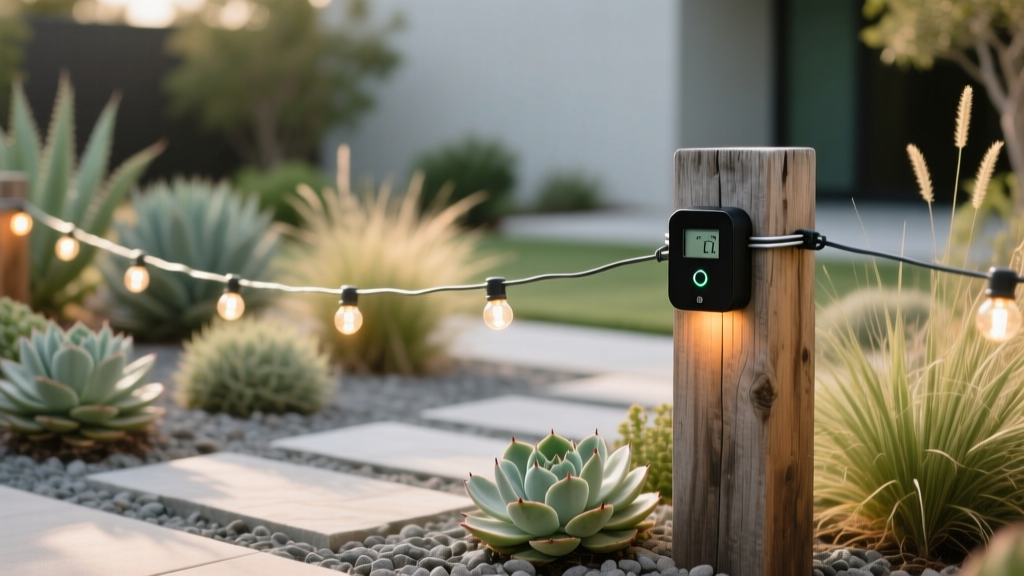
2026 Xeriscape String Lights: Guide Wire & Timer Guide
Anna KowalskiPublished
Illuminating the Xeriscape: Ambiance Meets Conservation
Xeriscaping is often misunderstood as a barren, rock-only landscape. In reality, a well-designed low-water garden in 2026 is a lush, architectural masterpiece featuring structural agaves, flowing ornamental grasses, and striking desert trees like the Palo Verde or Desert Willow. As outdoor living spaces continue to merge with water-wise gardening, ambient lighting becomes essential. However, installing outdoor string lights in a xeriscape requires a fundamentally different approach than in a traditional turf lawn. You cannot simply drive stakes into shallow desert soil or wrap heavy cords around the delicate bark of drought-adapted trees. This guide explores the professional method of using stainless steel guide wires paired with smart timers to illuminate your xeriscape safely, sustainably, and beautifully.
The Danger of Traditional Installation in Low-Water Gardens
In conventional landscapes, homeowners often wrap string lights directly around tree trunks or use plastic lawn stakes to route cords across the grass. In a xeriscape, both practices are detrimental. Desert trees possess remarkably thin, sensitive bark that is easily damaged by friction and heat. Wrapping cords tightly can lead to girdling, cutting off the tree's nutrient flow and inviting devastating pests like the flatheaded borer. Furthermore, xeric plants and succulents often feature wide, shallow root systems designed to capture fleeting rainfall. Driving metal stakes or digging trenches for wiring can sever these vital roots, causing irreversible stress to plants that take years to mature. According to the EPA WaterSense program, maintaining the health of your drought-tolerant plants is paramount to preserving your landscape's water efficiency. A damaged plant requires supplemental watering, entirely defeating the purpose of xeriscaping. The solution is an elevated, tensioned guide wire system paired with energy-efficient automation.
Essential 2026 Gear for Xeriscape Lighting
To execute a flawless installation that respects your low-water ecosystem, you need commercial-grade materials that withstand extreme UV exposure and temperature fluctuations common in arid climates.
| Component | Specification | Xeriscape Benefit | 2026 Est. Cost |
|---|---|---|---|
| Guide Wire | 304 Stainless Steel, 1/8 inch | Rust-proof; will not leach harmful metals into porous, alkaline desert soils. | $28 |
| Turnbuckles | M6 Stainless Steel Hook/Eye | Allows precise tensioning without stressing structural anchor points. | $12 |
| String Lights | Shatterproof LED Edison (1W) | Emits near-zero ambient heat, protecting nearby sensitive succulent leaves. | $45 |
| Smart Timer | Matter-Certified Outdoor Plug | Aligns with xeric conservation ethics by eliminating electricity waste. | $22 |
Step-by-Step Guide Wire Installation
Step 1: Map the Hardscape and Root Zones
Before purchasing hardware, map your yard. Identify your anchor points. In a xeriscape, the best anchor points are existing hardscapes: pergolas, stucco walls, fence posts, or the eaves of your home. Avoid using living desert trees as primary load-bearing anchors. If you must span across a garden bed, ensure your anchor points are on the perimeter to keep the guide wire suspended high above towering plants like Ocotillo or tall Yucca.
Step 2: Install Heavy-Duty Eye Screws and Turnbuckles
At your starting anchor, drill a pilot hole and install a heavy-duty stainless steel eye screw. At the terminating anchor, install an eye screw attached to a turnbuckle. The turnbuckle is critical; it allows you to apply hundreds of pounds of tension to the aircraft cable, ensuring your lights do not sag into your prized Agave americana spikes during high desert winds.
Step 3: Thread and Tension the Aircraft Cable
Thread your 1/8-inch stainless steel wire rope through the eye screws. Use wire rope clips (U-bolts) to secure the ends. Slowly twist the turnbuckle to tighten the wire until it produces a low hum when plucked. This rigid spine will bear the entire weight of the lighting strand, completely relieving stress from the bulbs and cords. When working over decomposed granite or delicate groundcovers like Dymondia, lay down a temporary work board to distribute your weight if you need to use a step ladder. This prevents soil compaction, which can suffocate the shallow roots of your drought-tolerant groundcovers.
Step 4: Mount the Lights with UV-Rated Zip Ties
Drape your commercial-grade string light strand over the tensioned guide wire. Secure the cord to the wire every 12 inches using UV-resistant black zip ties. This prevents the cord from sliding and bunching up, ensuring an even distribution of light across your gravel mulch and boulder features.
Smart Timers: Conserving Energy Like You Conserve Water
The core philosophy of xeriscaping is resource conservation. While we meticulously manage our water usage, we must apply the same ethos to our electricity. Leaving outdoor lights on all night or relying on manual switches leads to unnecessary energy drain and light pollution, which disrupts local desert wildlife, including essential nocturnal pollinators like bats and moths. In 2026, the integration of Matter-compatible smart outdoor plugs has revolutionized landscape lighting. By plugging your string lights into a smart timer equipped with an astronomical clock or geofencing, the lights automatically adjust to the shifting sunset times throughout the year. The U.S. Department of Energy highly recommends utilizing automated controls and high-efficiency LEDs to minimize outdoor energy consumption. Set your smart plug to turn on precisely at dusk and turn off at 11:00 PM, or use motion-sensor triggers for pathways leading through your creeping thyme and decomposed granite walkways.
Aesthetic Considerations for Desert Flora
When positioning your guide wires, consider how the light interacts with your specific plant palette. Xeriscapes thrive on shadows and texture. String lights provide a soft, ambient fill light that gently grazes textured stucco walls and highlights the architectural rosettes of Agave and Aloe. Avoid placing bright bulbs directly above variegated succulents, as the constant artificial light can occasionally disrupt their natural photoperiods. Instead, route the guide wire along the periphery of your seating area, allowing the warm 2700K LED glow to wash over your landscape boulders and desert sand. Consider the color temperature of your LEDs. In 2026, tunable white outdoor LEDs are widely available, allowing you to shift from a crisp 3000K for evening entertaining to a warm, amber 2200K later at night. Amber tones are not only more flattering to the natural reds and greens of desert foliage, but they are also significantly less disruptive to local wildlife and dark-sky initiatives, which are increasingly important in arid, rural communities.
Maintenance in a Dusty Environment
Arid environments are inherently dusty, and micro-debris will accumulate on your string light bulbs, dimming their output over time. Because your lights are suspended on a rigid guide wire, maintenance is straightforward. Twice a year, take a soft microfiber cloth and gently wipe the shatterproof LED bulbs. Inspect the zip ties for UV degradation—a common issue in high-sun environments—and replace any that have become brittle. Check the turnbuckle tension, as seasonal temperature swings can cause the metal cable to expand and contract slightly. Furthermore, ensure that your smart timer's firmware is updated via your home hub to maintain seamless connectivity with your 2026 smart home ecosystem. A reliable automation setup means you never have to manually intervene, preserving the effortless beauty of your desert landscape. By maintaining your hardware, you ensure your xeriscape remains a stunning, illuminated oasis for years to come without wasting a single drop of water or a watt of unnecessary electricity.
