
Landscaping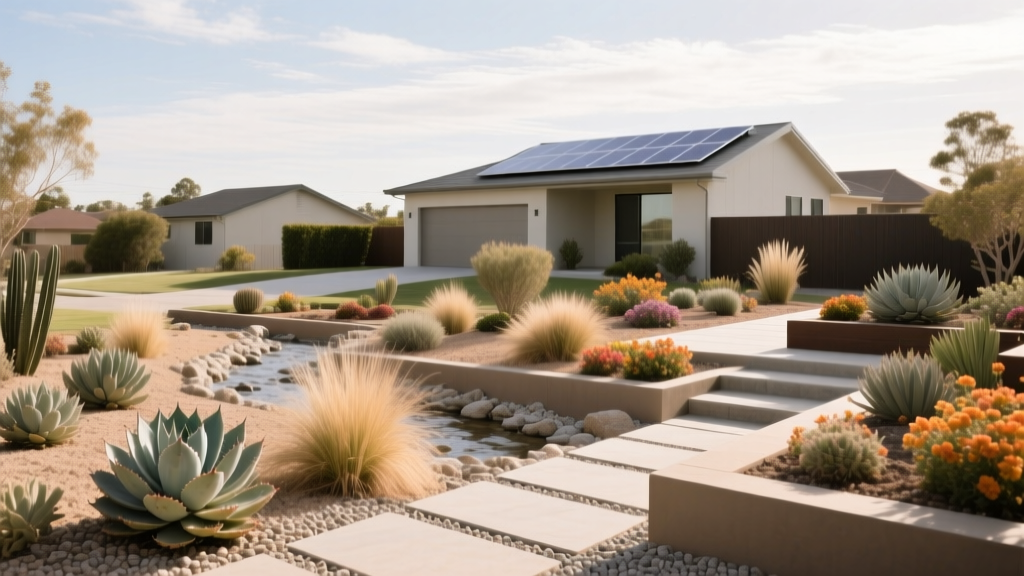
Xeriscaping Cost Breakdown: Budgeting a Drought-Tolerant Yard
Sarah ChenPublished
Understanding Xeriscaping and Its Financial Appeal
As water scarcity becomes a pressing issue across many regions and municipal water rates continue to climb, homeowners are increasingly turning to xeriscaping as a sustainable and financially savvy landscaping solution. Xeriscaping is not merely about replacing a lush green lawn with a barren desert scape or a yard full of rocks and cacti. It is a comprehensive landscape design philosophy focused on water conservation, utilizing drought-tolerant plants, efficient irrigation, and strategic hardscaping. According to the Environmental Protection Agency (EPA), outdoor water use accounts for nearly 30% of total household water consumption, with traditional turfgrass being one of the most resource-intensive elements of a property. By rethinking your landscape, you can dramatically reduce your water footprint while simultaneously boosting your curb appeal and property value.
However, transitioning from a traditional lawn to a xeriscaped yard requires a significant upfront investment. For homeowners operating on a strict budget, understanding the true cost of xeriscaping—including design, materials, labor, and long-term maintenance—is crucial. This comprehensive cost and budgeting guide will break down the expenses associated with drought-tolerant landscaping, compare it to traditional turf maintenance, and provide actionable strategies to maximize your return on investment.
The Upfront Investment: Xeriscaping Cost Breakdown
The initial cost to xeriscape a yard typically ranges from $10 to $25 per square foot, depending on the complexity of the design, the materials chosen, and whether you hire professional landscapers or tackle portions of the project as a DIY endeavor. For an average 1,000-square-foot front yard, you can expect to spend between $10,000 and $25,000 for a complete, professionally installed transformation. Here is a detailed breakdown of where those costs originate:
1. Landscape Design and Planning
A professional landscape architect or xeriscape designer will charge between $2,000 and $5,000 to create a customized master plan. This plan includes a hydrozoning layout (grouping plants with similar water needs), hardscape blueprints, and a detailed plant list. Skipping this step can lead to costly mistakes, such as planting high-water species in full sun or installing inadequate drainage systems.
2. Turf Removal and Site Preparation
Before new elements can be installed, the existing grass must be removed. Professional sod removal and disposal cost between $1.50 and $3.00 per square foot. Alternatively, sheet mulching (smothering the grass with cardboard and mulch over several months) is a budget-friendly DIY option that costs roughly $0.50 per square foot in materials but requires patience and time. Following removal, soil amendment and grading are necessary to ensure proper drainage, adding another $500 to $1,500 to the project.
3. Hardscaping and Ground Cover
Hardscaping forms the structural backbone of a xeriscaped yard. Materials like decomposed granite (DG), river rock, and flagstone replace thirsty turf while providing functional outdoor spaces. Decomposed granite is highly budget-friendly, costing $3 to $6 per square foot installed. Natural flagstone or permeable pavers are more expensive, ranging from $15 to $30 per square foot, but they offer superior durability and aesthetic appeal.
4. Drought-Tolerant Plants and Trees
The cost of plants varies wildly based on size and maturity. A 1-gallon perennial like *Salvia greggii* (Autumn Sage) might cost $10 to $15, while a mature, 15-gallon *Agave americana* or desert-adapted shade tree like the Desert Willow (*Chilopsis linearis*) can cost $150 to $400 each. Budget approximately $3,000 to $6,000 for a diverse, mature plant palette for a 1,000-square-foot yard.
5. Smart Irrigation Systems
Xeriscaping does not mean zero watering; it means efficient watering. Upgrading from traditional spray heads to a subsurface drip irrigation system with a smart weather-based controller (like Rachio or Rain Bird) costs between $1,500 and $3,000. Drip systems deliver water directly to the root zone, minimizing evaporation and runoff.
Xeriscaping vs. Traditional Turf: A 5-Year Cost Analysis
While the initial price tag of xeriscaping can cause sticker shock, the long-term financial benefits become evident when you factor in water savings and reduced maintenance. The table below compares the estimated costs of maintaining a 1,000-square-foot traditional Kentucky Bluegrass lawn versus a professionally installed xeriscaped yard over a five-year period.
| Expense Category | Traditional Turf (1,000 sq ft) | Xeriscaping (1,000 sq ft) |
|---|---|---|
| Initial Installation / Renovation | $1,500 (Sod & Soil Prep) | $15,000 (Design, Hardscape, Plants, Drip) |
| Annual Water Costs (Yearly Avg) | $600 / year ($3,000 total) | $150 / year ($750 total) |
| Annual Maintenance (Mowing, Fertilizer, Aeration) | $1,200 / year ($6,000 total) | $200 / year ($1,000 total - seasonal pruning) |
| Equipment & Fuel (Mower, Trimmer) | $300 / year ($1,500 total) | $0 |
| System Repairs & Winterization | $500 (5-year total) | $250 (5-year total) |
| Total 5-Year Cost | $12,500 | $18,000 |
As the data illustrates, the traditional lawn appears cheaper over a strict five-year window primarily due to the high upfront capital required for xeriscaping. However, by year seven or eight, the xeriscaped yard typically reaches its break-even point. Beyond that, the xeriscaped yard generates pure savings, often yielding a net positive return on investment while requiring a fraction of the weekend labor.
Hidden Costs to Watch Out For
When drafting your landscaping budget, it is vital to account for hidden expenses that can derail your financial plan. First, soil testing and heavy clay amendment may be required if your native soil lacks the drainage necessary for succulents and Mediterranean plants. Second, high-quality commercial-grade weed barrier fabric is essential beneath gravel and decomposed granite to prevent invasive weeds from ruining your hardscape; budget an extra $0.50 to $1.00 per square foot for premium woven geotextiles. Finally, check with your local Homeowners Association (HOA) and municipal planning department. Some HOAs have strict rules regarding the percentage of living ground cover versus gravel, and some municipalities require permits for major grading or turf removal projects, which can incur fees ranging from $100 to $500.
Maximizing Your Budget: Rebates and Incentives
One of the most effective ways to offset the upfront costs of xeriscaping is by taking advantage of local and regional water conservation rebates. Many water districts in drought-prone areas offer 'Cash for Grass' or turf replacement programs. According to the Alliance for Water Efficiency, municipal rebate programs can reimburse homeowners anywhere from $1.00 to $3.00 per square foot of removed turf, provided the replacement landscape meets specific water-efficiency and canopy coverage criteria. For a 1,000-square-foot lawn, this could translate to a $1,000 to $3,000 rebate, significantly softening the initial financial blow. Always contact your local water provider before removing your grass, as most programs require a pre-inspection and specific documentation.
Phased Implementation: A Budget-Friendly Strategy
If the total cost of a full-yard xeriscape renovation exceeds your current budget, consider a phased implementation approach based on the principles of hydrozoning. Hydrozoning involves dividing your yard into distinct zones based on water requirements and usage.
- Phase 1: The Oasis Zone (High Traffic/High Visibility) Focus your initial budget on the areas immediately surrounding your patio or front entryway. Here, you can install a small patch of drought-tolerant alternative grass (like UC Verde Buffalograss) or a vibrant cluster of flowering perennials and a focal point tree. This zone receives the most water and attention.
- Phase 2: The Transition Zone (Moderate Traffic) In the following year, tackle the middle sections of the yard. Replace thirsty shrubs with low-water alternatives like *Lantana* or *Rosemary*, and introduce groundcovers like *Creeping Thyme* between stepping stones.
- Phase 3: The Natural Zone (Low Traffic/Perimeter) Finally, address the perimeter and unused corners of the property. These areas are perfect for budget-friendly hardscaping, heavy mulching, and ultra-low-water native succulents like *Agave* and *Yucca*, which require minimal soil preparation and almost no supplemental irrigation once established.
Selecting the Right Plants for Your Budget
Choosing the right plants is critical to ensuring your xeriscaped yard thrives without expensive replacements. Planting a species that requires more water than your region naturally provides will defeat the purpose of the landscape and inflate your water bill. To make informed, budget-conscious purchasing decisions, utilize resources like the University of California's WUCOLS database (Water Use Classification of Landscape Species). This extensive, scientifically backed database categorizes thousands of landscape plants by their actual water needs, allowing you to filter for 'Very Low' and 'Low' water use species that are proven to thrive in your specific climate zone.
Furthermore, buy smaller plants whenever possible. While a 15-gallon shrub provides instant gratification, a 1-gallon or 5-gallon specimen of the same species costs a fraction of the price. Drought-tolerant plants and native species are incredibly vigorous growers; within two to three growing seasons, a small, budget-friendly plant will catch up to its larger, more expensive counterpart, saving you hundreds of dollars in nursery costs.
Conclusion
Xeriscaping is a powerful landscaping strategy that aligns environmental stewardship with long-term financial prudence. While the upfront costs of design, turf removal, hardscaping, and drip irrigation require a substantial initial budget, the dramatic reduction in water consumption, elimination of mowing, and potential utility rebates create a compelling financial case. By carefully planning your hydrozones, leveraging local rebate programs, and selecting verified low-water plants, you can transform your property into a stunning, resilient, and budget-friendly landscape that will pay dividends for decades to come.

