
Gardening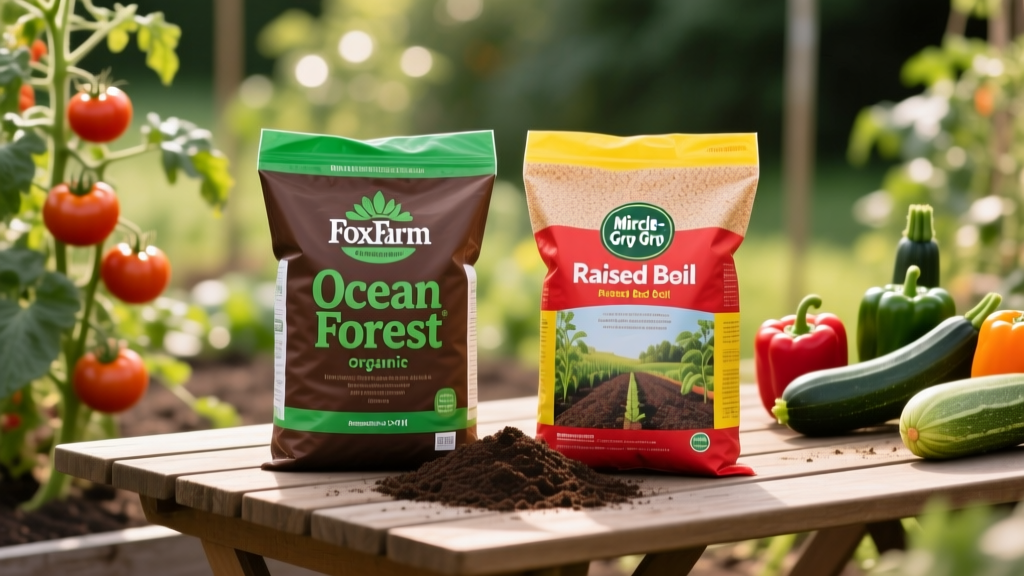
FoxFarm Ocean Forest vs Miracle-Gro Raised Bed Soil Tested
Anna KowalskiPublished
The Foundation of a Thriving Raised Bed
Raised bed gardening offers superior drainage, better soil temperature control, and significantly higher yields compared to traditional in-ground rows. However, the foundation of any successful raised bed is the soil you choose to fill it with. Unlike in-ground gardening, where you can amend native dirt over time, raised beds require a carefully balanced, nutrient-dense, and well-aerated medium from day one.
When browsing the garden center, two commercial heavyweights consistently dominate the premium soil aisle: FoxFarm Ocean Forest Potting Soil and Miracle-Gro Raised Bed Soil. Both promise vigorous growth and bountiful harvests, but they achieve these results through vastly different formulations, ingredient profiles, and price points. In this comprehensive comparison, we will break down the science, cost, and long-term viability of both soils to help you decide which is best for your vegetable and flower gardens.
FoxFarm Ocean Forest Potting Soil: An Overview
FoxFarm Ocean Forest is widely regarded as a 'super soil' among organic gardening enthusiasts. It is engineered to be a complete, self-sustaining ecosystem right out of the bag. Rather than relying on synthetic chemical fertilizers, FoxFarm utilizes a complex blend of organic matter and marine-based nutrients to feed both the plants and the soil microbiome.
Key Ingredients and Benefits
- Earthworm Castings: Often called 'black gold,' castings provide highly bioavailable nutrients and beneficial microbes.
- Bat Guano & Fish Emulsion: These marine and animal-based ingredients deliver a massive initial spike of nitrogen and phosphorus.
- Forest Humus & Sphagnum Peat Moss: Provides excellent moisture retention while maintaining a light, airy structure.
- Mycorrhizae: Beneficial fungi that colonize plant roots, vastly expanding their ability to absorb water and nutrients.
The primary advantage of Ocean Forest is its rich biological activity. According to the Sustainable Agriculture Research and Education (SARE) program, fostering a diverse soil microbiome is critical for long-term nutrient cycling and disease suppression in organic farming systems. FoxFarm achieves this out of the bag.
The Drawbacks
The main critique of Ocean Forest is that it is incredibly 'hot.' The high concentration of nitrogen-rich guano and fish emulsion can easily burn the tender roots of young seedlings if planted directly. Additionally, the premium organic ingredients command a steep price, making it an expensive choice for filling large, deep raised beds.
Miracle-Gro Raised Bed Soil: An Overview
Miracle-Gro is a household name in gardening, and their dedicated Raised Bed Soil is formulated specifically for the unique drainage and aeration requirements of elevated garden boxes. It is designed to be a user-friendly, foolproof medium that appeals to both beginners and seasoned gardeners looking for consistency.
Key Ingredients and Benefits
- Sphagnum Peat Moss & Coir: The primary bulk of the mix, offering excellent water retention and a light texture.
- Processed Forest Products: Adds necessary aeration and prevents the peat from compacting too tightly.
- Proprietary Nutrient Blend: Miracle-Gro typically incorporates a synthetic or organically derived time-release fertilizer (depending on whether you buy the standard or 'Performance Organics' line) that feeds plants for up to three months.
- Yucca Extract: A natural wetting agent that helps water penetrate the peat moss evenly.
Miracle-Gro's greatest strength is its physical texture and consistency. It is virtually impossible to over-compact this soil, ensuring that root vegetables like carrots and radishes can push through the medium with ease. As noted by The Old Farmer's Almanac, maintaining a loose, friable soil structure is the most critical factor for successful root crop development in raised beds.
The Drawbacks
The reliance on peat moss means the soil can become hydrophobic if it is allowed to dry out completely, requiring slow, deep watering to rehydrate. Furthermore, standard Miracle-Gro products often rely on synthetic salts for nutrition, which do little to build long-term soil biology or organic matter.
Head-to-Head Comparison Chart
| Feature | FoxFarm Ocean Forest | Miracle-Gro Raised Bed |
|---|---|---|
| Base Texture | Chunky, rich, dark loam | Light, fibrous, peat-heavy |
| Nutrient Source | Organic (Guano, Fish, Crab Meal) | Synthetic / Time-Release (Standard line) |
| Seedling Safety | Low (Can burn tender roots) | High (Gentle, balanced formulation) |
| Microbiology | Excellent (Includes Mycorrhizae) | Poor (Lacks active biological inoculants) |
| Water Retention | High (Holds moisture well) | Medium-High (Can become hydrophobic) |
| Avg. Cost (1.5 cu ft) | $22.00 - $28.00 | $8.00 - $12.00 |
The Mathematics of Filling a Raised Bed
To truly understand the comparison, we must look at the cost of a real-world project. Let us assume you are building a standard 4-foot by 8-foot raised bed, with a depth of 12 inches. This bed requires exactly 32 cubic feet of soil.
Both FoxFarm and Miracle-Gro are commonly sold in 1.5 cubic foot bags. Therefore, you will need approximately 22 bags to fill the bed to the brim (accounting for slight settling).
- FoxFarm Ocean Forest Cost: 22 bags x $24.00 (average) = $528.00
- Miracle-Gro Raised Bed Cost: 22 bags x $10.00 (average) = $220.00
The price difference is staggering. Filling a single large bed with pure FoxFarm Ocean Forest costs more than double the price of Miracle-Gro. For gardeners on a budget, or those building multiple beds, purchasing pure Ocean Forest is often financially unfeasible.
Nutrient Profile and Fertilizer Burn Risk
The nutrient density of your soil dictates how you plant. Because FoxFarm Ocean Forest is packed with bat guano and fish emulsion, its initial Nitrogen-Phosphorus-Potassium (NPK) rating is quite high for a potting mix. If you attempt to direct-sow delicate seeds like lettuce, spinach, or carrots directly into pure Ocean Forest, the salts and high nitrogen levels can cause 'fertilizer burn,' stunting germination or killing the sprouts.
Actionable Advice: If you choose FoxFarm, start your seeds indoors and transplant established seedlings into the bed. Alternatively, if you must direct sow, dig a small trench and fill it with a sterile, nutrient-free seed-starting mix to give the roots a safe buffer before they reach the hot Ocean Forest soil.
Miracle-Gro Raised Bed Soil, conversely, is buffered and formulated to be gentle enough for direct seeding. The time-release synthetic beads provide a steady, low-dose drip of nutrition that will not shock young plants.
Water Retention, Drainage, and Aeration
Raised beds naturally drain faster than in-ground gardens. According to the University of Wisconsin Extension, proper drainage is vital to prevent root rot, but the soil must also retain enough moisture to sustain plants through hot summer afternoons.
FoxFarm utilizes a blend of forest humus and peat moss, buffered with perlite. The forest humus acts like a sponge, holding onto water and nutrients, while the perlite ensures that excess water drains freely. This creates a highly forgiving environment for heavy feeders like tomatoes and peppers.
Miracle-Gro relies heavily on sphagnum peat moss and coir. While this creates a beautifully light texture that roots love, peat moss has a known flaw: if it dries out completely, it shrinks away from the edges of the bed and becomes hydrophobic (water-repellent). If you skip watering your Miracle-Gro bed for a few days in July, you may find that water simply runs down the sides of the bed and out the bottom, leaving the core of the soil bone dry. To combat this, Miracle-Gro includes yucca extract, a natural surfactant that helps water penetrate dry peat, but gardeners must still be vigilant about maintaining consistent moisture.
Long-Term Soil Health and Microbiology
Gardening is not just about feeding the plant; it is about feeding the soil. Over a period of three to five years, the biological differences between these two soils become apparent.
FoxFarm Ocean Forest is a living soil. The inclusion of mycorrhizal fungi and diverse organic meals means that as the years pass, the soil structure actually improves. The microbes break down the organic matter, creating humus that permanently improves the soil's cation exchange capacity (CEC)—its ability to hold onto nutrients.
Miracle-Gro Raised Bed Soil, particularly the standard non-organic version, is largely an inert growing medium supplemented by chemical salts. Once the three-month supply of time-release fertilizer is exhausted, the soil offers very little nutritional value. Furthermore, as the processed forest products and peat moss break down and decompose, the soil level in your raised bed will drop significantly, and the remaining material can become compacted and acidic. Gardeners using Miracle-Gro must commit to annual amendments, adding generous amounts of compost and organic fertilizers every spring to maintain viability.
Amending and Stretching Your Soil Budget
Given the high cost of FoxFarm and the long-term biological limitations of standard Miracle-Gro, many expert gardeners opt for a hybrid approach to maximize both budget and plant health.
The 50/50 Hybrid Strategy
Instead of filling your entire raised bed with premium soil, consider buying a bulk blend of high-quality topsoil and compost from a local landscape supply yard. Fill the bottom 6 inches of your raised bed with this bulk material. Then, fill the top 6 inches with a 50/50 mix of FoxFarm Ocean Forest and Miracle-Gro Raised Bed Soil.
This strategy provides the deep, moisture-retentive base of bulk soil, the biological inoculants and rich nutrients of FoxFarm, and the light, aerated texture of Miracle-Gro—all while cutting your premium soil budget by more than 60%.
The Verdict: Which Should You Choose?
The choice between FoxFarm Ocean Forest and Miracle-Gro Raised Bed Soil ultimately comes down to your gardening philosophy, budget, and the specific crops you are growing.
Choose FoxFarm Ocean Forest if: You are an organic purist growing heavy-feeding transplants like tomatoes, peppers, and eggplants. You value long-term soil biology, want to avoid synthetic chemicals, and have the budget to invest in premium, living soil. Just remember to protect delicate seeds from fertilizer burn.
Choose Miracle-Gro Raised Bed Soil if: You are a beginner, you are direct-sowing root vegetables and leafy greens, or you are filling multiple large beds on a strict budget. It offers a foolproof, lightweight texture that guarantees good drainage and gentle initial feeding, provided you are willing to amend it with compost in subsequent years.
By understanding the unique strengths and weaknesses of both formulations, you can tailor your raised bed soil to perfectly match your garden's needs, ensuring a bountiful harvest for seasons to come.