Gardening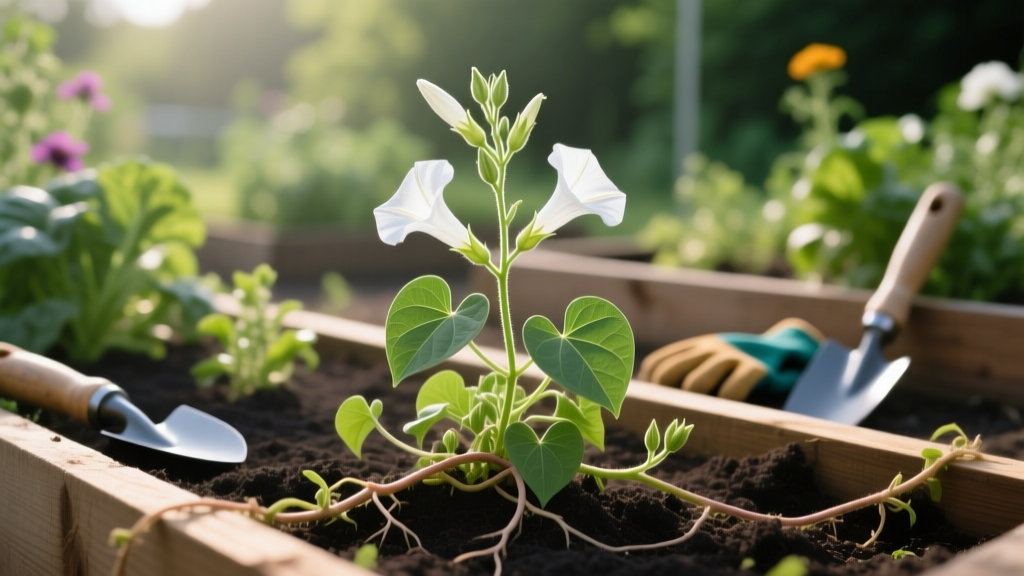
How to Identify and Eradicate Bindweed in Vegetable Gardens
Mike RodriguezPublished
The Ultimate Garden Villain: Understanding Bindweed
Every seasoned gardener has a nemesis, but few weeds inspire as much dread as bindweed. Often mistaken for the innocent and beautiful morning glory, bindweed is a relentless, creeping perennial that can quickly overtake vegetable beds, choke out delicate flowers, and reduce crop yields to zero. Unlike annual weeds that complete their life cycle in one season and can be managed with basic mulching, bindweed is a perennial powerhouse equipped with a subterranean root system that seems almost invincible.
If you have noticed twisting vines with trumpet-shaped white or pink flowers wrapping around your tomato cages, bean poles, and sunflower stalks, you are likely dealing with a bindweed infestation. Eradicating this weed requires patience, strategic planning, and a deep understanding of its biology. In this comprehensive guide, we will explore how to accurately identify bindweed, understand its survival tactics, and deploy both organic and targeted chemical removal strategies to reclaim your garden.
Identifying the Enemy: Field vs. Hedge Bindweed
Before you can effectively eradicate bindweed, you must correctly identify which type is invading your garden. The two most common culprits in North American gardens are Convolvulus arvensis (Field Bindweed) and Calystegia sepium (Hedge Bindweed). While they share similar vining habits and trumpet-shaped flowers, their leaf structures and growth behaviors differ slightly. It is also crucial to distinguish them from the annual morning glory, which is a desirable garden plant.
| Characteristic | Field Bindweed (Convolvulus arvensis) | Hedge Bindweed (Calystegia sepium) | Annual Morning Glory (Ipomoea) |
|---|---|---|---|
| Leaves | Arrowhead-shaped, small (1-2 inches), smooth margins. | Large, triangular with prominent lobes at the base (3-5 inches). | Heart-shaped or deeply lobed, varying sizes, often fuzzy. |
| Flowers | Small (1 inch), white or pale pink, funnel-shaped. | Large (2-3 inches), pure white, prominent bracts at the base. | Large (2-4 inches), vibrant blues, purples, pinks, or whites. |
| Growth Habit | Creeping ground cover, climbs when supported. | Vigorous climber, aggressively twines around structures. | Fast-growing annual climber, dies with first frost. |
| Root System | Deep, extensive perennial taproot and rhizomes. | Fleshy, creeping perennial rhizomes. | Fibrous annual root system. |
The Biology of Survival: Why Bindweed is So Stubborn
To defeat bindweed, you must understand its subterranean warfare tactics. According to the Colorado State University Extension, field bindweed possesses a taproot that can plunge up to 20 feet deep into the soil. Furthermore, it produces an extensive network of lateral rhizomes (horizontal roots) that spread outward, generating new shoots wherever nodes touch the soil.
When you pull the top of a bindweed plant, you are only removing a fraction of the organism. The brittle roots snap easily, leaving behind fleshy fragments that contain enough stored carbohydrates to generate new shoots within days. Additionally, bindweed seeds have incredibly hard coats and can remain viable in the soil seed bank for up to 50 years, waiting for the right conditions to germinate.
Organic and Cultural Removal Strategies
For vegetable gardeners who prefer to avoid synthetic herbicides near their edible crops, organic management is the preferred route. However, organic eradication of bindweed is not a weekend project; it is a multi-season campaign of attrition.
1. The Exhaustion Method (Repeated Snipping)
Bindweed relies on its leaves to photosynthesize and send energy down to its massive root system. By repeatedly removing the foliage, you force the roots to expend their stored carbohydrate reserves to push out new growth. Using a pair of sharp garden snips, cut the bindweed vines off exactly at the soil line. Do this every 7 to 10 days. Over the course of one to two growing seasons, the root system will eventually starve and die. Never pull the vine, as this can uproot desirable plants nearby; simply snip and discard.
2. Smothering and Sheet Mulching
If you have an empty garden bed or a pathway heavily infested with bindweed, sheet mulching is a highly effective organic control method.
- Step 1: Mow or cut the existing bindweed as close to the ground as possible.
- Step 2: Lay down overlapping sheets of heavy-duty corrugated cardboard. Ensure the edges overlap by at least 6 to 8 inches so the vines cannot find a gap to push through.
- Step 3: Wet the cardboard thoroughly with a garden hose.
- Step 4: Cover the cardboard with 4 to 6 inches of organic mulch, such as arborist wood chips or straw.
3. Soil Solarization
In regions with hot, sunny summers, soil solarization can cook bindweed roots and seeds in the top layers of the soil. Clear the area of all vegetation, water the soil deeply, and cover it tightly with 2 to 4 mil clear plastic sheeting. Bury the edges of the plastic to trap the heat. Leave it in place for 6 to 8 weeks during the peak heat of summer (July and August). While this effectively kills seeds and shallow roots, deeper taproots may survive and require follow-up monitoring.
CRITICAL WARNING: Never use a rototiller to prepare soil infested with bindweed. Tilling chops the fleshy rhizomes into dozens of tiny pieces. Each piece containing a node will sprout into a brand-new, genetically identical bindweed plant. Tilling turns one bindweed problem into a hundred.
Targeted Chemical Control for Severe Infestations
When organic methods are insufficient, or when bindweed is invading non-edible ornamental beds and fence lines, systemic herbicides may be necessary. Systemic herbicides like glyphosate are absorbed through the leaves and translocated down into the root system, killing the weed from the inside out. The University of Wisconsin-Madison Extension notes that timing is everything when using chemical controls on perennial weeds.
The Paintbrush Technique for Vegetable Gardens
Spraying herbicides in a vegetable garden is incredibly risky, as chemical drift can easily kill your tomatoes, peppers, and squash. Instead, use the targeted "paintbrush technique":
- Mix a 2% solution of glyphosate concentrate (41% active ingredient) with water. Add a few drops of non-ionic surfactant or liquid dish soap to help the solution stick to the waxy leaves.
- Wear chemical-resistant gloves and safety goggles. Follow all safety guidelines outlined by the Environmental Protection Agency (EPA).
- Dip a small foam paintbrush or a cotton swab into the solution.
- Carefully paint the herbicide directly onto the leaves of the bindweed, avoiding any contact with your desirable crops.
Timing: Apply the herbicide in late summer or early fall (August to September). During this time, perennial plants are actively drawing nutrients down into their roots to prepare for winter dormancy. This natural downward sap flow will carry the herbicide deep into the taproot, ensuring a more complete kill.
Preventative Measures for Long-Term Success
Once you have gained the upper hand, vigilance is required to keep bindweed from returning. Always inspect nursery plants and bags of topsoil before introducing them to your garden, as bindweed rhizomes frequently hitchhike in commercial soil amendments. Maintain a thick layer of organic mulch around your crops to block sunlight from reaching germinating seeds. Finally, consider planting dense, competitive cover crops like winter rye or buckwheat in empty beds; these crops establish quickly and can outcompete bindweed seedlings for water, nutrients, and sunlight.
Conclusion
Eradicating bindweed is a test of a gardener's persistence. Whether you choose the organic route of relentless snipping and sheet mulching or opt for targeted, careful chemical applications, consistency is your greatest weapon. By understanding the biology of this formidable weed and refusing to let it photosynthesize unchallenged, you can eventually starve its root system and reclaim your vegetable garden for your actual crops.