Gardening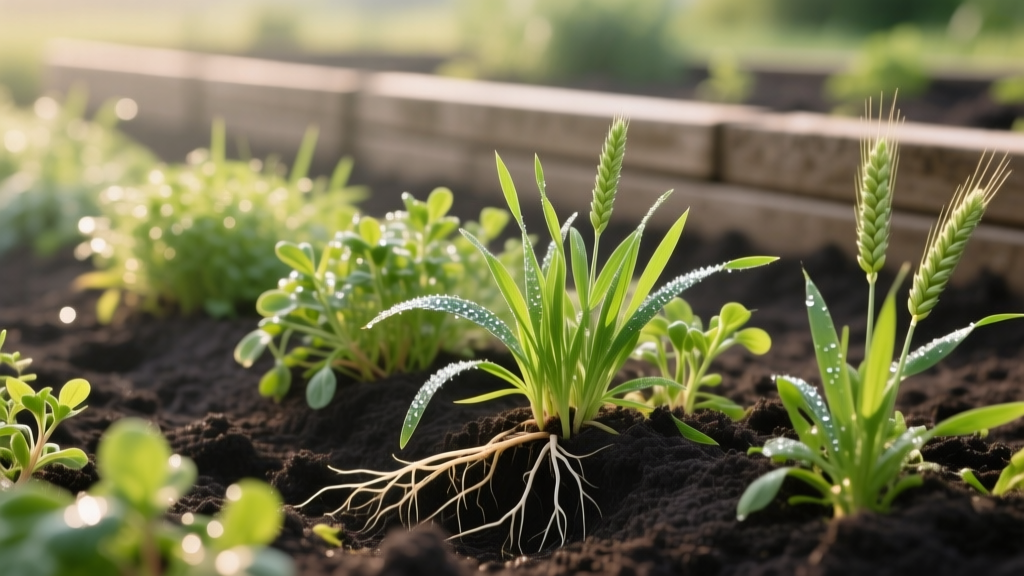
Matching Cover Crop Grasses to Garden Soil Types
Robert HayesPublished
The Foundation of Garden Soil Preparation: Grass Cover Crops
When it comes to vegetable and flower gardening, the secret to a bountiful harvest lies beneath the surface. While many gardeners focus on synthetic fertilizers or bagged compost, professional growers and permaculture designers rely on a more sustainable method: cover cropping. Often referred to as "green manure," cover crops are planted not to be harvested, but to be returned to the earth. Among the most effective cover crops are various grass species, which excel at building soil structure, preventing erosion, and cycling nutrients.
However, a one-size-fits-all approach does not work in the garden. Matching the right grass species to your native soil profile is critical for maximizing biomass and improving your garden beds. According to the Cornell University Soil Health initiative, understanding your soil texture and drainage capabilities is the first step in selecting a cover crop that will thrive and provide maximum agronomic benefits.
In this guide, we will explore how to match specific cover crop grasses to clay, sandy, and loamy soils, providing actionable seeding rates, termination methods, and composting strategies to prepare your garden for the upcoming planting season.
Identifying Your Garden Soil Profile
Before selecting a grass seed, you must identify the dominant soil type in your garden beds or the native ground where you plan to build raised beds. Soil is generally categorized into three main types based on particle size:
- Clay: Composed of microscopic particles that pack tightly together. Clay soils retain water and nutrients exceptionally well but suffer from poor drainage, severe compaction, and hardpan formation.
- Sandy: Made of large, irregular particles. Sandy soils drain rapidly and are easy to work, but they leach water-soluble nutrients and struggle to retain moisture during dry spells.
- Loam: The ideal gardener's soil, featuring a balanced mix of sand, silt, and clay. It offers excellent drainage, moisture retention, and a crumbly structure that promotes root growth.
To get a macro-level understanding of your native earth before you even dig a test hole, the USDA Natural Resources Conservation Service provides extensive databases and tools to help landowners understand their local soil profiles and historical land use.
Matching Grasses to Heavy Clay Soils
Clay soils are notoriously difficult for vegetable root crops like carrots and radishes, and they can easily waterlog delicate flower bulbs. The primary goal when gardening in clay is to break up compaction and increase porosity without resorting to mechanical tilling, which can actually worsen clay structure over time by destroying soil aggregates.
Top Grass Matches: Cereal Rye and Annual Ryegrass
For heavy clay, you need grasses with aggressive, deep, and fibrous root systems that act as "biological tillers."
- Cereal Rye (Secale cereale): This is the undisputed champion of clay soil preparation. Cereal rye develops a massive, deep root system that penetrates hardpans and compacted layers. When the roots eventually decompose, they leave behind microscopic channels that improve water infiltration and aeration for your future vegetable crops.
- Annual Ryegrass (Lolium multiflorum): Similar to cereal rye but with an even denser, shallower fibrous root mat. It is excellent for breaking up surface-level clay crusting and preventing winter erosion.
Actionable Planting and Maintenance Advice
Timing: Plant in early fall, about 4 to 6 weeks before your first expected hard frost. This gives the grass time to establish a deep root system before winter dormancy.
Seeding Rate: Broadcast 2 to 3 pounds of cereal rye seed per 1,000 square feet of garden space.
Depth: Rake the seed into the top 1/2 inch of soil. Ensure good seed-to-soil contact by lightly rolling or tamping the area.
Matching Grasses to Sandy Soils
Sandy soils present the opposite challenge of clay. Water and expensive organic fertilizers wash right through the soil profile, leaving plants thirsty and hungry. The goal in sandy soils is to rapidly build organic matter (humus) to act like a sponge, increasing the soil's cation exchange capacity (CEC) and water-holding capabilities.
Top Grass Matches: Oats and Barley
Sandy soils require fast-growing grasses that produce a high volume of above-ground biomass (carbon) to be used as surface mulch or incorporated into the topsoil.
- Oats (Avena sativa): Oats are a gardener's best friend in sandy soils, particularly in colder climates. They grow rapidly in the cool weather of early fall, producing thick, lush foliage that shades the soil and suppresses weeds. Crucially, oats are "winter-killed" in zones with hard freezes, meaning they die back naturally, leaving a perfect, weed-free mulch mat on the surface by spring.
- Barley (Hordeum vulgare): Barley is highly drought-tolerant and thrives in sandy, slightly alkaline soils where other grasses might struggle. It produces excellent biomass and helps scavenge leftover nitrogen from previous vegetable crops, preventing it from leaching into groundwater.
Actionable Planting and Maintenance Advice
Timing: Plant oats in late summer to early fall. They need about 6 to 8 weeks of growth before a killing frost to produce adequate biomass.
Seeding Rate: Apply 3 to 4 pounds of oat seed per 1,000 square feet. Because sandy soils are loose, you can sow slightly heavier to ensure a thick stand.
Depth: Plant oats slightly deeper than rye, about 1 inch deep, to reach adequate moisture in fast-draining sand.
Matching Grasses to Loamy Soils
If you are blessed with loamy soil, your goal is simply maintenance and nutrient cycling. Loam supports almost any plant, but heavy-feeding vegetables like tomatoes, corn, and squash can rapidly deplete its nutrient reserves. Cover crops in loam should focus on nutrient scavenging and adding diverse root exudates to feed the soil microbiome.
Top Grass Matches: Winter Wheat and Sorghum-Sudangrass
- Winter Wheat (Triticum aestivum): Wheat is less aggressive than rye, making it easier to terminate in the spring. It provides excellent ground cover, suppresses weeds through allelopathy (releasing natural biochemicals that inhibit weed seed germination), and leaves a manageable amount of residue that breaks down quickly in loamy soils.
- Sorghum-Sudangrass (Sorghum bicolor x S. sudanense): If you have a bare garden bed during the hot summer months, this warm-season grass is unmatched. It thrives in the heat, grows up to 6 feet tall, and produces massive amounts of organic matter. It is ideal for preparing new raised bed areas or revitalizing exhausted loam.
Comprehensive Soil-to-Grass Matching Chart
The Sustainable Agriculture Research and Education (SARE) program emphasizes that proper selection and termination are the keys to successful cover cropping. Use the table below as a quick reference for your garden planning.
| Soil Type | Primary Challenge | Best Grass Match | Seeding Rate (per 1k sq ft) | Primary Benefit | Termination Method |
|---|---|---|---|---|---|
| Heavy Clay | Compaction, Hardpans | Cereal Rye | 2 - 3 lbs | Deep biological tillage | Mow & Tarp (Occultation) |
| Sandy | Nutrient Leaching, Drought | Oats | 3 - 4 lbs | Rapid biomass, weed suppression | Winter-kill or Mow |
| Loam | Nutrient Depletion, Weeds | Winter Wheat | 2 - 3 lbs | Allelopathic weed control | Flail Mow & Incorporate |
| Compacted New Beds | Poor Structure, Low Carbon | Sorghum-Sudangrass | 1.5 - 2 lbs | Massive summer biomass | Chop & Drop, Compost |
Termination and Composting In-Place (Chop and Drop)
Growing the grass is only half the battle; how you terminate it dictates how your garden soil will respond. Grasses are high in carbon. If you till large amounts of mature grass directly into the soil right before planting vegetables, the soil microbes will consume all available nitrogen to break down the carbon, causing a "nitrogen tie-up" that will stunt your vegetable seedlings.
The Occultation (Tarping) Method for Clay and Loam
For no-till gardeners, occultation is the gold standard for terminating tough grasses like cereal rye.
- Timing: Wait until the grass has headed out (produced seed heads) but before the seeds mature and harden.
- Mowing: Use a string trimmer or lawn mower set to the lowest deck height to scalp the grass as close to the soil surface as possible.
- Tarping: Immediately cover the mowed garden bed with a heavy, UV-treated silage tarp (black on both sides). Weigh down the edges with sandbags or rocks.
- Composting In-Place: Leave the tarp in place for 3 to 4 weeks. The lack of sunlight and the heat generated beneath the tarp will kill the grass and its root system. Earthworms and soil fungi will pull the decaying matter down into the soil profile, effectively composting it in place without disturbing the soil structure.
- Planting: Remove the tarp, lightly rake away any remaining surface debris, and transplant your vegetable seedlings directly into the nutrient-rich, weed-free soil.
The Chop-and-Drop Method for Sandy Soils
If you used oats that winter-killed, or if you are terminating sorghum-sudangrass in late summer, simply use a machete or hedge clippers to chop the stalks into 2-inch pieces. Leave them on the surface of your sandy soil as a thick mulch. This mimics natural forest floor decomposition, slowly releasing nutrients, retaining vital soil moisture, and protecting the delicate sand structure from heavy spring rains.
Final Thoughts on Soil and Grass Synergy
Matching your cover crop grass to your specific soil type transforms a passive garden bed into an active, biological engine. By utilizing the deep roots of rye for clay, the rapid biomass of oats for sand, and the weed-suppressing qualities of wheat for loam, you eliminate the need for heavy mechanical tilling and synthetic fertilizers. Take the time to assess your soil texture, invest in high-quality seed, and let nature's biological tillers prepare the perfect canvas for your next gardening season.