Gardening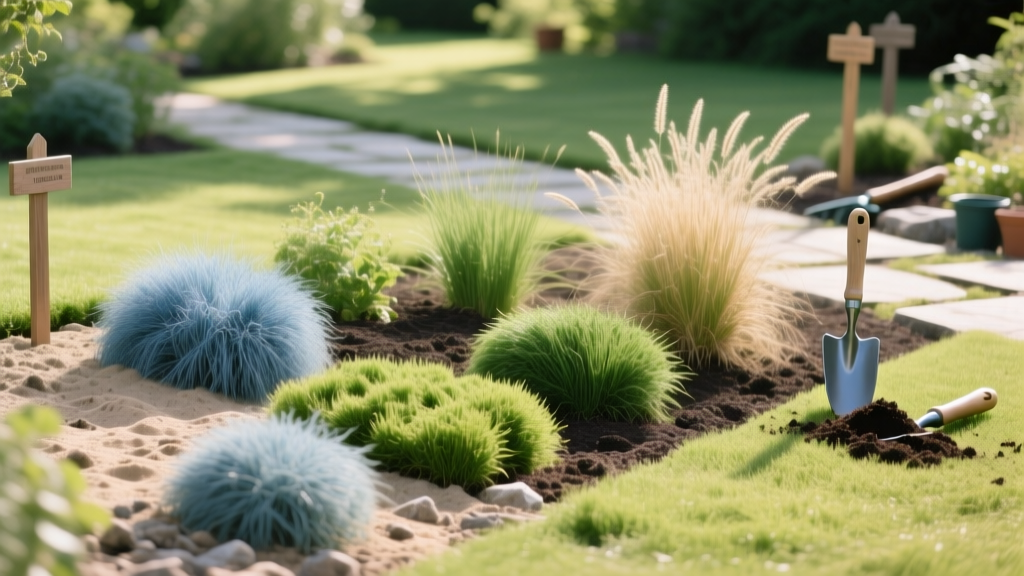
A Complete Guide to Matching Grass to Garden Soil Types
Lisa ThompsonPublished
The Foundation of Garden Design: Soil and Grass Symbiosis
Designing a beautiful garden landscape requires more than just selecting vibrant flowers and lush shrubs. The true foundation of any thriving outdoor space lies beneath the surface. Whether you are establishing a sprawling turfgrass lawn to border your vegetable beds or integrating striking ornamental grasses into your perennial garden, matching the right grass species to your native soil type is critical. Ignoring soil composition leads to chronic drainage issues, nutrient deficiencies, and an endless cycle of expensive chemical treatments. By understanding your soil's physical and chemical properties, you can select grass varieties that will naturally thrive, reducing maintenance costs and conserving water.
Understanding the Four Primary Soil Textures
Soil is primarily categorized by its mineral particle size, which dictates how it holds water, drains, and exchanges nutrients. Before selecting any grass for your garden landscape, you must identify which of the four main soil types dominates your yard.
- Sandy Soil: Composed of large, coarse particles, sandy soil drains exceptionally well but struggles to retain moisture and essential nutrients. It warms up quickly in the spring, making it ideal for certain warm-season grasses, but it requires frequent, light watering and regular fertilization.
- Clay Soil: Made of microscopic, plate-like particles that pack tightly together. Clay holds nutrients brilliantly but suffers from severe compaction and poor drainage. Water tends to pool on the surface, and roots can easily suffocate or rot if the wrong grass species is planted.
- Silt Soil: With particle sizes between sand and clay, silt feels smooth and soapy when wet. It is highly fertile and holds moisture well, but it is highly susceptible to compaction from foot traffic and heavy rain, which can form a hard crust that impedes grass seed germination.
- Loam Soil: The holy grail of gardening, loam is a balanced mixture of sand, silt, and clay (typically 40% sand, 40% silt, 20% clay). It offers excellent drainage, high nutrient retention, and a friable structure that allows grass roots to penetrate deeply and establish robustly.
How to Test Your Garden Soil Profile
Before purchasing seed or sod, you need empirical data about your garden beds and lawn areas. While professional laboratory testing provides exact chemical breakdowns, you can determine your soil texture and drainage capabilities at home using a few simple methods.
The Ribbon Test for Texture
Take a handful of moist soil and squeeze it into a ball. Slowly push the soil upward between your thumb and forefinger to form a ribbon. If the soil crumbles immediately and won't form a ribbon, it is sandy. If it forms a ribbon less than an inch long before breaking, it is loam. If you can extrude a ribbon longer than two inches without it breaking, you have heavy clay soil.
The Percolation Test for Drainage
- Dig a hole approximately 12 inches deep and 12 inches wide in the area where you plan to plant grass.
- Fill the hole completely with water and let it drain overnight to saturate the surrounding soil.
- Refill the hole with water and insert a ruler. Measure the water level every hour for four hours.
- Ideal garden soil should drain at a rate of 1 to 2 inches per hour. If it drains faster than 3 inches per hour, it is too sandy. If it drains less than 1 inch per hour, you have a clay drainage problem.
For a broader understanding of your region's native earth, you can also utilize the USDA Natural Resources Conservation Service (NRCS) Web Soil Survey. This free, authoritative mapping tool allows you to pinpoint your exact property and view detailed historical and geological soil data.
Matching Turfgrasses to Soil Profiles
When establishing a traditional lawn area within your garden landscape, selecting a turfgrass adapted to your native soil will save you countless hours of aeration and amendment work. According to the University of California Statewide Integrated Pest Management Program, matching grass to site conditions is the most effective cultural control for long-term turf health.
| Turfgrass Species | Ideal Soil Type | Optimal pH Range | Drought Tolerance | Best Climate Zone |
|---|---|---|---|---|
| Bermudagrass | Sandy Loam | 6.0 - 7.0 | High | Warm-Season / Southern |
| Tall Fescue | Clay / Clay Loam | 5.5 - 7.5 | Moderate-High | Transition / Cool-Season |
| Zoysiagrass | Sandy / Loam | 6.0 - 6.5 | High | Warm-Season / Transition |
| Kentucky Bluegrass | Well-Drained Loam | 6.0 - 7.0 | Low-Moderate | Cool-Season / Northern |
| Centipedegrass | Acidic Sandy Soil | 5.0 - 6.0 | Moderate | Warm-Season / Coastal |
Tall Fescue is a standout choice for gardens with heavy clay soil. Its deep, extensive root system can penetrate dense clay layers, accessing subterranean moisture that shallow-rooted grasses cannot reach. Conversely, Bermudagrass thrives in fast-draining sandy soils where other grasses would scorch, provided it receives adequate nitrogen fertilization throughout the growing season.
Integrating Ornamental Grasses in Garden Beds
Ornamental grasses provide architectural height, winter interest, and vital habitat for garden pollinators. Because they are often planted in mixed perennial beds rather than monoculture lawns, their soil requirements can vary wildly depending on the species. The Clemson University Cooperative Extension notes that most ornamental grasses are highly adaptable, but specific varieties excel in challenging soil conditions where traditional flowers fail.
- Switchgrass (Panicum virgatum): A native powerhouse that tolerates a wide range of soils, including heavy clay and periodically wet areas. It is excellent for rain gardens or low-lying garden beds where water tends to pool.
- Purple Fountain Grass (Pennisetum setaceum): Prefers well-draining sandy or loamy soils. It is highly drought-tolerant once established and thrives in hot, dry garden borders where clay soil has been heavily amended with grit and compost.
- Maiden Grass (Miscanthus sinensis): Adaptable to most garden soils but performs best in moist, well-draining loam. It struggles in heavily compacted clay and will require topdressing with organic matter to maintain vigorous plume production.
- Moor Grass (Sesleria autumnalis): An excellent choice for alkaline, chalky, or poor soils. It forms neat, low-growing mounds and is perfect for edging garden pathways where soil quality is marginal.
Soil Amendment Strategies for Grass Establishment
If your native soil is entirely unsuited for your desired grass, you must amend the soil profile before planting. The goal is not to completely replace your native soil, but to improve its structure, biological activity, and drainage capacity.
Amending Clay Soil for Grass
Breaking up clay requires physical disruption and organic matter. Avoid the temptation to add sand to clay; without the right ratios, this creates a concrete-like substance. Instead, apply 2 to 3 cubic yards of high-quality organic compost per 1,000 square feet. Use a rototiller to incorporate the compost into the top 6 to 8 inches of soil. For severely compacted clay, applying agricultural gypsum (calcium sulfate) at a rate of 40 pounds per 1,000 square feet can help flocculate clay particles, improving drainage without altering the soil pH.
Amending Sandy Soil for Grass
Sandy soil needs help retaining moisture and nutrients. Incorporate 3 to 4 cubic yards of peat moss, coconut coir, or well-rotted leaf mold per 1,000 square feet. These materials act like sponges, increasing the soil's cation exchange capacity (CEC) and holding onto fertilizers that would otherwise leach past the root zone. After tilling, roll the area lightly to ensure good seed-to-soil contact before sowing.
Pro Tip: Never amend soil with sand alone to fix clay drainage issues. Mixing sand and clay without adding generous amounts of organic matter creates a concrete-like texture that suffocates grassroots and ruins garden beds.
Conclusion
Successfully matching grass types to your garden's soil profile is an investment in the long-term ecological balance and aesthetic beauty of your landscape. By taking the time to perform a ribbon test, evaluate drainage, and consult authoritative soil maps, you can select turf and ornamental grasses that work in harmony with your environment. Whether you are planting deep-rooted Tall Fescue in stubborn clay or vibrant Switchgrass in a moist rain garden, respecting the soil beneath your feet is the first and most important step in successful garden design.