Gardening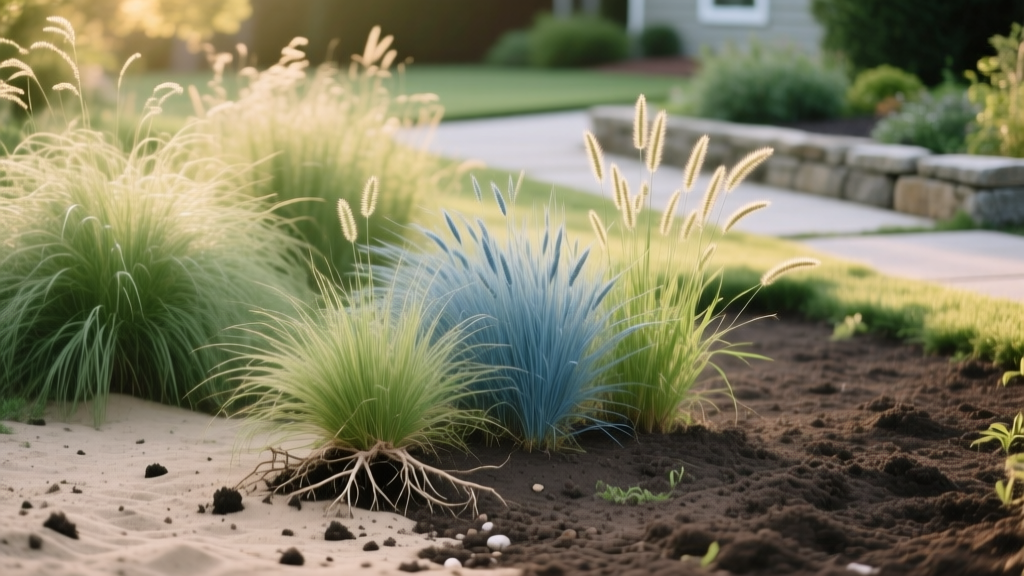
Matching Grasses to Garden Soil Types: A Complete Guide
Anna KowalskiPublished
Introduction: The Foundation of a Thriving Garden Landscape
When designing a garden, most homeowners focus heavily on vibrant flower beds, vegetable yields, and hardscaping. However, the grasses you choose—whether functional turfgrasses for pathways and borders or striking ornamental grasses for visual texture—can make or break your landscape's long-term success. The secret to a lush, low-maintenance garden lies beneath the surface: matching your grass species to your specific soil type. Planting a moisture-loving grass in fast-draining sand, or a drought-tolerant species in heavy clay, leads to endless cycles of fertilization, watering, and eventual replanting. By understanding your soil's physical and chemical properties, you can select grasses that will naturally thrive, saving you time, water, and money.
How to Identify Your Soil Texture
Before purchasing seed or plugs, you must determine your soil's texture, which is defined by the proportion of sand, silt, and clay particles. According to the University of Minnesota Extension, soil texture dictates water retention, drainage, and nutrient availability. You can determine your soil type at home using two simple methods.
The Mason Jar Test
Fill a clear mason jar one-third full with garden soil, add water until it is nearly full, and include a teaspoon of dish soap to help separate the particles. Shake vigorously and let it sit undisturbed for 48 hours. The heaviest sand particles will settle at the bottom within the first minute. Silt will settle over the next few hours, and the finest clay particles will take up to two days to form the top layer. Measure the thickness of each layer to calculate your soil's primary composition.
The Ribbon Test
Moisten a handful of soil and knead it into a ball. Slowly squeeze the soil between your thumb and forefinger to push it upward into a 'ribbon.' If the soil crumbles immediately and won't form a ribbon, it is sandy. If it forms a ribbon less than an inch long before breaking, it is loam. If you can push a ribbon longer than two inches, you have heavy clay soil.
Clay Soil: Heavy, Nutrient-Rich, and Poorly Draining
Clay soils are composed of microscopic, flat particles that pack tightly together. While they are excellent at holding onto vital nutrients like potassium and calcium, they suffer from poor drainage and severe compaction. In the spring, clay stays cold and waterlogged; in the summer, it bakes into a hard, cracked surface that restricts root penetration and oxygen flow.
Best Turfgrasses for Clay
For functional lawn areas bordering your garden beds, you need grasses with aggressive, deep root systems capable of breaking through compacted layers.
- Tall Fescue (Festuca arundinacea): A cool-season grass with roots that can reach up to 3 feet deep, allowing it to access moisture and survive the summer heat in heavy clay.
- Bermudagrass (Cynodon dactylon): For warmer climate zones, Bermudagrass offers incredible wear tolerance and a vigorous rhizome system that pushes through dense soil profiles.
Best Ornamental Grasses for Clay
When integrating ornamental grasses into garden beds with clay soil, look for species that tolerate 'wet feet' in the spring and drought in the summer.
- Switchgrass (Panicum virgatum): Cultivars like 'Heavy Metal' or 'Northwind' are exceptionally tough, offering upright, architectural form and deep roots that stabilize clay banks.
- Maidenhair Grass (Miscanthus sinensis): Varieties such as 'Gracillimus' thrive in the nutrient-rich environment clay provides, producing stunning late-season plumes.
Sandy Soil: Fast-Draining and Low-Nutrient
Sandy soils feature large, irregular particles that create massive pore spaces. Water and liquid fertilizers wash right through the root zone before plants can absorb them—a process known as leaching. While sandy soil is easy to dig and warms up quickly in the spring, it requires careful plant selection to avoid constant irrigation.
Best Turfgrasses for Sand
- Zoysia Grass (Zoysia japonica): A warm-season turf that boasts exceptional drought tolerance and a dense growth habit that chokes out weeds in nutrient-poor environments.
- Bahiagrass (Paspalum notatum): Ideal for coastal and southern gardens, Bahiagrass thrives in acidic, sandy soils where other turfgrasses would quickly perish.
Best Ornamental Grasses for Sand
The Clemson University Home & Garden Information Center notes that many native ornamental grasses are perfectly adapted to the dry, low-fertility conditions of sandy landscapes.
- Blue Fescue (Festuca glauca): 'Elijah Blue' is a compact, clumping grass with striking silvery-blue foliage that requires almost no supplemental watering once established in sandy beds.
- Pink Muhly Grass (Muhlenbergia capillaris): Famous for its ethereal, pink autumn blooms, this native grass thrives in sandy, well-draining soil and ignores high heat and humidity.
Loam and Silt Soils: The Gardener’s Gold
Loam is the holy grail of gardening, offering a balanced mix of sand, silt, and clay (roughly 40-40-20). It retains moisture and nutrients without becoming waterlogged. Silt soils, while slightly more prone to compaction than loam, are highly fertile and hold water well. If you have loam or silt, your primary challenge is simply maintaining the soil structure by avoiding heavy foot traffic when the ground is wet.
Best Grasses for Loam and Silt
- Kentucky Bluegrass (Poa pratensis): In loam, this cool-season turf forms a dense, luxurious, dark-green carpet that recovers quickly from damage via underground rhizomes.
- Feather Reed Grass (Calamagrostis x acutiflora): 'Karl Foerster' is a staple in garden design, offering vertical interest and early-season plumes that look spectacular when planted in fertile, well-draining loam.
- Fountain Grass (Pennisetum alopecuroides): Provides a soft, cascading habit that contrasts beautifully with broadleaf perennials in nutrient-rich silt beds.
Soil and Grass Matching Chart
| Soil Type | Drainage Rate | Nutrient Retention | Best Turfgrass | Best Ornamental Grass | Key Amendment |
|---|---|---|---|---|---|
| Heavy Clay | Very Slow | High | Tall Fescue | Switchgrass | Expanded Shale / Gypsum |
| Sandy | Very Fast | Low | Zoysia / Bahia | Pink Muhly Grass | Biochar / Coconut Coir |
| Silt | Moderate | High | Perennial Ryegrass | Fountain Grass | Coarse Compost |
| Loam | Optimal | Optimal | Kentucky Bluegrass | Feather Reed Grass | Annual Topdressing |
Soil Preparation and Amendment Strategies
Even when you match the right grass to the right soil, proper site preparation is non-negotiable. According to the USDA Natural Resources Conservation Service, preserving soil structure while enhancing organic matter is key to long-term plant health.
Amending Clay for Grass Establishment
Do not add sand to clay soil; this creates a concrete-like substance. Instead, incorporate 2 to 3 inches of high-quality compost and 1 inch of expanded shale or calcined clay. Till this into the top 6 to 8 inches of the soil profile before seeding or laying sod. Expect to spend approximately $40 to $60 per cubic yard for premium compost and expanded shale amendments.
Amending Sandy Soil
Sandy soil requires materials that act like sponges. Incorporate 3 inches of peat moss, coconut coir, or biochar alongside compost. Biochar is particularly effective in sandy garden beds, as its highly porous structure holds onto water and fertilizer, preventing them from leaching past the grass root zone. Apply a slow-release, organic fertilizer (like Milorganite or Espoma) at planting to ensure steady nutrient availability.
pH Considerations
Most turf and ornamental grasses prefer a soil pH between 6.0 and 7.0. Sandy soils, particularly in high-rainfall regions, tend to become acidic over time and may require the application of pelletized lime (approx. 50 lbs per 1,000 sq ft) to raise the pH. Conversely, clay soils in arid regions can become alkaline, requiring elemental sulfur to lower the pH and unlock bound nutrients like iron.
Ongoing Maintenance Based on Soil Type
Your soil type will also dictate your watering and maintenance schedule. Clay soils require deep, infrequent watering (e.g., 1 inch of water once a week) to encourage roots to grow downward. Watering clay too frequently leads to shallow roots and fungal diseases. Sandy soils, lacking water-holding capacity, require more frequent, lighter watering sessions (e.g., 0.5 inches of water every 3 days) to keep the root zone consistently moist without wasting water to runoff.
Fertilization also varies. Grasses in sandy soils should be fed small amounts of slow-release fertilizer 4 to 5 times a year to prevent leaching. Grasses in clay soils can handle larger, less frequent applications, as the clay particles naturally bind to the nutrients and release them slowly to the roots.
Conclusion
Successfully integrating grasses into your garden landscape requires looking past the plant tags and looking down at the dirt. By identifying whether your garden sits on clay, sand, silt, or loam, you can select turf and ornamental grasses that are biologically engineered to thrive in those exact conditions. Coupled with smart soil amendments and tailored watering schedules, matching your grass to your soil guarantees a resilient, beautiful garden that works with nature, rather than fighting against it.