Gardening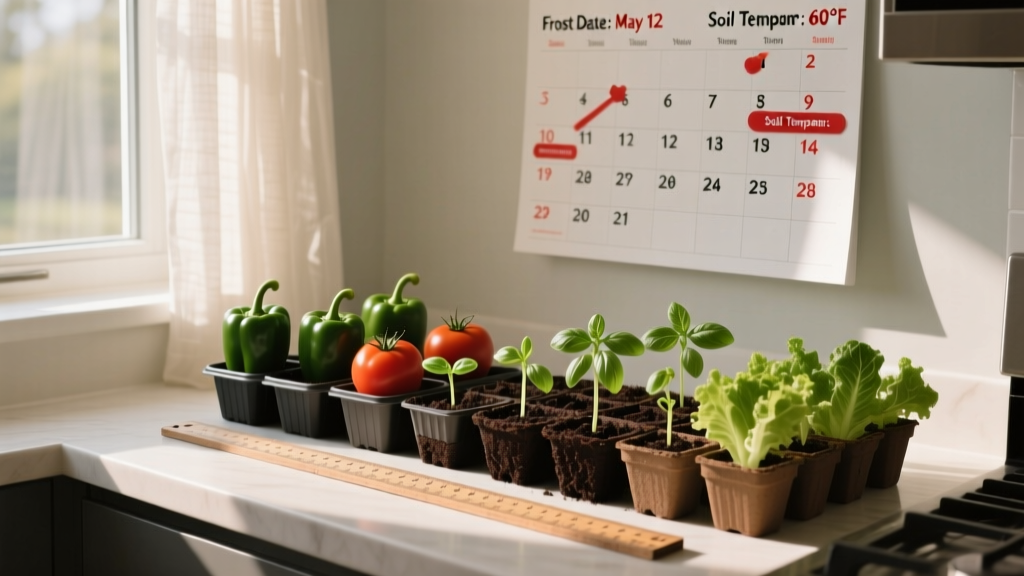
When to Start Seeds Indoors: A Zone-by-Zone Timing Guide
Emily WatsonPublished
The Foundation of Timing: Finding Your Last Frost Date
Success in vegetable and flower gardening hinges almost entirely on timing. Starting seeds indoors is a cost-effective way to extend your growing season, experiment with heirloom varieties unavailable at local nurseries, and ensure robust transplants. However, starting seeds too early leads to leggy, root-bound plants that stall when transplanted, while starting too late sacrifices your overall harvest window. The cornerstone of indoor seed starting timing is understanding your average last spring frost date.
Your last frost date is the calendar day in spring when your region historically experiences its final freezing temperatures (32°F or 0°C). Because weather is inherently unpredictable, this date is a statistical average rather than a guarantee. To find your precise local frost date, utilize tools like the Old Farmer's Almanac Frost Date Calculator, which uses decades of historical weather data from the National Oceanic and Atmospheric Administration (NOAA) to provide highly accurate, zip-code-specific estimates.
Once you have your last frost date, you can cross-reference it with the USDA Plant Hardiness Zone Map. This map divides North America into 13 zones based on minimum winter temperatures. While the hardiness zone dictates what perennials can survive your winter, your frost date dictates the annual planting schedule. For example, a gardener in Zone 5a might have a last frost date around May 15th, whereas a Zone 8b gardener might see their last frost as early as March 1st.
The Golden Rule: Counting Backwards from the Frost Date
The most reliable method for determining when to start seeds indoors is to count backwards from your average last spring frost date. Seed packets are your ultimate cheat sheet; the back of the packet will typically instruct you to "start indoors 6 to 8 weeks before the last frost." This timeframe accounts for the germination period, the initial slow growth phase, and the development of true leaves necessary for transplanting.
According to the University of Minnesota Extension, adhering strictly to these backward-counting schedules prevents the most common novice mistake: starting seeds too early. An oversized, root-bound tomato seedling stressed in a small plastic cell will actually produce a lower yield than a younger, vigorously growing seedling transplanted at the correct time.
Zone-by-Zone Seed Starting Timeline
Below is a generalized timing chart to help you plan your indoor seed starting schedule based on broad regional climate zones. Always adjust these dates based on your specific local microclimate and the exact frost date for your zip code.
| USDA Zone | Avg. Last Frost Date | When to Start Indoors (Early Crops) | When to Start Indoors (Warm Crops) | Best Crops for Early Indoor Start |
|---|---|---|---|---|
| Zones 3-4 | May 15 - June 1 | Mid-March | Early April | Onions, Celery, Peppers, Tomatoes |
| Zones 5-6 | April 15 - May 15 | Mid-February to Early March | Mid-March to Early April | Brassicas, Tomatoes, Peppers, Eggplant |
| Zones 7-8 | March 1 - April 15 | Mid-January to Mid-February | Mid-February to Mid-March | Tomatoes, Peppers, Artichokes, Herbs |
| Zones 9-10 | Feb 1 - March 1 (or frost-free) | December to January | January to February | Peppers, Tomatoes, Tropical Flowers |
Crop-Specific Timing Variations
Not all seeds follow the standard 6-to-8-week rule. Different plant families have vastly different growth rates and transplant tolerances.
Slow-Growing Warm Season Crops (Start 8-12 Weeks Before Frost)
Crops like celery, onions, leeks, and certain hot peppers (like habaneros or ghost peppers) have notoriously long germination times and slow initial growth. Onions from seed, for instance, require 10 to 12 weeks indoors to develop a thick enough stalk to survive outdoor transplanting. Peppers generally prefer an 8 to 10-week head start because they require warm soil (80°F to 85°F) to germinate and grow slowly until nighttime outdoor temperatures consistently stay above 55°F.
Standard Warm Season Crops (Start 6-8 Weeks Before Frost)
Tomatoes, eggplants, and standard bell peppers fit perfectly into the 6-to-8-week window. Tomatoes germinate rapidly (often within 5 to 7 days) and grow vigorously under indoor lights. Starting them exactly 6 weeks before your frost date ensures they are 6 to 8 inches tall with a strong, thick stem when it is time to harden them off.
Fast-Growing Cool Season Crops (Start 4-6 Weeks Before Frost)
Brassicas (broccoli, cabbage, cauliflower, kale) and lettuce are cold-hardy and grow quickly. Starting these 4 to 6 weeks before the last frost allows you to transplant them outdoors a few weeks *before* your last frost date, as they can tolerate light frosts (down to 28°F) once acclimated.
Delicate Warm Season Crops (Start 3-4 Weeks Before Frost)
Cucurbits (cucumbers, squash, melons, pumpkins) have highly sensitive root systems that despise being disturbed. They also grow at an explosive rate. If you start cucumbers 8 weeks early, they will become a tangled, root-bound mess that will suffer severe transplant shock. Start these indoors only 3 to 4 weeks before your last frost date, or use biodegradable cow pots that can be planted directly into the soil to minimize root disturbance.
Creating the Ideal Indoor Germination Environment
Timing your seeds correctly is only half the battle; providing the right environment ensures they actually thrive during those critical indoor weeks. A basic, highly effective indoor seed starting setup costs between $40 and $75 and requires the following components:
- Sterile Seed Starting Mix: Never use garden soil or heavy potting soil, which can harbor fungal pathogens and suffocate delicate roots. Use a sterile, peat-moss or coir-based seed starting mix (such as Espoma Organic Seed Starter or Pro-Mix).
- Seed Trays and Humidity Domes: Standard 1020 flats (measuring 10x20 inches) without holes, paired with 72-cell inserts, provide ample space. Clear plastic humidity domes trap moisture during the germination phase.
- Thermostatically Controlled Heat Mats: Most vegetable seeds germinate best when soil temperatures are between 75°F and 80°F. A heat mat with a digital thermostat probe ensures the soil stays in this optimal range, speeding up germination by days.
- High-Intensity Grow Lights: A sunny windowsill is rarely sufficient and will cause seedlings to stretch and become "leggy." Use adjustable T5 fluorescent fixtures or 6500K daylight LED shop lights. Keep the lights positioned just 2 to 3 inches above the seedling canopy, raising them as the plants grow. Provide 14 to 16 hours of light per day using an inexpensive outlet timer.
The Hardening Off Process: Timing the Transition
You cannot move a tender, indoor-raised seedling directly into full sun and wind; the sudden UV exposure and temperature drop will scorch the leaves and stunt the plant. You must "harden off" your seedlings, a process that thickens their cellular walls and acclimates them to outdoor conditions. This process takes 7 to 10 days and should begin exactly one week before your planned outdoor transplant date.
- Days 1-3: Place seedlings outdoors in a fully shaded, sheltered area (like a covered porch) for 2 to 3 hours. Bring them back indoors under lights for the remainder of the day.
- Days 4-6: Increase outdoor time to 5 to 6 hours. Introduce them to dappled sunlight or gentle morning sun (before 10 AM), but protect them from harsh afternoon rays and strong winds.
- Days 7-9: Leave the seedlings outdoors in full sun for the entire day. If nighttime temperatures remain safely above 50°F, leave them outside overnight in a protected area.
- Day 10: Transplant into the garden on a calm, overcast day, or in the late afternoon, to minimize immediate heat stress. Water deeply with a diluted liquid kelp or fish emulsion fertilizer to reduce transplant shock.
Common Seed Starting Mistakes to Avoid
Even with perfect timing, poor cultural habits can ruin your seedlings. Damping off is a fatal fungal disease caused by Pythium and Rhizoctonia, which causes seedling stems to pinch at the soil line and topple over. It is triggered by overwatering, poor air circulation, and contaminated trays. To prevent this, always wash reused seed trays with a 10% bleach solution, water your seedlings from the bottom (by pouring water into the solid bottom tray and letting the cells wick it up), and run a gentle oscillating fan over your seedlings for a few hours a day to strengthen stems and disrupt fungal spores.
By mastering the timing of your frost dates, respecting the unique growth rates of different plant families, and providing a rigorous indoor environment, you will produce robust, garden-ready transplants that hit the ground running the moment spring arrives.