Fall Lawn Renovation: Core Aeration and Overseeding Guide
Bridging the Gap Between Outdoor Living and Lawn Health
Your outdoor living space is a seamless extension of your home's interior, bridging the gap between indoor comfort and the natural beauty of your garden. Whether you are hosting a summer barbecue on your patio, cultivating a garden-to-table vegetable patch, or simply relaxing on your outdoor furniture, the foundation of your landscape—your lawn—plays a pivotal role in the overall aesthetic and usability of your yard. However, maintaining a pristine, carpet-like lawn requires more than just occasional mowing. For homeowners looking to revitalize thinning grass and combat soil compaction, mastering core aeration and overseeding techniques is the ultimate seasonal home maintenance project. This comprehensive guide will walk you through the science, timing, and step-by-step execution of these vital lawn care practices, ensuring your outdoor oasis remains lush, resilient, and inviting year-round.
The Science Behind Core Aeration and Overseeding
Soil compaction is the silent enemy of a thriving lawn. Over time, foot traffic, the weight of heavy outdoor furniture, children playing, and even heavy rainfall compress the soil particles, squeezing out the vital oxygen and water pathways that grass roots need to survive. When soil becomes compacted, grassroots suffocate, and nutrient uptake plummets. Core aeration involves using a specialized machine to extract small plugs of soil and thatch from the lawn. According to turfgrass experts at Penn State Extension, this process physically relieves compaction, creates channels for air, water, and fertilizer to reach the root zone, and stimulates microbial activity that breaks down thatch.
Overseeding, the process of sowing new grass seed directly into existing turf, works synergistically with aeration. The holes left behind by the aerator provide perfect, sheltered micro-environments for seed-to-soil contact, which is the most critical factor for successful germination. By combining these two techniques, you introduce new, vigorous grass varieties that can outcompete weeds and tolerate environmental stress, effectively thickening your turf and enhancing the visual appeal of your outdoor living areas.
Timing Your Lawn Renovation
The success of your aeration and overseeding project hinges entirely on timing, which is dictated by the type of grass you are growing. Cool-season grasses, such as Kentucky Bluegrass, Tall Fescue, and Perennial Ryegrass, thrive in cooler temperatures and should be aerated and overseeded in early fall (late August to mid-October). During this window, soil temperatures are still warm enough to encourage rapid seed germination, while cooler air temperatures reduce heat stress on young seedlings. Fall also allows the new grass to establish deep roots before the following summer's drought.
Conversely, warm-season grasses like Bermudagrass, Zoysia, and Centipedegrass should be aerated and overseeded in late spring to early summer (May through July) when they are actively growing and can quickly recover from the mechanical stress of the aerator.
Step-by-Step DIY Aeration and Overseeding Technique
Executing this DIY garden project requires careful preparation and a methodical approach. Follow these steps for optimal results:
- Mow and Rake: Mow your lawn to a height of about 1.5 to 2 inches, which is lower than your usual maintenance height. Bag the clippings to ensure the seeds can reach the soil surface. Rake heavily to remove any excess thatch and debris.
- Mark Utility Lines and Irrigation Heads: Before running a heavy aerator over your yard, call 811 to mark underground utilities. Additionally, use bright landscaping flags to mark all sprinkler heads and shallow smart home irrigation lines to prevent costly damage.
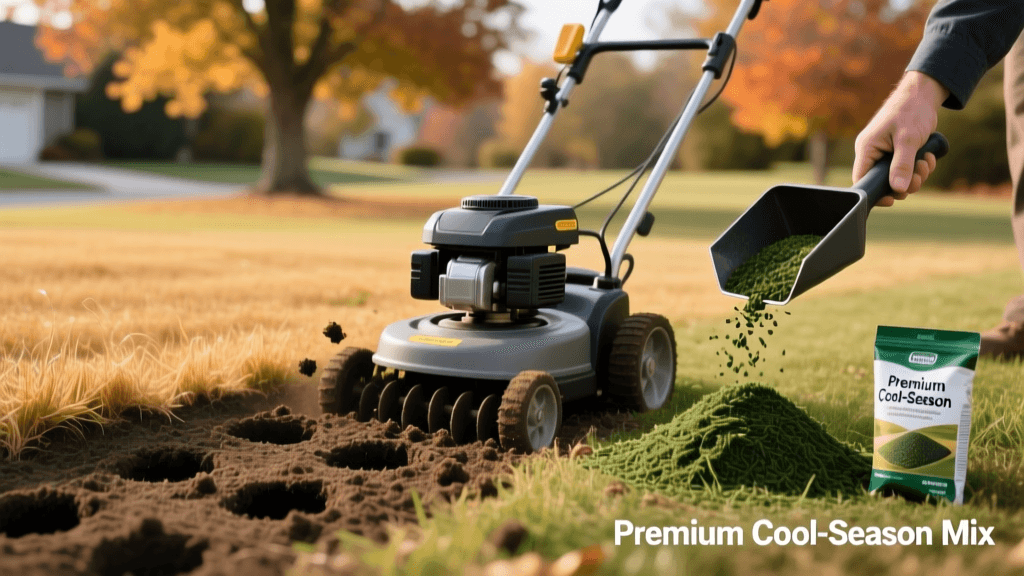
- Core Aerate: Rent a heavy-duty core aerator (avoid spike aerators, as they can worsen compaction). Make one pass over the entire lawn in a single direction, and a second pass perpendicular to the first. Leave the extracted soil plugs on the lawn; they will break down naturally and return valuable microbes to the surface.
- Overseed: Use a broadcast spreader to apply high-quality, weed-free grass seed. Apply half the seed walking in a north-south direction, and the other half walking east-west to ensure even coverage.
- Apply Starter Fertilizer: Apply a high-phosphorus starter fertilizer immediately after seeding to promote rapid root development.
- Topdress (Optional but Recommended): Drag a thin layer (about 1/4 inch) of screened compost or peat moss over the lawn to cover the seeds and retain moisture.
Grass Type Data Chart: Seed Rates and Aeration Depths
To ensure you purchase the correct amount of seed and set your equipment properly, refer to the following specifications based on common turfgrass varieties.
| Grass Type | Season | Seed Rate (lbs/1000 sq ft) | Aeration Depth |
|---|---|---|---|
| Tall Fescue | Cool | 5.0 - 8.0 | 2 - 3 inches |
| Kentucky Bluegrass | Cool | 1.5 - 3.0 | 2 - 3 inches |
| Perennial Ryegrass | Cool | 5.0 - 7.0 | 2 - 3 inches |
| Bermudagrass | Warm | 1.0 - 2.0 | 1 - 2 inches |
| Zoysiagrass | Warm | 1.0 - 2.0 | 1 - 2 inches |
Smart Home Integration: Automating the Germination Watering Schedule
The most common point of failure in overseeding is improper watering. Grass seed must remain consistently moist, but not waterlogged, for the first two to three weeks. This typically requires watering the lawn lightly two to three times a day for 5 to 10 minutes per zone. Manually adjusting your irrigation system for this schedule is tedious and prone to human error. This is where smart home integration shines. By upgrading to a Wi-Fi-enabled smart irrigation controller, you can program custom, temporary germination schedules directly from your smartphone.
According to the EPA WaterSense program, Weather-based irrigation controllers (WBICs) and soil moisture sensor controllers can tailor watering schedules to local weather and soil conditions, preventing overwatering while ensuring seeds never dry out. Once the grass reaches mowing height, you can easily revert to a deep, infrequent watering schedule with a single tap, promoting drought tolerance and energy-efficient landscaping.
Soil Health and Long-Term Maintenance
Aeration and overseeding are not standalone fixes; they are part of a holistic approach to soil health. The University of California Integrated Pest Management (UC IPM) program emphasizes that proper cultural practices, including balanced fertilization and deep watering, are essential for maintaining a dense turf that naturally resists weeds and pests. After your new grass has been mowed three times, resume your regular lawn care regimen.
Consider conducting a soil test every two to three years to monitor pH levels and nutrient deficiencies. If your soil is highly acidic, applying pelletized lime in the fall alongside your aeration efforts can significantly improve nutrient availability. Furthermore, leaving grass clippings on the lawn during regular mowing sessions acts as a natural, slow-release fertilizer, reducing your reliance on synthetic chemicals and supporting a more sustainable garden ecosystem.
Equipment Costs: Renting vs. Hiring a Professional
For the avid DIYer, renting a walk-behind core aerator from a local hardware store typically costs between $70 and $100 for a half-day rental. Add in the cost of premium grass seed ($60 to $120 depending on the brand and coverage area) and starter fertilizer ($30 to $50), and a full weekend DIY renovation will cost roughly $160 to $270 for an average 5,000-square-foot lawn.
However, core aerators are heavy, cumbersome machines that can be difficult to transport and maneuver, especially on sloped terrain. Hiring a professional lawn care service to perform aeration and overseeding generally costs between $150 and $350 for the same square footage. While the upfront cost is slightly higher, professionals utilize commercial-grade equipment, carry commercial seed blends, and assume the labor and liability, making it a worthwhile investment for those with busy schedules or challenging landscape topography.
Conclusion
Transforming your outdoor living space begins from the ground up. By integrating core aeration and overseeding techniques into your seasonal home maintenance routine, you are not just planting grass; you are investing in the long-term health, beauty, and functionality of your property. Whether you choose to tackle this DIY garden project yourself or leverage smart home technology to manage the aftercare, the result will be a vibrant, resilient lawn that perfectly complements your outdoor decor and garden-to-table lifestyle.