Core vs Liquid Aeration Guide for Fall Overseeding Lawns
The Ultimate Fall Lawn Renovation: Core vs. Liquid Aeration
As the scorching heat of summer fades and crisp autumn air settles in, your lawn enters its most critical recovery phase. For homeowners with cool-season grasses like Tall Fescue, Kentucky Bluegrass, and Perennial Ryegrass, fall is the undisputed champion of lawn care seasons. This is the time to repair summer damage, relieve soil compaction, and introduce new grass seed through overseeding. Bridging the gap between a thin, tired yard and a lush, vibrant outdoor living space requires strategic seasonal maintenance.
But when it comes to preparing your soil for new seed, a major debate has emerged in the landscaping and DIY community: traditional core aeration versus modern liquid aeration. Both methods promise to break up compacted soil and improve seed-to-soil contact, but they operate on entirely different scientific principles. In this comprehensive guide, we will break down the mechanics, costs, and effectiveness of core versus liquid aeration, providing you with actionable, step-by-step techniques to achieve a golf-course-caliber lawn right in your backyard.
The Science of Core Aeration
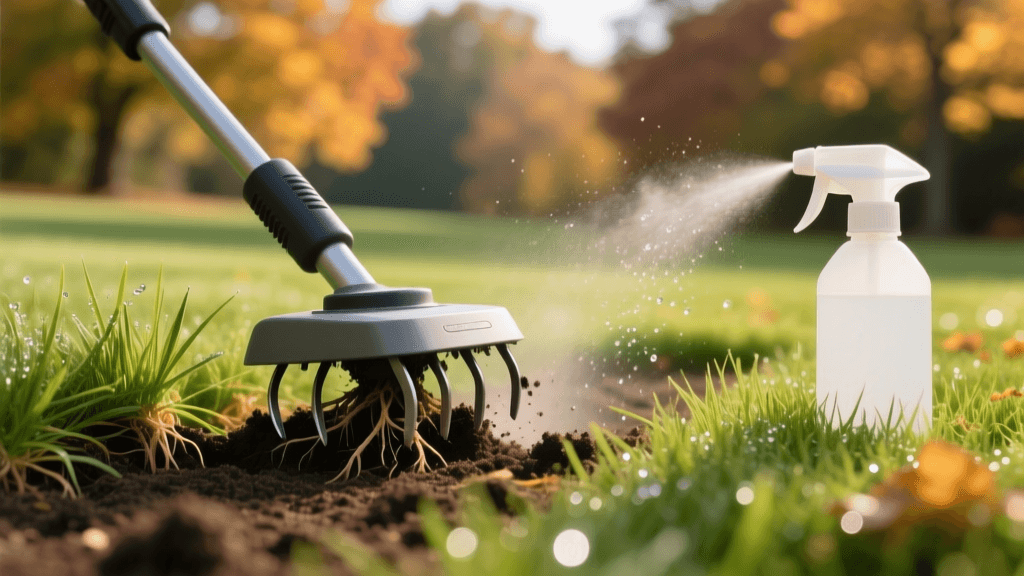
Core aeration, often referred to as mechanical aeration, is the gold standard that has been used by turfgrass professionals for decades. This process involves using a heavy, gas-powered machine equipped with hollow tines that physically plunge into the earth, extracting small plugs of soil and thatch measuring roughly two to three inches in length. According to the University of Minnesota Extension, core aeration is highly effective at alleviating severe soil compaction, enhancing water infiltration, and promoting deeper root growth.
The physical removal of soil cores creates macropores in the ground, allowing oxygen, water, and nutrients to reach the root zone directly. Furthermore, the extracted soil cores are left on the surface to break down, introducing beneficial microbes back into the thatch layer. When paired with overseeding, these physical holes act as perfect, protected micro-environments for grass seed to germinate, keeping the seed safe from birds and washing away.
However, core aeration is labor-intensive. Renting a mechanical aerator from a local hardware store typically costs between $80 and $120 for a half-day rental. The machines are exceptionally heavy, often weighing over 250 pounds, making them difficult to maneuver in tight corners or small urban backyards. Additionally, the physical tearing of the turf can cause temporary stress, and you must be careful to mark shallow irrigation lines and sprinkler heads to avoid costly damage.
The Rise of Liquid Aeration
In recent years, liquid aeration has gained massive popularity among DIY lawn care enthusiasts and organic landscapers. Instead of using heavy machinery to physically remove soil plugs, liquid aeration relies on chemical and biological compounds to alter the soil structure from the inside out. Liquid aerators typically contain powerful surfactants, such as ammonium lauryl sulfate, combined with soil conditioners like humic acid, fulvic acid, and yucca extract.
These ingredients work by breaking the surface tension of water and dispersing tightly bound clay particles, effectively creating microscopic fractures in the soil profile. Products like N-EXT Air-8 or Simple Lawn Solutions Liquid Aerating Soil Loosener can be easily applied using a standard hose-end sprayer. The primary advantages of liquid aeration are convenience and coverage. A single $35 bottle can treat up to 10,000 square feet of lawn in less than twenty minutes, with zero physical strain and no risk of severing underground irrigation lines.
Liquid aeration also provides 100 percent coverage of the lawn, whereas mechanical core aeration only impacts the specific paths where the tines penetrate. However, liquid aeration does not physically remove thatch, nor does it create literal holes for grass seed to fall into. It is best suited for lawns with mild to moderate compaction or as a maintenance treatment between heavy core aeration sessions.
Head-to-Head Comparison: Core vs. Liquid Aeration
| Feature | Core (Mechanical) Aeration | Liquid Aeration |
|---|---|---|
| Primary Mechanism | Physical extraction of soil plugs | Chemical/biological soil fracturing |
| Cost | $80 - $120 (Rental) or $200+ (Service) | $30 - $45 per 10,000 sq ft |
| Labor & Effort | High (Heavy machinery, physical labor) | Low (Hose-end sprayer application) |
| Compaction Relief | Excellent for severe, deep compaction | Moderate (Best for mild clay soils) |
| Seed-to-Soil Contact | Superior (Seeds fall into core holes) | Good (Requires raking or topdressing) |
| Thatch Management | Excellent (Microbes break down thatch) | Poor (Does not physically remove thatch) |
| Irrigation Risk | High (Can sever shallow lines/heads) | None |
Step-by-Step Fall Overseeding Technique
Regardless of whether you choose core or liquid aeration, the subsequent overseeding process requires precision, timing, and the right materials. According to the UMN Extension Overseeding Guide, the ideal time to overseed is in late summer to early fall, when soil temperatures are hovering around 70°F and daytime air temperatures are between 60°F and 75°F. Here is your actionable blueprint for a successful fall renovation.
Step 1: Preparation and Mowing
Begin by mowing your existing lawn shorter than usual, aiming for a height of about 1.5 to 2 inches. This reduces competition for sunlight and allows the new seed to reach the soil surface more easily. Bag the clippings to prevent them from smothering the new seed. If you have a thick layer of thatch (over 0.5 inches), use a dethatching rake or a power dethatcher before proceeding.
Step 2: Aeration Execution
If using a core aerator, make two passes over your lawn in perpendicular directions (e.g., north-south, then east-west) to maximize the number of holes. If using a liquid aerator, apply the solution evenly across the entire lawn using a hose-end sprayer, and water it in immediately to activate the surfactants and push them into the root zone.
Step 3: Seed Selection and Application
Choose a high-quality seed blend appropriate for your region and sunlight conditions. For Tall Fescue, apply seed at a rate of 5 to 7 pounds per 1,000 square feet. For Kentucky Bluegrass, a lighter rate of 1 to 2 pounds per 1,000 square feet is sufficient due to its aggressive spreading rhizomes. Use a broadcast spreader, such as the Scotts Turf Builder EdgeGuard, to ensure an even distribution. For optimal results, split your seed in half and apply it in two perpendicular passes.
Step 4: Fertilization and Topdressing
Immediately after seeding, apply a high-quality starter fertilizer. Starter fertilizers are rich in phosphorus (the middle number on the bag, such as 18-24-6), which is critical for rapid root development in new seedlings. If you used liquid aeration, consider applying a thin layer of compost or peat moss (about 1/4 inch thick) over the lawn to protect the seed and retain moisture, since you do not have core holes to hide the seed in.
Step 5: The Watering Regimen
This is where most homeowners fail. New grass seed must remain consistently moist until it germinates, which can take anywhere from 7 to 21 days depending on the grass species. Set your smart irrigation controller or manual sprinklers to water the lawn lightly two to three times a day for about 5 to 10 minutes per zone. You are not trying to deeply soak the soil; you are simply keeping the top inch of soil damp. Once the new grass reaches about 2 inches tall, gradually reduce the frequency of watering while increasing the duration to encourage deep root growth.
Final Thoughts on Seasonal Lawn Maintenance
Bridging the gap between a thin, tired lawn and a lush, vibrant outdoor living space requires strategic seasonal maintenance. While core aeration remains the undisputed heavyweight champion for severely compacted soils and optimal seed-to-soil contact, liquid aeration offers a highly effective, low-effort alternative for annual maintenance and mild compaction. By understanding the unique benefits of each technique and following a disciplined overseeding schedule, you can transform your yard into a resilient, beautiful landscape that enhances your home's curb appeal and provides a perfect outdoor retreat for years to come. Evaluate your soil's condition, choose your aeration method wisely, and let the fall season work its magic on your turf.