The Ultimate Seasonal Lawn Care Checklist for Cool-Season Grasses
Mastering the Cool-Season Grass Lifecycle
Maintaining a pristine lawn featuring cool-season grasses—such as Kentucky bluegrass, tall fescue, and perennial ryegrass—requires a strategic, season-specific approach. Unlike warm-season varieties that thrive in the peak of summer, cool-season grasses experience their most vigorous growth during the moderate temperatures of spring and fall. During the summer, they often enter a state of stress or dormancy, while winter forces them into complete dormancy. To bridge the gap between a healthy turf and a beautiful outdoor living space, homeowners must implement a rigorous lawn care schedule. This comprehensive checklist integrates traditional turf management with modern smart home technology, ensuring your lawn remains the perfect foundation for your garden-to-table beds, outdoor furniture, and landscape lighting.
Spring Lawn Care Checklist: Awakening the Turf
Spring is about recovery and preparation. As soil temperatures begin to rise, your cool-season grass will break dormancy and require immediate attention to outcompete weeds and establish deep roots before the summer heat arrives.
Soil Testing and Early Cleanup
Before applying any amendments, conduct a soil test. You can purchase a mail-in soil test kit from a local university extension office for approximately $15 to $30. This test will reveal your soil pH and nutrient deficiencies. Aim for a pH between 6.0 and 7.0. Once the ground thaws and dries, lightly rake the lawn to remove winter debris, dead grass, and leaves. This prevents snow mold and allows sunlight to reach the soil surface.
Pre-Emergent Weed Control
Timing is everything when applying pre-emergent herbicides. Apply a prodiamine-based pre-emergent when soil temperatures consistently reach 50°F to 55°F at a depth of two inches. A common phenological indicator is the blooming of forsythia bushes. This creates a chemical barrier that prevents crabgrass and other summer annual weeds from germinating.
Smart Irrigation Spring Setup
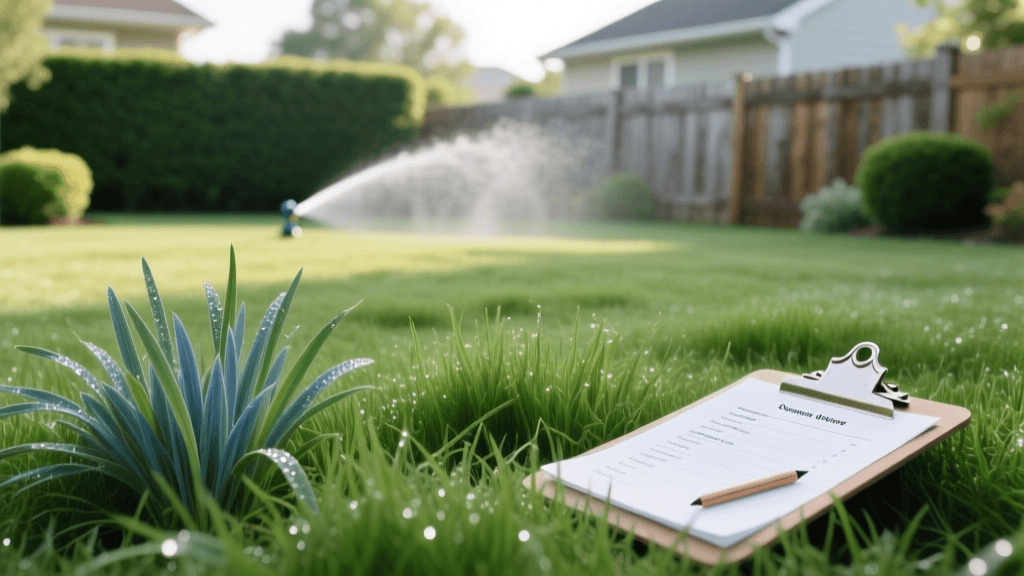
Spring is the ideal time to boot up your smart irrigation system. According to EPA WaterSense, weather-based irrigation controllers (WBICs) can save the average home nearly 7,600 gallons of water annually. Connect your Wi-Fi-enabled controller (such as a Rachio or B-hyve) to your home network, update the firmware, and ensure local weather station integrations are active so the system can automatically skip watering during spring rain events.
Summer Lawn Care Checklist: Surviving the Heat
Summer is a period of survival for cool-season grasses. The primary goal is to minimize stress, conserve moisture, and protect the crown of the plant from extreme heat and drought.
Adjusting Mowing Heights
As temperatures climb, raise your mower deck. Cutting your grass too short exposes the soil to direct sunlight, increasing evaporation and encouraging weed seeds to sprout. Set your mower to a height of 3.5 to 4 inches. Taller grass blades shade the soil, keeping the root zone cooler and significantly reducing water requirements. Always follow the one-third rule: never remove more than one-third of the grass blade in a single mowing session.
Deep and Infrequent Watering
Lawns require about 1 to 1.5 inches of water per week during the summer, including rainfall. Instead of watering a little bit every day, which promotes shallow, drought-prone roots, water deeply two to three times a week. Utilize your smart irrigation system's "cycle and soak" feature to prevent runoff on compacted soils or sloped yards. As noted by the University of California Agriculture and Natural Resources Lawn Guide, deep watering encourages roots to grow deeper into the soil profile, where moisture is more stable and temperatures are cooler.
Grub Prevention
If your lawn has a history of grub damage, apply a preventative grub control product containing imidacloprid or chlorantraniliprole in early to mid-summer. These products must be watered in immediately with at least 0.5 inches of irrigation to move the active ingredient into the root zone where grubs feed.
Fall Lawn Care Checklist: The Most Critical Season
Fall is the most important season for cool-season lawn care. The combination of warm soil and cool air temperatures creates the perfect environment for seed germination, root development, and nutrient storage.
Core Aeration and Overseeding
Compacted soil restricts water, air, and nutrient flow to the roots. Rent a core aerator (typically $80 to $100 for a half-day) or hire a professional service ($150 to $250) to pull soil plugs from the lawn. Immediately after aeration, overseed bare or thin areas with a high-quality seed blend that matches your existing turf. Apply 5 to 10 pounds of seed per 1,000 square feet, and keep the top inch of soil consistently moist until the new grass is established.
Fall Fertilization
Apply a high-quality, slow-release winterizer fertilizer in early to mid-fall. Look for a formulation rich in nitrogen and potassium, which promotes deep root growth and helps the grass store carbohydrates for the winter. This single application is often the most crucial feeding of the entire year.
Leaf Management
Do not let fallen leaves smother your turf. Instead of raking, use a mulching mower to chop leaves into dime-sized pieces. These fine particles will filter down to the soil surface, decompose, and return valuable organic matter and nutrients to the lawn ecosystem.
Winter Lawn Care Checklist: Dormancy and Preparation
While the grass is dormant, the homeowner's focus shifts to equipment maintenance, landscape planning, and preparing the outdoor living space for the following year.
Equipment Winterization
Drain fuel from your gas-powered mower or remove the battery from your electric model. Sharpen the mower blades, change the oil, and replace the air filter. A well-maintained mower will provide a cleaner cut next spring, reducing the risk of fungal diseases.
Smart Outdoor Lighting Integration
Winter nights are long, making it the perfect time to evaluate and upgrade your smart outdoor lighting. Integrate Wi-Fi-enabled path lights and spotlights to highlight your dormant garden beds and architectural features. Proper lighting not only enhances curb appeal but also improves safety for evening walks and early winter holiday gatherings on your patio.
Comprehensive Monthly Lawn Care Schedule
Use the following structured table to keep your seasonal maintenance on track. Costs are approximate and can vary based on lawn size and regional pricing.
| Season | Primary Tasks | Mowing Height | Smart Irrigation Setting | Est. Cost (DIY) |
|---|---|---|---|---|
| Spring | Soil test, pre-emergent, light raking | 2.5 - 3.0 inches | Rain-skip enabled, 1x/week | $50 - $80 |
| Summer | Grub control, deep watering, weed spotting | 3.5 - 4.0 inches | Cycle & soak, 2-3x/week | $40 - $60 |
| Fall | Core aeration, overseeding, winterizer | 3.0 - 3.5 inches | Reduce frequency, monitor rain | $120 - $180 |
| Winter | Equipment service, soil test planning | N/A (Dormant) | System winterized / off | $30 - $50 |
Pro Tip: According to EPA WaterSense, outdoor water use accounts for nearly 30% of total household water consumption in the US. Upgrading to a smart irrigation system and pairing it with soil moisture sensors can reduce outdoor water use by up to 50% while maintaining a healthier, deeper-rooted lawn.
Integrating Smart Home Technology for Lawn Care
Bridging the gap between indoor convenience and outdoor maintenance is the hallmark of modern home and garden care. By integrating your lawn care schedule with smart home ecosystems like Google Home, Amazon Alexa, or Apple HomeKit, you can automate much of the guesswork. For instance, you can set geofencing routines that automatically adjust your smart sprinkler controller when you leave for a summer vacation, ensuring your lawn stays hydrated without wasting water. Furthermore, linking your smart irrigation system to your local weather alerts ensures that an impending heavy rainstorm will automatically cancel the scheduled morning watering cycle. This level of precision not only protects your investment in premium grass seed and organic fertilizers but also aligns your landscape management with eco-friendly, energy-efficient practices. Ultimately, a well-scheduled, technologically integrated lawn provides the perfect, lush backdrop for your outdoor living spaces, making your garden a true extension of your home.