The Ultimate Smart Lawn Care Schedule for Cool-Season Grasses
Introduction to Cool-Season Lawn Care
Maintaining a pristine, lush lawn that seamlessly bridges your indoor and outdoor living spaces requires more than just occasional mowing and watering. For homeowners with cool-season grasses—such as Kentucky Bluegrass, Tall Fescue, and Perennial Ryegrass—success hinges on a strategic, season-by-season approach. Cool-season grasses thrive in the cooler temperatures of spring and fall, often going dormant or struggling during the peak heat of summer. By implementing a structured lawn care schedule and integrating smart home irrigation technology, you can achieve a vibrant, energy-efficient landscape that serves as the perfect backdrop for your outdoor furniture and garden-to-table entertaining areas.
This comprehensive guide provides a month-by-month checklist, actionable product recommendations, and precise measurements to keep your turf healthy year-round. Furthermore, we will explore how upgrading to a smart sprinkler controller can save water, reduce utility costs, and automate your landscape maintenance.
Spring: Awakening and Smart Irrigation Setup
Spring is the season of renewal, but it is also the time when weeds attempt to take over your yard. Your primary focus from March through May should be on weed prevention, initial mowing, and optimizing your irrigation system for the upcoming heat.
Pre-Emergent Weed Control
Timing is everything when applying a pre-emergent herbicide. You must apply it before soil temperatures consistently reach 50°F to 55°F at a depth of two inches. This is the exact temperature range where crabgrass seeds begin to germinate. Products containing Prodiamine or Dithiopyr (such as Scotts Turf Builder Halts Crabgrass Preventer) are highly effective. Apply at a rate of 3 to 4 pounds per 1,000 square feet, and water it in with about 0.5 inches of water to activate the chemical barrier in the soil.
Smart Irrigation Integration
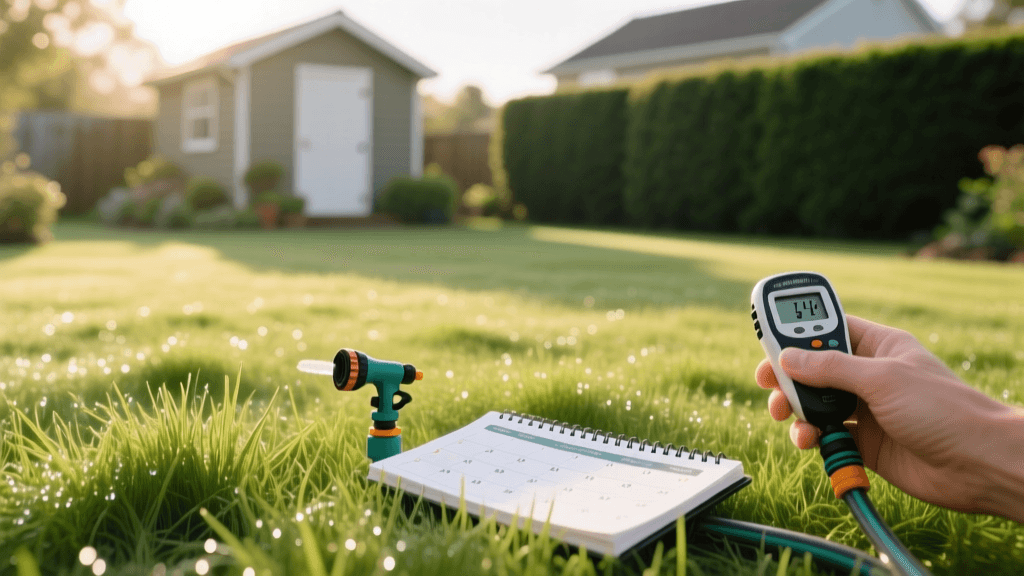
Before the summer heat arrives, upgrade your traditional timer to a smart sprinkler controller like the Rachio 3 or Orbit B-hyve. These devices connect to your home Wi-Fi and use local weather data, including evapotranspiration rates and rain forecasts, to automatically adjust your watering schedule. According to the Environmental Protection Agency (EPA), outdoor water use accounts for nearly 30% of total household water use, and smart irrigation systems can reduce landscape water use by up to 50%. Expect to spend between $150 and $250 for a quality smart controller, an investment that typically pays for itself in water savings within two seasons.
Summer: Drought Management and Pest Control
Cool-season grasses naturally slow their growth during the summer months. The goal from June through August is survival and stress management, not aggressive growth.
Mowing and Watering Best Practices
Raise your mower deck to a height of 3.5 to 4 inches. Taller grass blades shade the soil, reducing moisture evaporation and preventing weed seeds from receiving the sunlight they need to sprout. When it comes to watering, deep and infrequent is the golden rule. Aim for 1 to 1.5 inches of water per week, including rainfall. Use your smart controller's soil moisture sensor add-ons to ensure you are not overwatering, which can lead to shallow root systems and fungal diseases like brown patch.
Grub and Pest Management
Summer is prime time for lawn-destroying grubs (the larvae of Japanese beetles and June bugs). If your lawn has a history of grub damage, apply a preventive insecticide containing Imidacloprid or Chlorantraniliprole in late June or early July. These products cost around $20 to $30 per bag and will protect your root system through the late summer hatching period.
Fall: The Critical Season for Aeration and Overseeding
For cool-season lawns, fall is the most important season of the year. The cool air and warm soil create the perfect environment for seed germination and root development.
Core Aeration
Soil compaction prevents water, oxygen, and nutrients from reaching the root zone. In September, perform core aeration to pull 2-to-3-inch plugs of soil from the ground. You can rent a mechanical core aerator from a local hardware store for about $60 to $80 for a half-day, or hire a professional landscaping service for $75 to $150 depending on your yard size. Leave the soil plugs on the lawn; they will break down and return valuable microbes to the surface.
Overseeding and Fall Fertilization
Immediately after aerating, overseed your lawn with a premium Tall Fescue or Kentucky Bluegrass mix. Apply seed at a rate of 4 to 6 pounds per 1,000 square feet for overseeding. Follow this with a high-phosphorus starter fertilizer to promote rapid root growth. The University of Minnesota Extension emphasizes that fall fertilization is crucial for cool-season grasses, as it helps the turf store carbohydrates for winter survival and early spring green-up. Use an organic option like Milorganite or a synthetic 18-24-12 starter fertilizer.
Winter: Dormancy and Equipment Maintenance
From December through February, your lawn is dormant, but your maintenance duties are not entirely over. This is the time to prepare your equipment and protect your landscape infrastructure.
Irrigation Winterization
Freezing water inside your irrigation pipes can cause catastrophic cracks and leaks. In late November, blow out your sprinkler lines using an air compressor. If you do not own a commercial-grade compressor, hire a professional irrigation specialist for $50 to $150 to perform the blowout. Additionally, use your smart controller's app to put the system into 'Rain Delay' or 'Off' mode for the winter.
Mower Maintenance
Drain the gas from your lawnmower or add a fuel stabilizer to prevent the carburetor from gumming up. Sharpen the mower blades now so you are ready for the first cut of spring. Dull blades tear the grass rather than cutting it cleanly, leaving the lawn vulnerable to disease and giving it a brown, ragged appearance.
Month-by-Month Lawn Care Checklist
Use the table below as a quick-reference guide to keep your cool-season lawn care on track throughout the year.
| Month | Primary Lawn Task | Smart Irrigation Focus | Estimated Cost |
|---|---|---|---|
| March | First mow (low setting), apply pre-emergent | Boot up smart controller, test zones | $30 - $50 |
| April | Spot treat broadleaf weeds (dandelions) | Adjust schedules for spring rainfall | $15 - $25 |
| May | Apply late-spring fertilizer, raise mow height | Install soil moisture sensors | $40 - $60 |
| June | Apply preventive grub control | Set deep, infrequent watering (1 inch/week) | $20 - $30 |
| July | Monitor for drought stress, mow at 4 inches | Utilize weather-based skip features | $0 (Water costs vary) |
| August | Control summer weeds, prepare for fall seeding | Audit sprinkler heads for clogs/misalignment | $15 - $25 |
| September | Core aeration and overseeding | Increase water frequency for new seed (light, daily) | $80 - $150 |
| October | Apply fall starter fertilizer, rake leaves | Transition back to deep, infrequent watering | $40 - $60 |
| November | Final mow (lower height), winterize irrigation | Blow out lines, shut off smart controller | $50 - $150 |
| Dec-Feb | Avoid walking on frozen turf, maintain mower | System dormant; review annual water reports via app | $20 (Fuel stabilizer/sharpening) |
Smart Home Integration for Energy-Efficient Landscaping
Bridging the gap between indoor comfort and outdoor beauty means treating your landscape as an extension of your smart home ecosystem. Modern smart irrigation controllers integrate seamlessly with platforms like Amazon Alexa, Google Home, and Apple HomeKit. You can create automated routines where your outdoor smart lighting turns on at dusk, and your irrigation system automatically delays watering if your local weather station detects an incoming cold front or heavy rain.
Furthermore, integrating smart soil moisture sensors (such as those from Toro or Rain Bird) directly into your garden beds and lawn zones ensures that your garden-to-table vegetable patches receive the precise amount of hydration they need without wasting water on established turf. This data-driven approach to lawn care not only yields a thicker, greener yard that enhances your home's curb appeal and outdoor living space but also aligns with modern, eco-friendly landscaping practices. By following this schedule and leveraging smart technology, your cool-season lawn will remain a resilient, beautiful foundation for your home and garden for years to come.