Smart Seasonal Lawn Care and Irrigation Schedule Guide
The Intersection of Smart Home Tech and Lawn Care
Bridging the gap between indoor convenience and outdoor vitality is the hallmark of modern home and garden management. For decades, maintaining a lush, green lawn required meticulous manual scheduling, constant weather monitoring, and a significant amount of guesswork. Today, the integration of smart home technology with seasonal lawn care checklists has revolutionized how we approach landscaping. By automating irrigation and aligning it with specific seasonal horticultural tasks, homeowners can achieve a pristine yard while drastically reducing their environmental footprint.
Outdoor water use is a massive component of residential utility consumption. According to the Environmental Protection Agency (EPA), outdoor water use accounts for up to 30% of total household water consumption, with some homes in arid climates using up to 60% of their water for landscaping. Much of this water is wasted due to evaporation, wind, and runoff caused by inefficient, static timer schedules. By adopting a dynamic, smart seasonal lawn care schedule, you not only protect your local watershed but also ensure your grass receives exactly what it needs, precisely when it needs it.
Spring: System Activation and Soil Awakening
Spring is the season of renewal, but it is also the most critical time for setting the foundation of your lawn's health. As soil temperatures consistently reach 50°F to 55°F, cool-season grasses break dormancy, and weeds like crabgrass begin to germinate. Your spring checklist should focus on system preparation, soil health, and early weed prevention.
Spring Lawn Care Checklist
- Debris Removal and Raking: Clear winter debris, twigs, and dead grass to allow sunlight to reach the soil and prevent snow mold.
- Pre-Emergent Application: Apply a pre-emergent herbicide when soil temperatures hit 55°F to create a barrier against crabgrass.
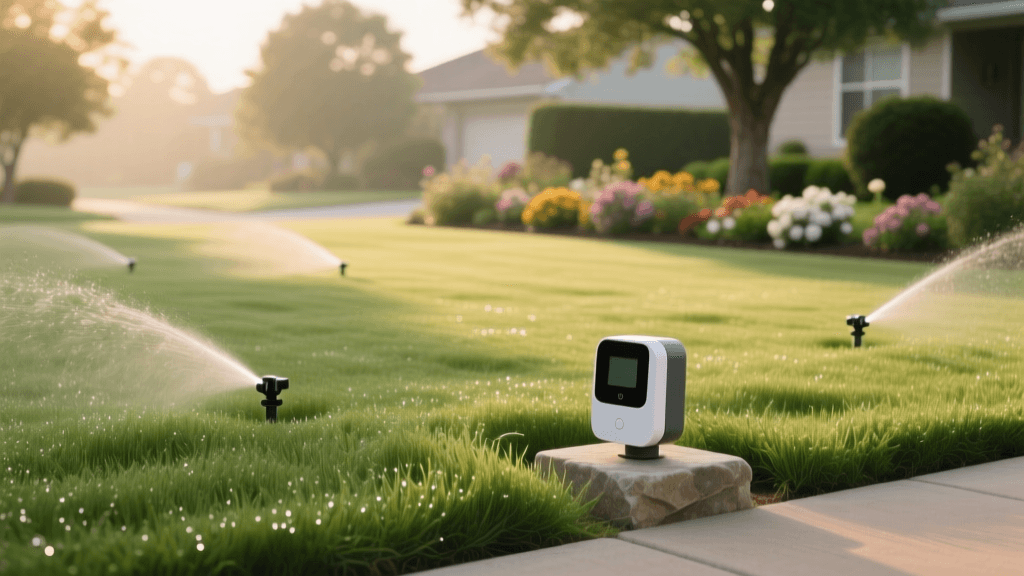
- Smart Controller Setup: Boot up your smart irrigation system (such as a Rachio 3 or B-hyve). Ensure the device is connected to your home Wi-Fi and pulling data from a reliable local weather station.
- Soil Testing: Take a core sample and send it to your local university extension office to determine exact pH and nutrient deficiencies.
Smart Irrigation Spring Settings
Do not turn on your sprinklers at the first sign of warmth. Overwatering in early spring encourages shallow root growth and fungal diseases. Instead, set your smart controller to 'Smart Cycle' or 'Soak and Cycle' mode. This divides your watering duration into shorter intervals, allowing water to penetrate deeply into clay or compacted soils without running off into the street. For early spring, rely on natural rainfall and only supplement if your region experiences a severe dry spell, aiming for roughly 0.5 inches of water per week.
Summer: Peak Demand and Water Conservation
Summer brings heat stress, high evapotranspiration (ET) rates, and peak water demand. The goal of your summer lawn care schedule is to maintain turf health while strictly adhering to water conservation principles. This is where your smart home integration truly pays dividends.
Summer Lawn Care Checklist
- Mowing Height Adjustment: Raise your mower deck to 3.5 or 4 inches. Taller grass shades the soil, reducing evaporation and choking out summer weeds.
- Grub Control: Apply preventive grub control in early summer to protect root systems from late-summer insect damage.
- Spot Treatment: Avoid broadcast herbicide applications during high heat, which can stress the lawn. Use targeted spot treatments for broadleaf weeds instead.
Smart Irrigation Summer Settings
Lawns generally require 1 to 1.5 inches of water per week during the peak of summer, including rainfall. Upgrading to a WaterSense labeled smart irrigation controller can save the average home nearly 7,600 gallons of water annually. These controllers use local weather data to automatically skip watering cycles before, during, and after rain events. Set your smart system to water only in the early morning hours (between 4:00 AM and 8:00 AM). Watering at midday leads to massive evaporation losses, while evening watering leaves the grass blades wet overnight, inviting fungal pathogens like brown patch and dollar spot.
Fall: Winterization and Overseeding Schedules
Autumn is arguably the most important season for cool-season lawn care. The combination of warm soil and cool air creates the perfect environment for root development and seed germination. Your fall schedule should pivot from maintenance to active restoration and preparation for dormancy.
Fall Lawn Care Checklist
- Core Aeration: Rent an aerator or hire a professional to pull soil plugs, alleviating summer compaction and allowing oxygen to reach the root zone.
- Overseeding: Broadcast high-quality turfgrass seed immediately after aeration. Keep the seed consistently moist until germination occurs.
- Fall Fertilization: Apply a winterizer fertilizer high in potassium to promote root hardiness and disease resistance going into the cold months.
Smart Irrigation Fall Settings
As temperatures drop, your smart controller should automatically begin to scale back watering durations based on decreasing ET rates. However, if you are overseeding, you will need to temporarily override the smart schedule. New seed requires frequent, light watering—often two to three times a day for 5 to 10 minutes. Once the new grass reaches mowing height, transition back to the smart controller's deep, infrequent autumn schedule to encourage deep root growth before the first hard freeze.
Winter: Dormancy and Indoor-Outdoor Planning
While the lawn is dormant, the modern homeowner's work shifts indoors and toward system preservation. Winter is the time to protect your irrigation investment and plan for the upcoming garden-to-table season.
Winter Lawn Care Checklist
- System Blowout: Hire a professional to blow out your irrigation lines with compressed air before the first hard freeze to prevent cracked PVC pipes and shattered sprinkler heads.
- Equipment Maintenance: Clean, sharpen, and oil your mower blades. Replace spark plugs and air filters so you are ready for spring.
- Indoor Seed Starting: Utilize your smart home grow lights and indoor climate controls to start vegetable and herb seeds for your spring garden-to-table beds.
Comprehensive Seasonal Lawn Care and Smart Watering Schedule
To keep your property on track, reference this structured schedule. It aligns traditional lawn care tasks with smart home irrigation settings, providing a holistic approach to landscape management.
| Season | Primary Lawn Care Task | Smart Irrigation Setting | Estimated Cost / Time |
|---|---|---|---|
| Early Spring | Pre-emergent & System Boot | Off (Rely on rain) / Soak & Cycle test | $50 materials / 2 hours |
| Late Spring | Weed Control & Mowing Start | 0.5 to 1 inch/week (Weather adaptive) | $30 herbicide / 1 hr/week |
| Summer | High Mowing & Grub Control | 1 to 1.5 inches/week (Early AM only) | $40 grub control / 1 hr/week |
| Early Fall | Aeration & Overseeding | Override: 3x daily for 5 mins (Seed) | $150 seed & rental / 4 hours |
| Late Fall | Winterizer Fertilizer | 0.5 inch/week (Tapering off) | $40 fertilizer / 2 hours |
| Winter | System Blowout & Planning | System Off / Winterized | $75-$100 professional blowout |
Frequently Asked Questions
Can I use a smart irrigation controller with an older sprinkler system?
Yes. Smart controllers like the Rachio, Orbit B-hyve, or Rain Bird ARC8 are designed to replace the indoor timer box and work with almost all standard 24-volt sprinkler valves. You do not need to dig up your yard or replace the physical sprinkler heads to gain smart home functionality. The smart controller simply sends the electrical signal to your existing valves based on Wi-Fi-enabled weather data.
How do I measure exactly how much water my smart system is applying?
Conduct a simple 'tuna can test.' Place 4 to 5 empty, flat-bottomed tuna cans in different zones of your lawn. Run your smart irrigation cycle for a set duration (e.g., 20 minutes). Measure the depth of the water in the cans using a ruler. If you collected 0.25 inches of water in 20 minutes, you know your system outputs 0.75 inches per hour. You can then input this precise precipitation rate into your smart controller app, allowing the algorithm to calculate exact runtimes with mathematical precision.
What is the best way to integrate garden-to-table beds into my irrigation schedule?
Vegetable gardens and edible landscapes require different watering profiles than turfgrass. While lawns thrive on deep, infrequent watering to drive roots downward, vegetable beds prefer consistent, even moisture to prevent issues like blossom end rot in tomatoes. Use your smart controller's separate zone programming to assign drip irrigation lines to your garden beds. Set these zones to water more frequently but for shorter durations, and consider adding inline soil moisture sensors to your smart hubs to override schedules when the garden beds are already adequately hydrated.
Conclusion
Mastering your landscape is no longer about spending every weekend manually dragging hoses and guessing when the rain will come. By adopting a comprehensive seasonal lawn care checklist and pairing it with smart home irrigation technology, you create a resilient, beautiful outdoor living space that operates in harmony with nature. This data-driven approach not only saves you time and money but also positions your home as a model of modern, energy-efficient landscaping.